I've been a model railroader and railfan for well over 60 years now. My interests lie in the steam era and the early diesel era. My modeling has been in HO, but I do have a closet interest in Fn3 :-)
It's been a number of years since I've done any layout construction, and the new Louisiana Central pike under construction is by far my most ambitious effort. Follow along with me on this new adventure of the Louisiana Central.
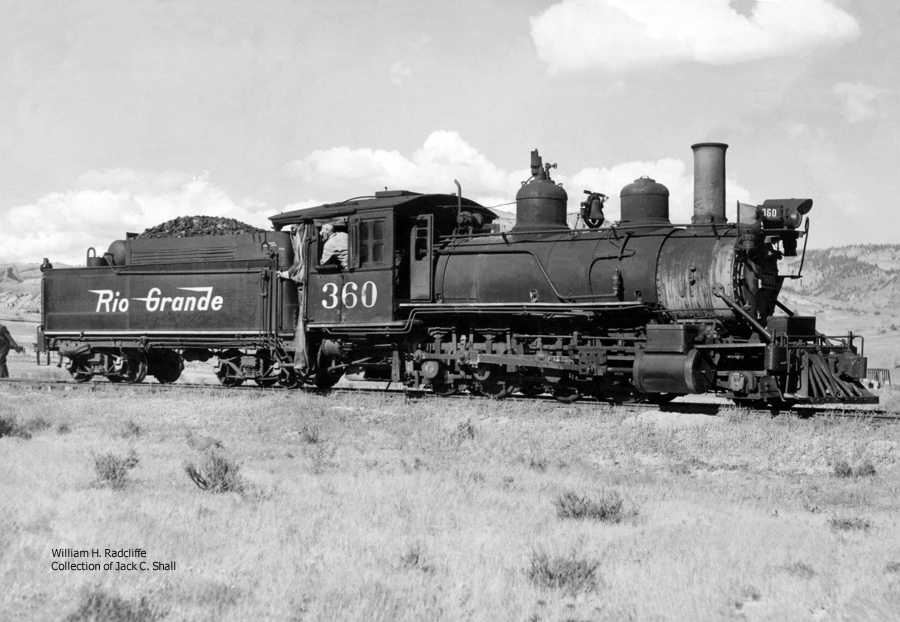
Mr. Radcliffe recorded this view of the D&RGW #360 as it was backing onto its train. We’re in Gunnison, Colorado, and the year is 1948.
This 2-8-0 Consolidation is a class C-21 locomotive, and was built in 1900 by Baldwin originally as the Crystal River Railroad #101. She was scrapped in 1950.
Work is progressing nicely in the train room. I’ve had assistance this week from a couple friends, Wayne Robichaux and Ron Findley. Their help was vital in order to hang the 8′ widths of drywall. Saturday, unbeknownst to me, Ron recorded a few pictures of the work in progress.
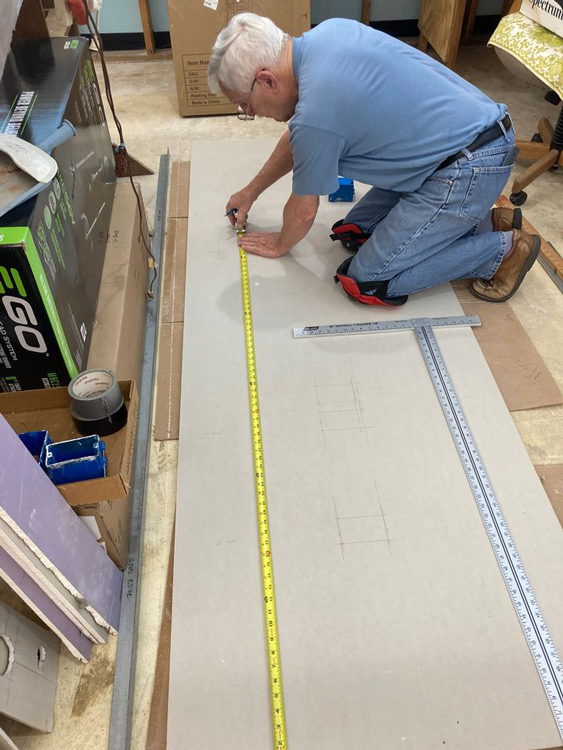
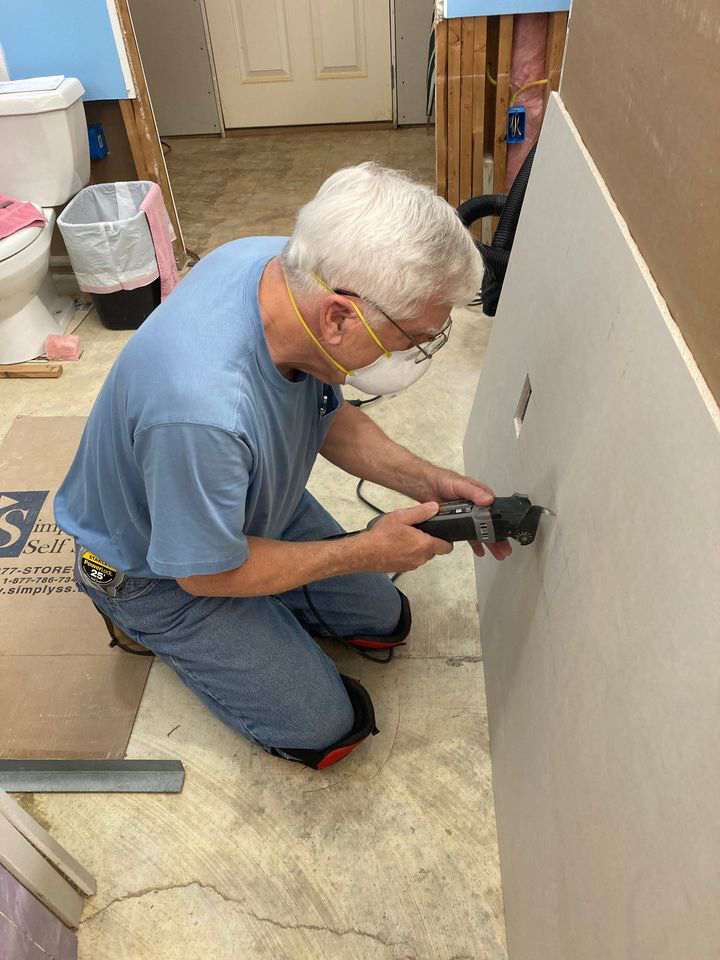
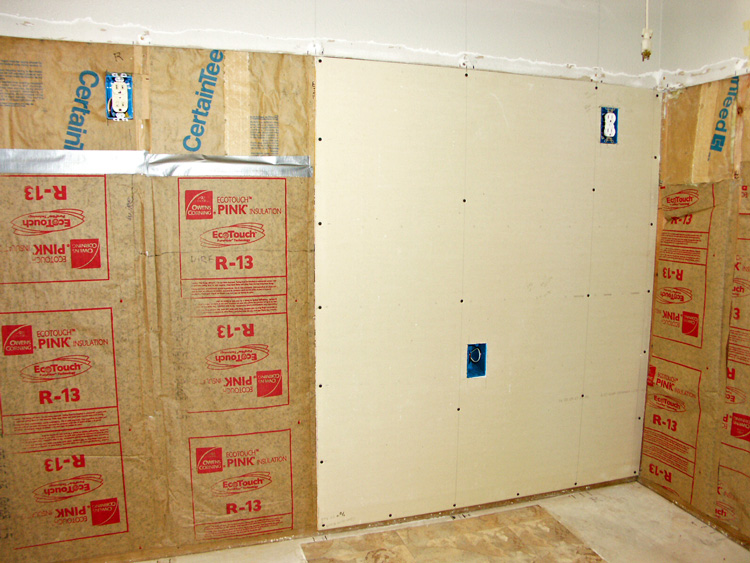
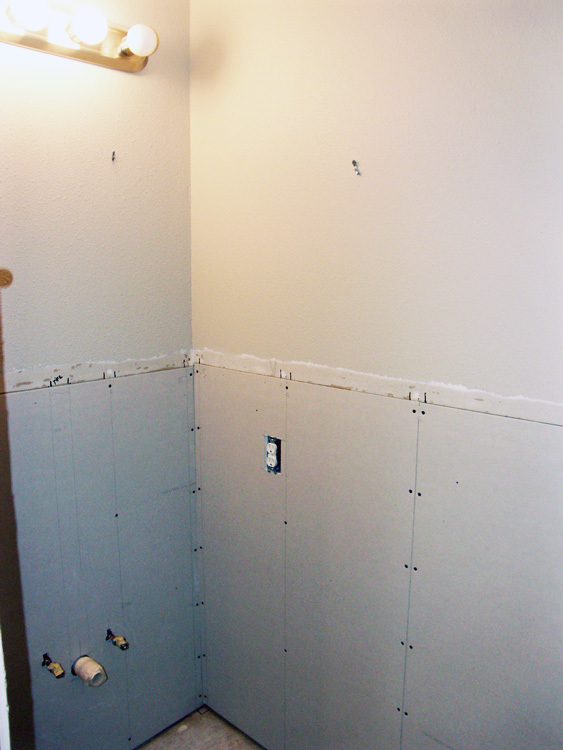
Ron made this image of the area where we were working before things got started.Here I am laying out the locations of the boxes for the electrical receptacles. This sheet alone had four boxes in it!And now I’m cutting out the box openings. No, there is no toilet in the train room. This one will find it’s way back into the restroom once the walls are finished and painted. 🙂A sheet of drywall being screwed to the studs.This sheet of drywall is hung and ready for finishing. The rag is covering the electrical equipment and connections for one of the model railroad districts. It’s one of three equipment locations. The L-girder bracing on the wall side has been temporarily removed to allow better access to the wall.
We’re on the downhill part of the drywall installation now, with a 28′ long wall, and half dozen “short” walls left to complete. My sincere thanks go out to Wayne and Ron for volunteering to help me with this work.
For those new to the blog, you can see the post Rising From the Ashes (Part Deux) for a starting point to read the story behind this work.
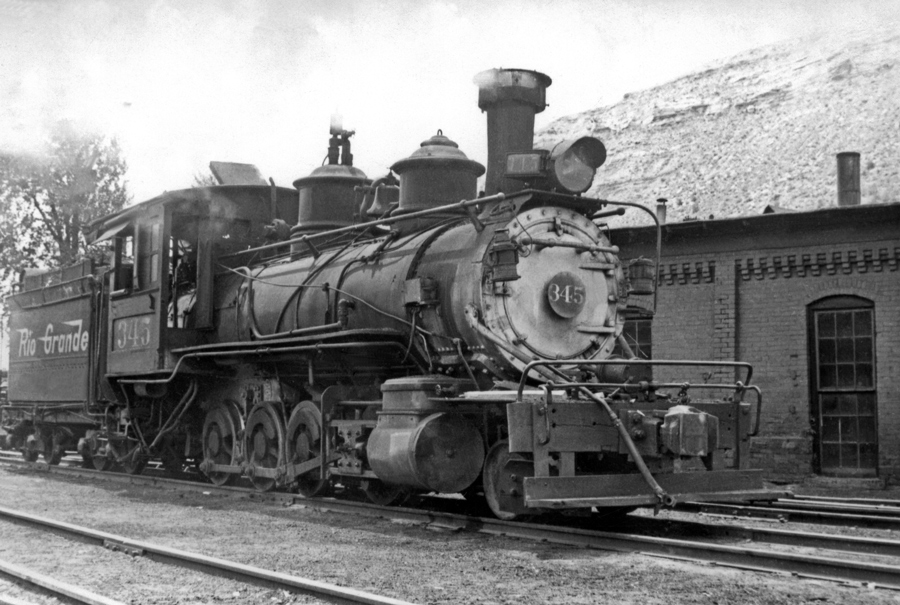
D&RGW 2-8-0 locomotive #345 is a Class C-19 Consolidation, built in 1881 by Baldwin. She was wrecked in 1951 and subsequently scrapped. I don’t have much information about this image; the location is unknown, as well as the date (but likely is the early 1940s). Also unsure if Mr. Radcliffe is the photographer.
It’s probably safe to assume the photograph was recorded in the summer since there’s no snow plow on the pilot.
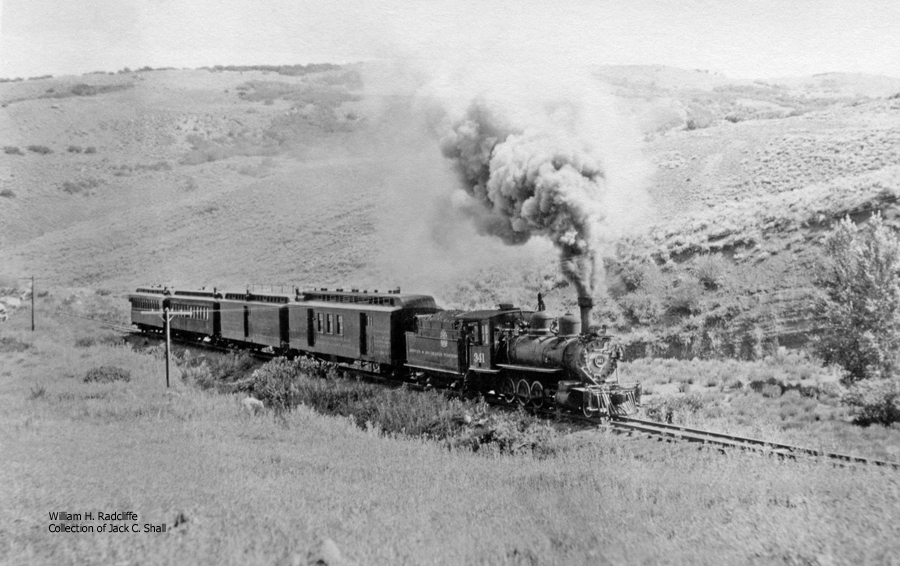
D&RGW 2-8-0 locomotive #341 heads up a passenger train in this image. The location is the east side of Cerro Summit in Colorado, and was (likely) taken in 1934. She pulls an interesting consist of what appears to be an RPO (Railway Post Office) car, along with a baggage car and a pair of coaches.
Number 341 is a Class C-19 locomotive built in 1881 by Baldwin. She was scrapped in January of 1939.
Though I’ve credited the photograph to Mr. Radcliffe, it’s unclear if he is the actual photographer. Many of the images that I have in my small collection merely have notes written on the backs concerning location and date. Others have a “photographer’s stamp” which has spaces to fill in with the subject, location, date and other information. Those stamps have his name included in the stamp. At any rate, all of these images are from his collection and I’ll name the photographer where possible.
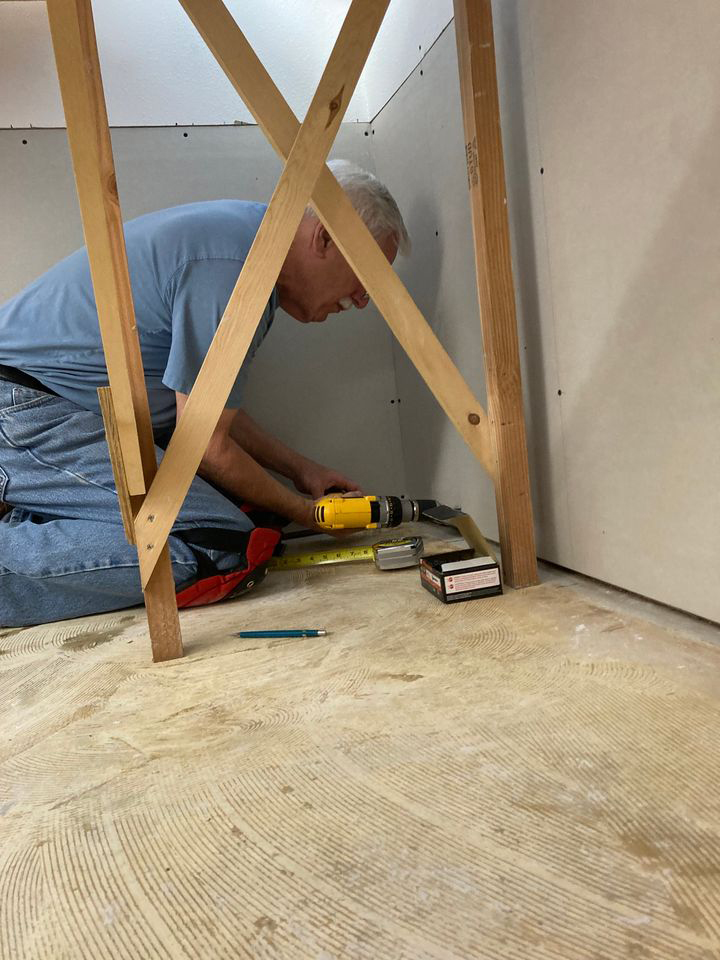
Now that the drywall has been hung in the shop and restroom, I’ve turned my attention to the train room itself. This is where the challenge starts! All of the work must occur under the layout benchwork structure. Here are a few photos to portray what is happening.
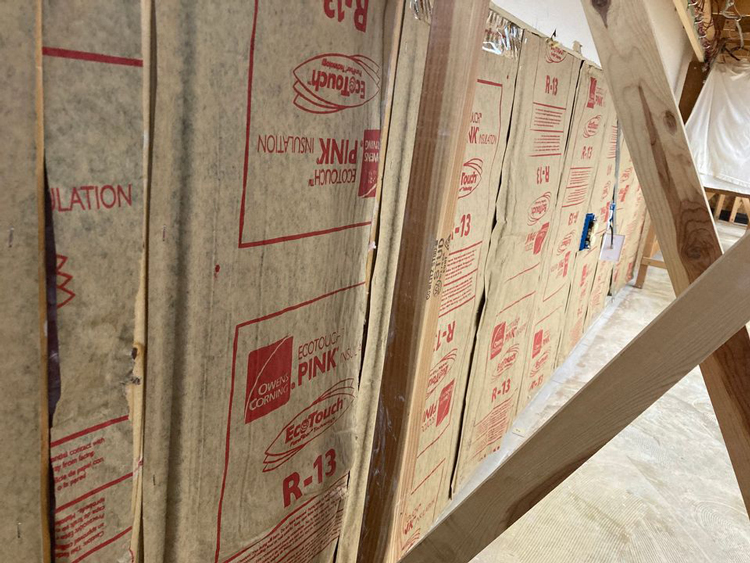
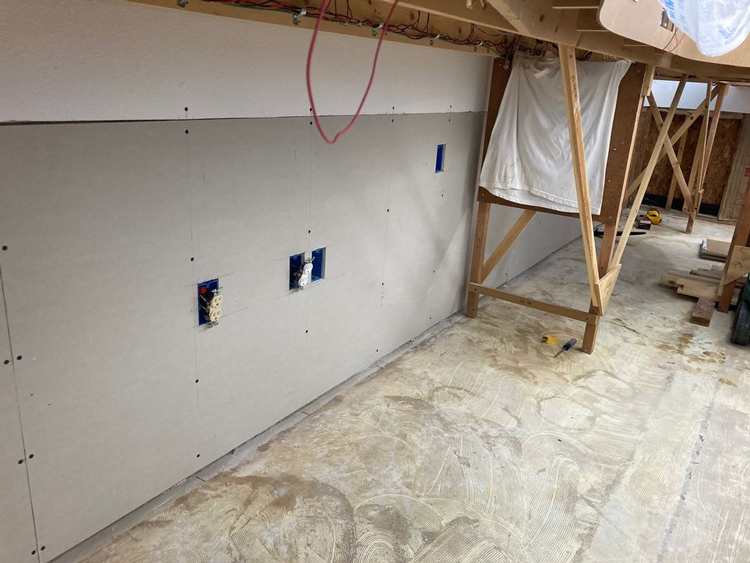
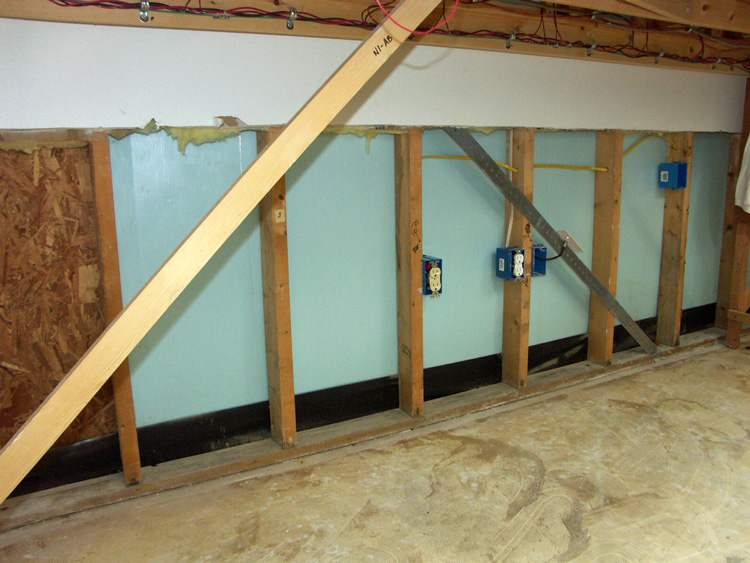
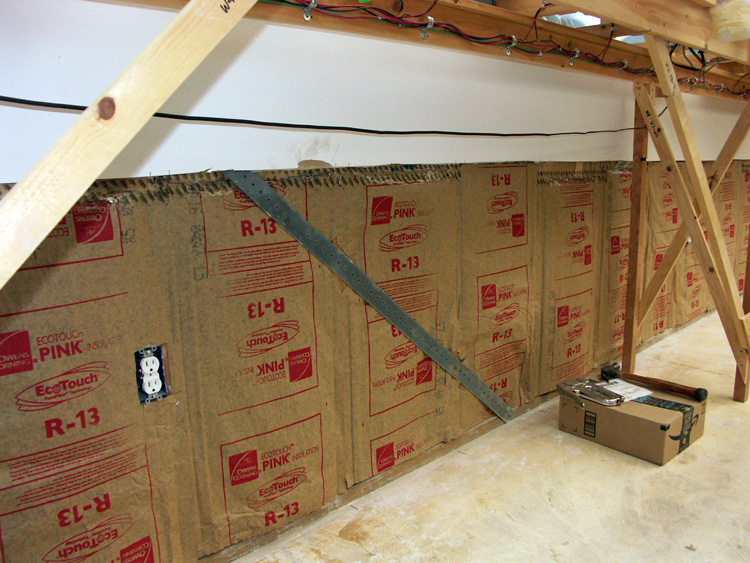
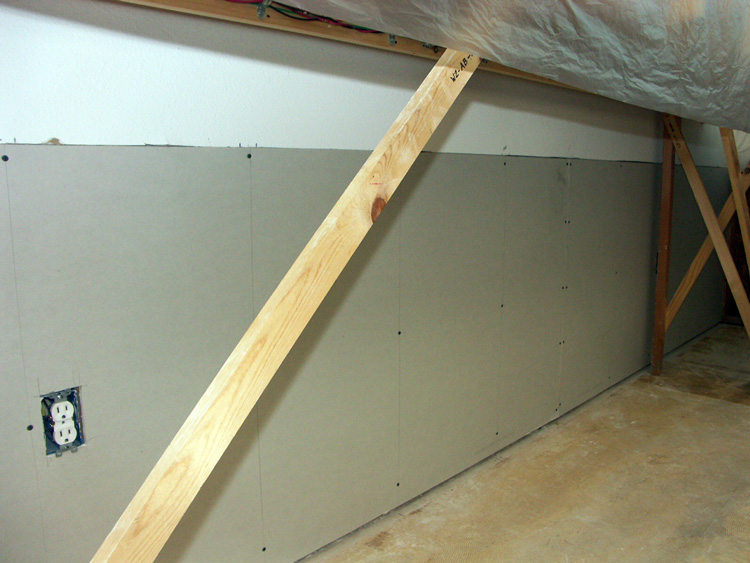
Here is a what things look like at the start. The wall cavities have been cleaned as well as possible, and all lumber is sufficiently dried (as determined with a moisture detector). This is the view below the layout benchwork, with the wall side L-girder visible at the top of the picture. The wooden diagonal braces next to the wall have been removed, but the legs must remain. Fortunately the legs are a few inches away from the wall. I’m hoping that the aisle side diagonal braces (one shown here) can remain in place. We’ll see.The next step is adding the batt insulation. The diagonal metal strap is part of the sway bracing in the walls, a little extra rigidity for this large room with no interior bracing as normally provided by inside rooms.Now with some drywall board hung. It is so nice to finally see a “real” wall. The first two sheets are up, only twelve more to go!
I’ve been preparing the other walls in the room as well, with all “cleaned” and ready for insulation and drywall. It’s slow going, but at least it’s going. 🙂
For those new to the blog, you can see the post Rising From the Ashes (Part Deux) for a starting point to read the story behind this work.
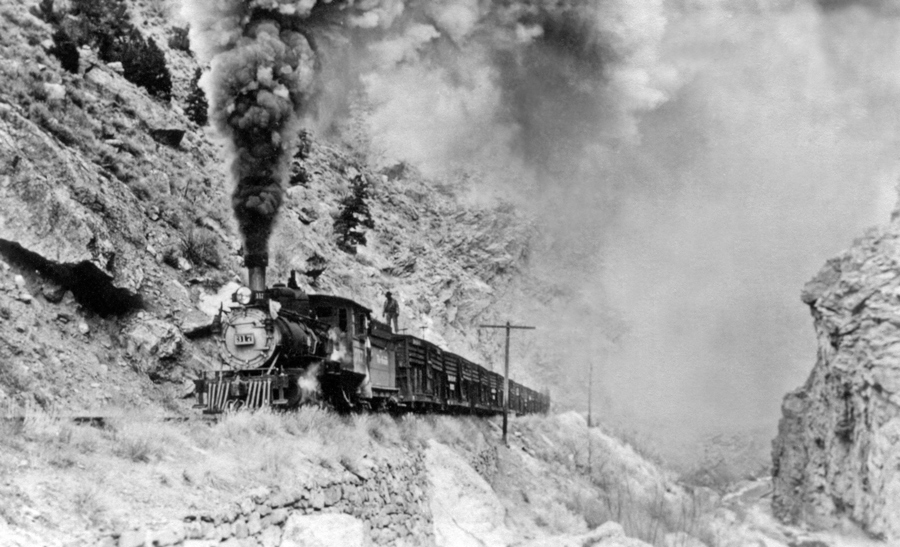
D&RGW 2-8-0 steam locomotive #317 is seen heading up a cattle train through a canyon. She appears to be working hard and a brakeman is keeping watch atop one of the cattle cars.
There is some conflict as to the exact location, with a note on the photo indicating that this is the Black Canyon of the Gunnison in Colorado. Another source says this is in the Cimarron Canyon near Cimarron, Colorado. Both locations are very close together, so only Otto Perry knows.
She’s a Class C-18 and a Baldwin product of 1895. Originally owned by the Florence and Cripple Creek Railroad as their #5 “Florence”, and was scrapped in 1946 (some sources indicate the date as 1948).
Photograph by Otto C. Perry; former collection of William H. Radcliffe; collection of Jack C. Shall.
The restoration of the Louisiana Central Railroad model railroad hobby building (aka ‘the Train Room’) is progressing, albeit a bit slowly. But it is progressing. I’ve hung the drywall in the shop, entry and restroom, and here are the photos to prove it!
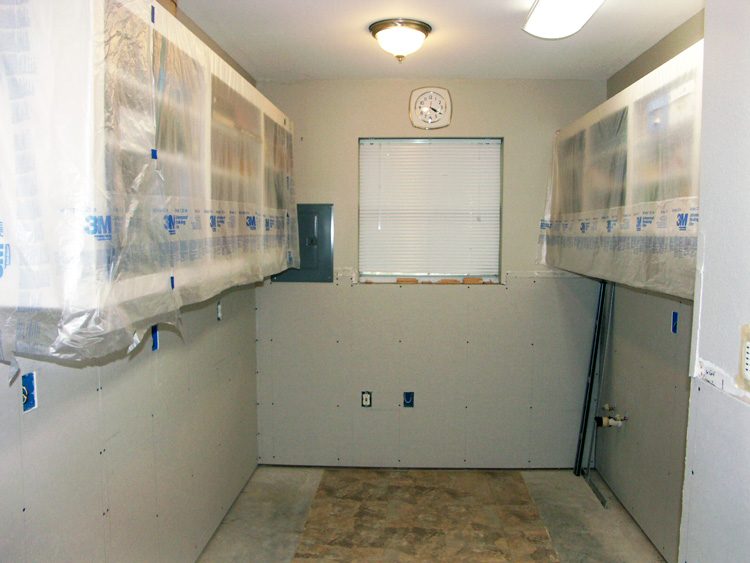
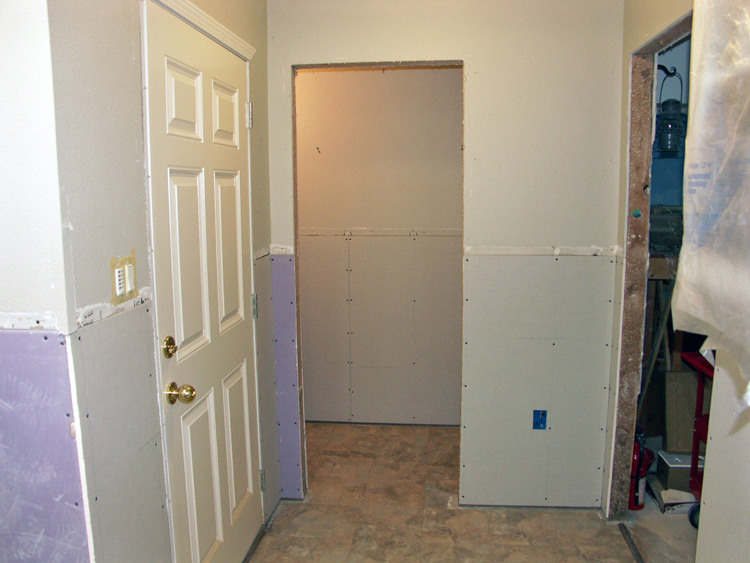
The very first piece of drywall in the shop has been hung!This view is the shop area. There will be cabinets with counters below both of those wall shelves, their footprint to be within those bare concrete areas. The cabinet unit at right will have a small utility sink at the piping rough-in. The primary work area is also at right, with the fluorescent light above providing extra illumination.Standing in the shop area and looking the opposite direction, we see the building entry door at left, the restroom straight ahead, and the entry to the train room at right. I had a few scraps of drywall left from my home flood restoration so I used them in this area (the reason for the different colors).Peaking in the doorway to the restroom, the lavatory will be here, the toilet to the right (out of this view).
There is still much work to do in these rooms to finish the drywall: the floating and taping work, and then texturing. But I plan to complete the insulation and drywall installation in the train room first. And I’ve started the prep work in there already (with a bit more to do), so should be hanging the rock by early next week.
For those new to the blog, you can see the post Rising From the Ashes (Part Deux) for a starting point to read the story behind this work. I’ll feature more photos of the restoration from time to time as the work progresses.
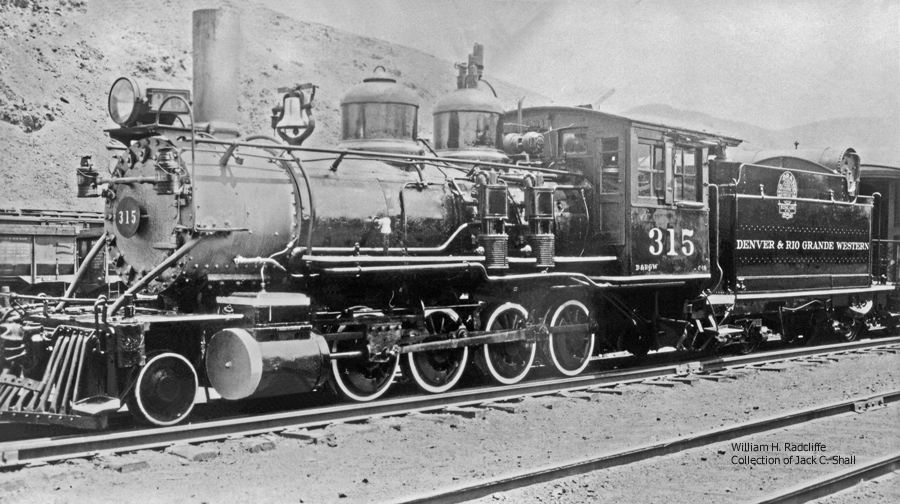
Bill Radcliffe was in Colorado back in July of 1938, and while there he recorded this view of the Denver & Rio Grande Western’s 3-foot gauge 2-8-0 locomotive #315. She’s a Class C-18 and a Baldwin product of 1895. Originally owned by the Florence and Cripple Creek Railroad as their #3, she is seen here in Salida sporting what appears to be a fresh coat of paint.
I understand that she was restored to operational condition in the early 2000s, and has operated on both the Durango and Silverton Railroad, and the Cumbres and Toltec Scenic Railroad.
Photograph by William H. Radcliffe; collection of Jack C. Shall
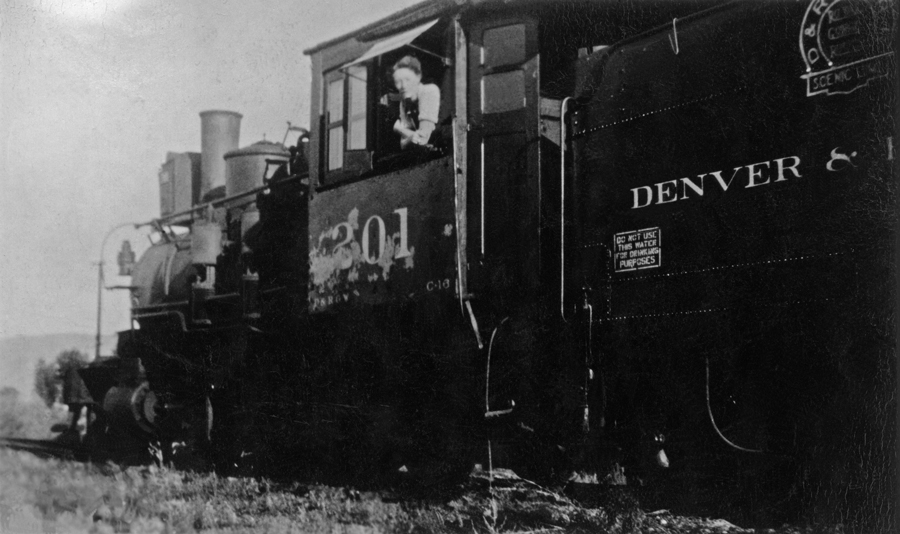
Another of the older locomotives in the Radcliffe collection is this rather unflattering view of Denver & Rio Grande Western locomotive #201. She is a 2-8-0 built by Grant in 1881 as a class 60 machine and I’ve read that she was named “Ohio Creek”. The Rio Grande later reclassified this locomotive as C-16, this classification being more familiar to railfans. She was scrapped in 1937.
This image was taken by an unknown photographer in 1918 at Gunnison, Colorado. Former collection of William H. Radcliffe; collection of Jack C. Shall.
Last week I mentioned a new photo topic for “narrow minded” folks. Well railfans probably knew immediately that I was hinting about the narrow gauge railroads. And that would be correct . . . the three-foot gauged lines in Colorado and New Mexico.
Back in the late 1980s I made the acquaintance of Mr. William H. Radcliffe, an elderly gentleman would also happened to be blind. In return for a favor, he gifted me with a manila envelope which he said were a few photographs that he was sure I would enjoy. When I got home and opened the envelope, it contained a couple dozen photographs of Colorado narrow gauge locomotives and trains. I noticed the envelope had been mailed to him by Mallory Hope Ferrell, and some notes indicated that Mr. Ferrell had received negatives sent him by Mr. Radcliffe. Knowing that Mr. Ferrell had authored perhaps two dozen books about the narrow gauge railways, I assume that he had been reviewing photos from Mr. Radcliffe’s collection.
But on to those photos. They’re all black and white prints of varying sizes, from 2.75″x4.5″ up through 5″x7″. Unfortunately they are all in semi-rough to very rough condition. I’ve scanned them, and attempted to restore them as well as my very limited skills allow. I’ll feature these photos over the next several months.
On to the show!
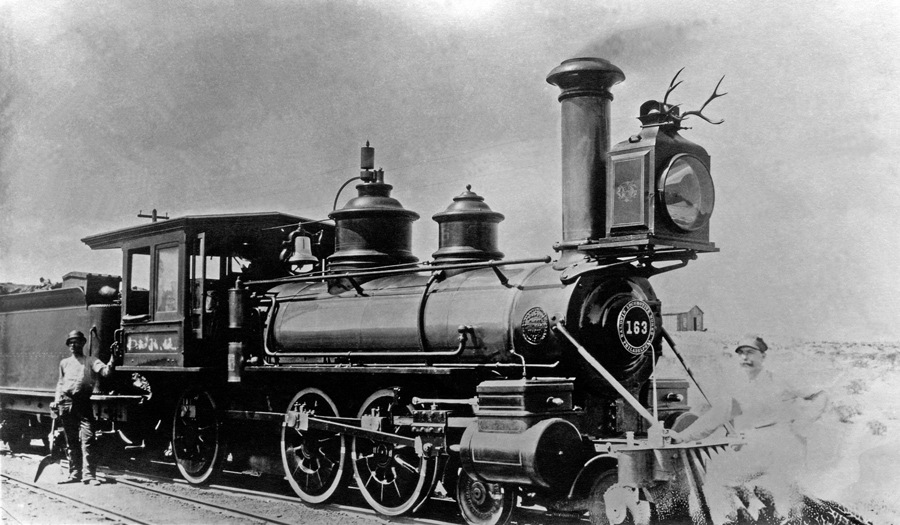
This first image is one of the oldest in the collection. The locomotive is the Denver & Rio Grande 4-6-0 #163, posed at an unknown location. She’s a product of the Baldwin Locomotive Works, built in 1882. The engineer is posed at the pilot with his oilcan, and the fireman is back at the cab with scoop in hand. And note the antlers on the headlight. She was scrapped in 1916.
Former collection of William H. Radcliffe, collection of Jack C. Shall.
I have been required to update my Post Notifications plugin to the latest and greatest. The update wasn’t as “simple and easy” as I expected, but I believe it is working correctly.
If you’re a subscriber reading this post, but did NOT receive a notification for it, please advise me so I can try to figure out what went wrong. You can do this by simply leaving a comment on this post.
Thanks for your support, and sorry if this causes any hassles!
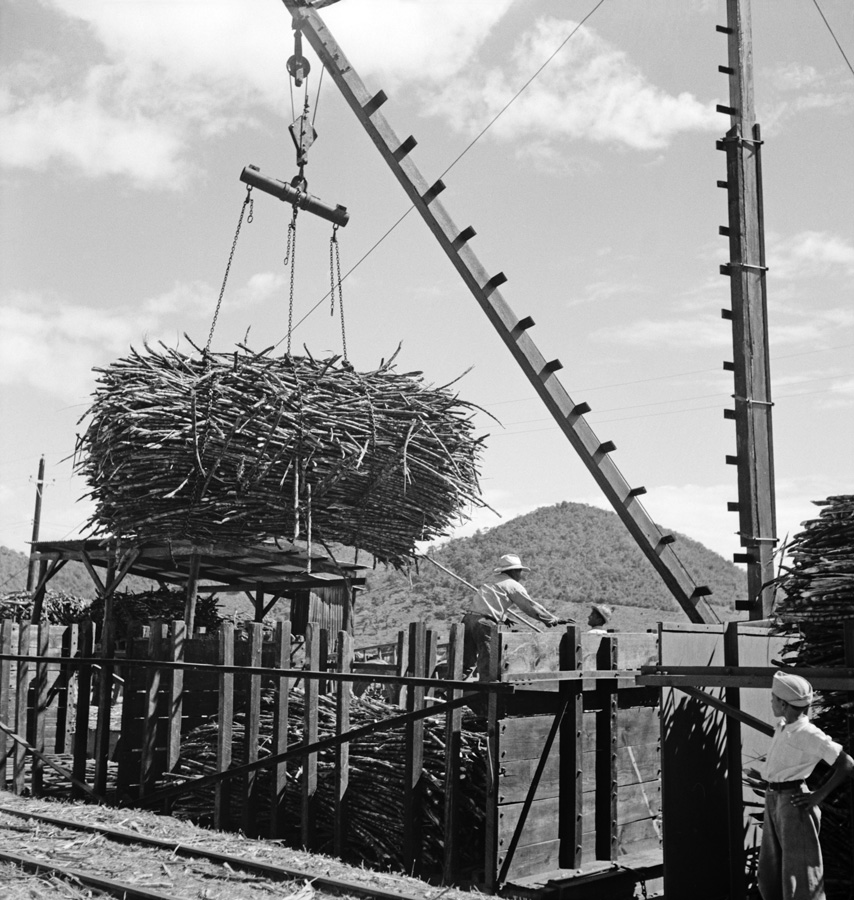
In January of 1942 Jack Delano spent a bit of time down in Puerto Rico. While there he recorded the work going on in the sugar cane fields. The workers bring the harvested cane in from the field in carts drawn by oxen, where it is trans-loaded onto freight cars for the trip to the mill. Here we see a freight car being loaded with cane at the loading station near Guánica.
Jack Delano fell in love with Puerto Rico while working there, and ultimately took up residence on the island after WWII. There is a nice write-up about him in Wikipedia that you might find interesting.
With this photograph we’ve concluded our journey with Jack Delano. We’ve seen almost 250 of the thousands of images that Mr. Delano created back in the early 1940s. I have a couple dozens images by others that I’ll be presenting over the next several months. They should appeal to the “narrow minded” folks that visit this blog. Come back next week to see what I refer to.