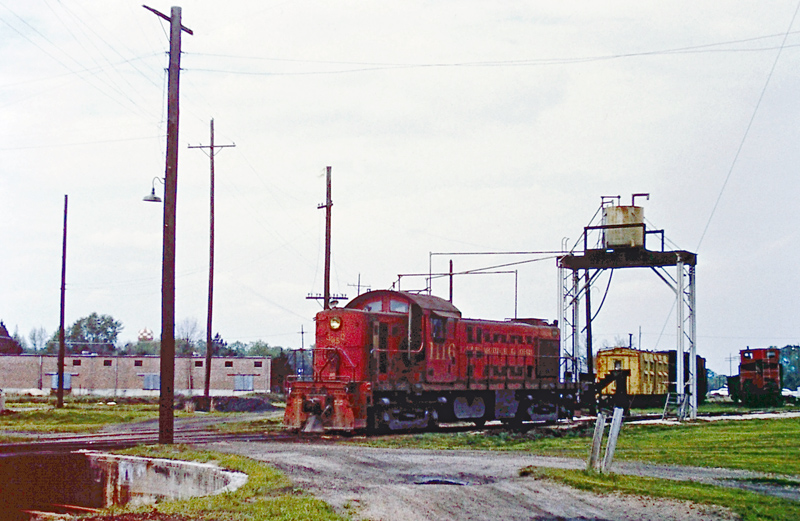
Another of the slides rescued by my friend Ron Findley, GM&O RS1 #1116 is seen here at rest in the servicing area in Bogalusa, Louisiana. The edge of the turntable is located at the left and the sand tower spanning the track just in front of the unit. Note the bunk car beyond and one of those beautiful GM&O cabooses. Again, I’m not sure of the exact date. Your estimate of time would be appreciated.
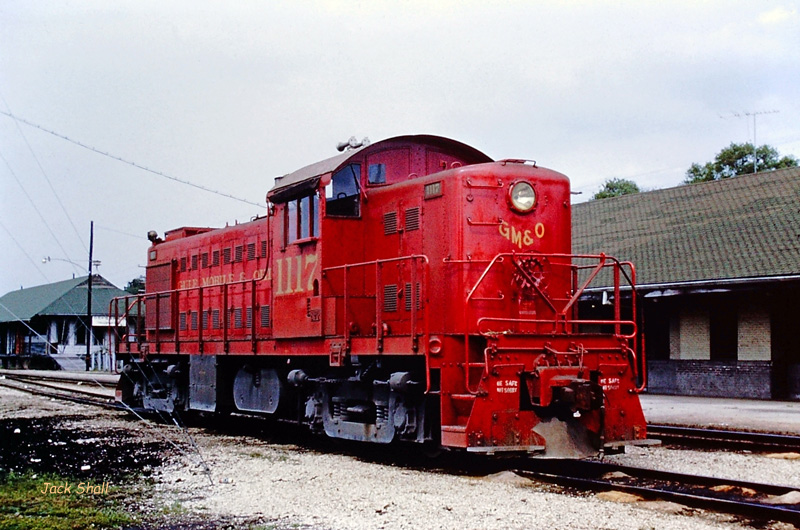
I’ve mentioned before that I lost my slide collection in the Great Flood of 2016 in South Louisiana. My friend Ron Findley had copies of a few of those images and he sent them to me awhile back. This scan, while a bit poor in its quality, features a Gulf, Mobile and Ohio RS1 locomotive sitting in front of the depot in Bogalusa, Louisiana. I’m not sure of the exact date. I’ve always been rather fond of these locomotives!
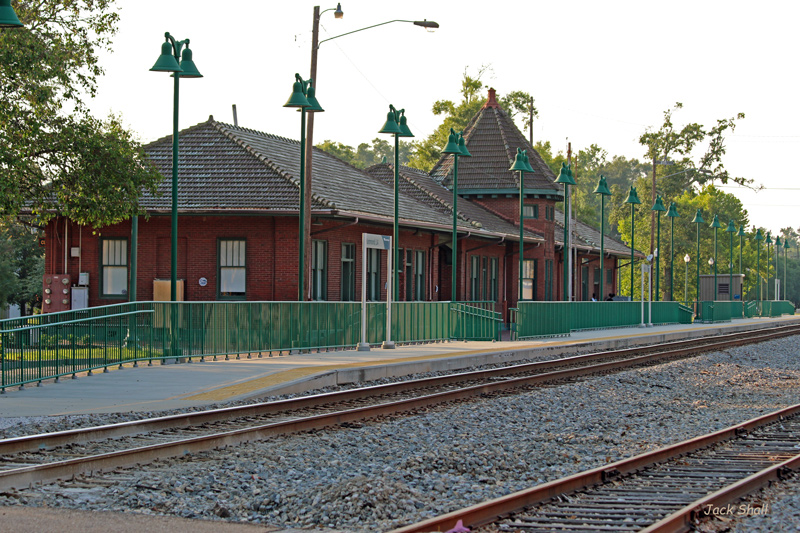
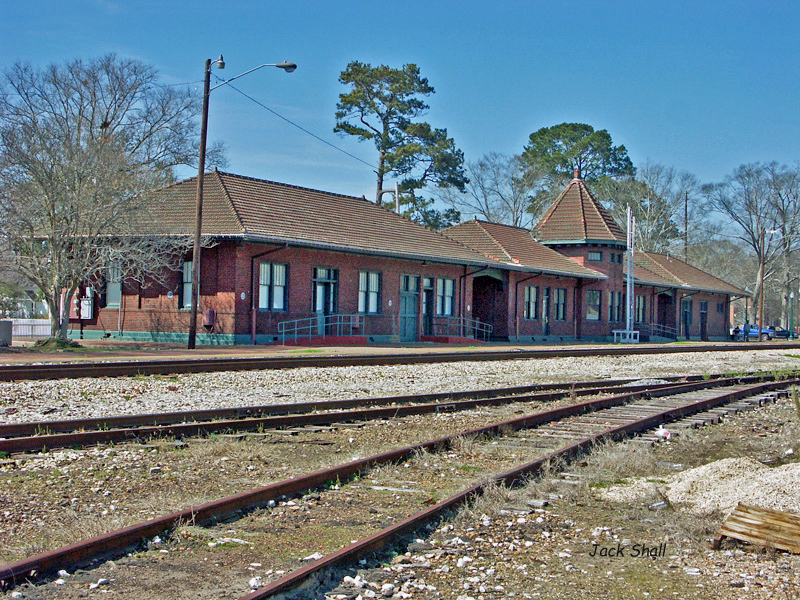
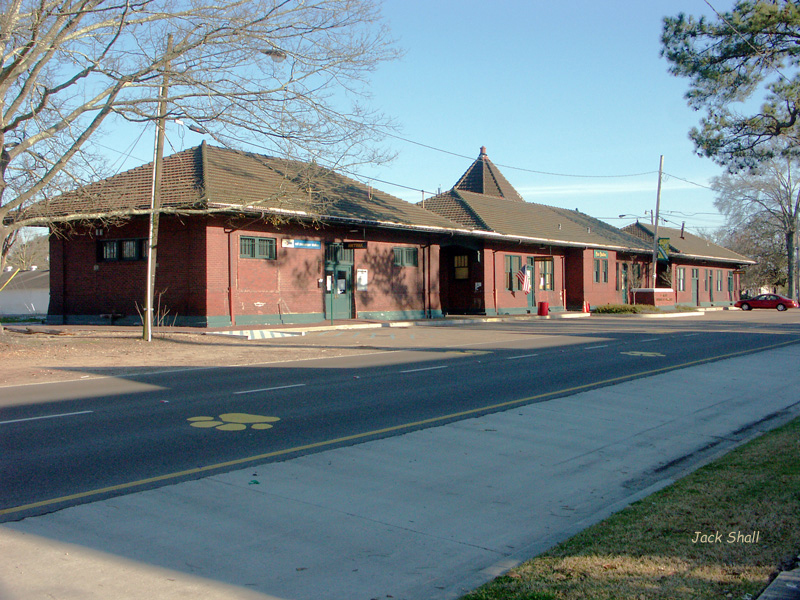
In the trackside photograph of the Hammond depot a few posts back, I mentioned that the view presented wasn’t able to be duplicated due to the now present Amtrak platform. The photograph below was taken in 2015 and shows the facility as it looks today.
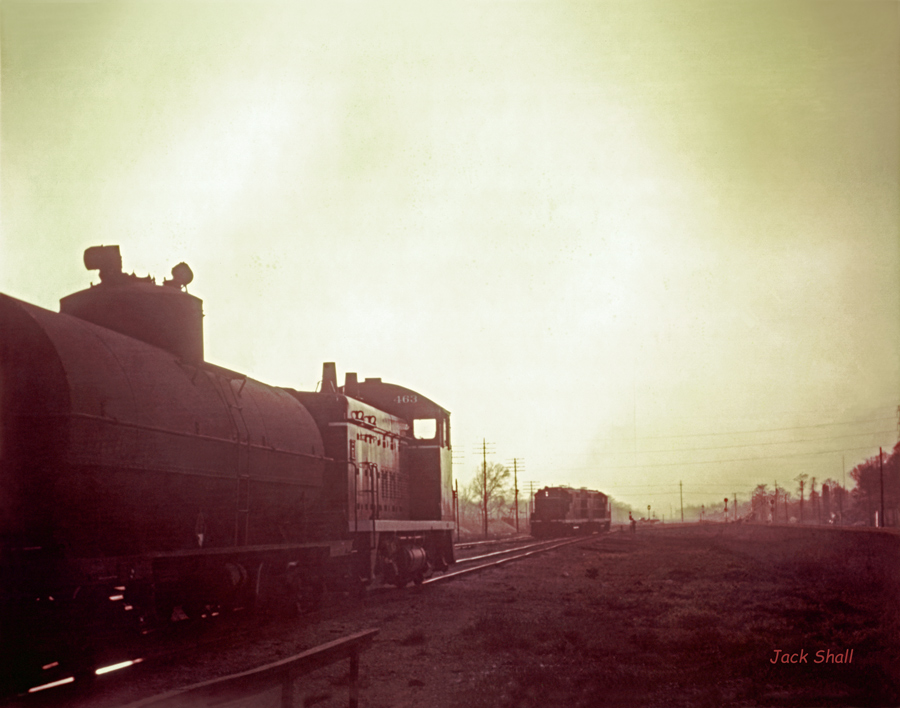
In March of 1965 I visited the Illinois Central Mays Yard in Jefferson Parish, Louisiana. It was right at dusk that day when I spotted this switcher with its cut of cars patiently waiting for a couple Geep locomotives to clear. This view is looking West, with the yard throat just behind us.
The Illinois Central Railroad built a wonderful depot in Hammond, Louisiana back in 1912. And it is still in use today, though in modified form. The track is now owned by the Canadian National Railway, and the passengers are served by Amtrak. It is still a busy place. The views below were recorded in February of 2004.
Here is the track-side view of the depot. The central building section was the original passenger depot, with the agent and ticket office in the center (where the turret is), and waiting rooms to either side. The two building sections to either side of that were a restaurant at left, and a Railway Express Agency facility at right. One can no longer duplicate this view as several years ago Amtrak added an elevated passenger platform along side the track, so it partially obstructs the view from this side.And here is the view from the street side of the depot. In its present use, Amtrak is using the building section at left (formally the REA facility). The wall at far left (where the blue/white pavement striping is seen) had an elevated freight door and a small platform for loading the REA trucks. The center section is now the city’s Chamber of Commerce, and the right section is the Clerk of Court office. The giant yellow paw prints on the roadway show support for the Southeastern Louisiana University Lions, the campus being just a few blocks away. Indeed, one can hear the cheers from the football stadium on an otherwise quiet night while lingering around the depot!
A bit after sunset on a day in June of 1965, Southern Railway locomotive #2100 is seen hauling its freight train over the underpass at Marconi Drive as it approaches City Park in New Orleans, Louisiana.
This locomotive is an EMD model NW5 built in 1947, the only one owned by the Southern, and one of only 13 built.
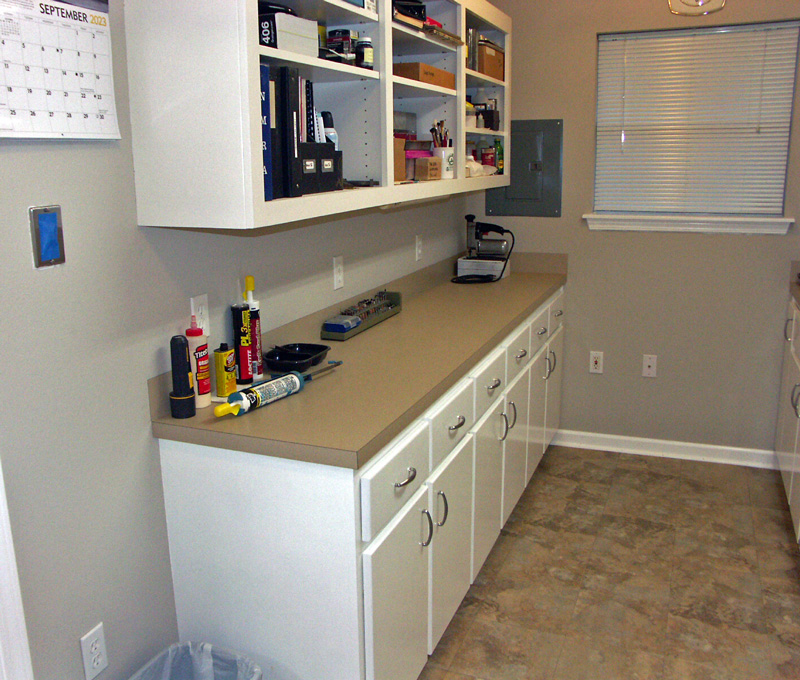
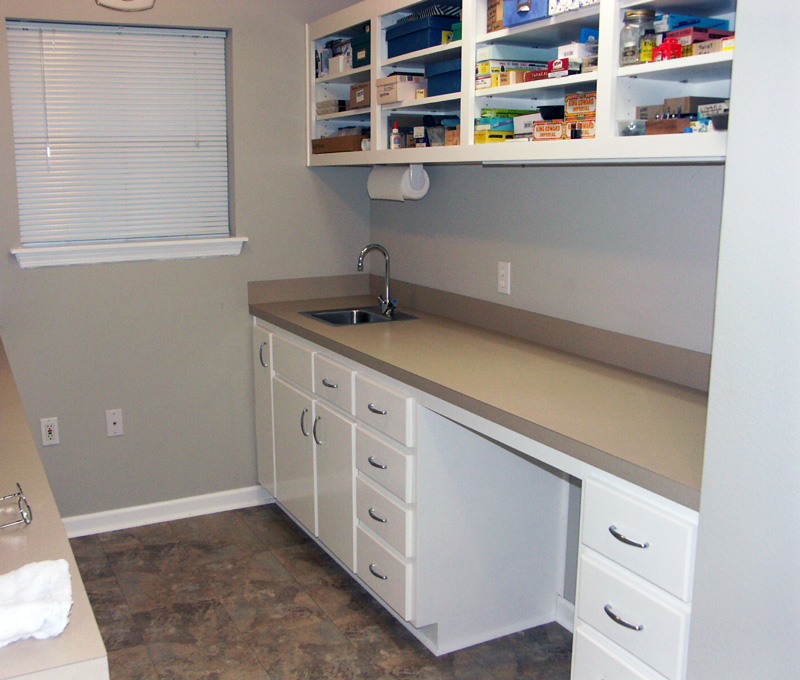
The shop area for the railroad is complete . . . well, almost. The Wilsonart laminate is installed, all the baseboards and quarter-round trim are in place, and the plastic coverings have been removed from the shelving above the cabinets. There is still a bit of paint touch-up left. I say “almost complete” as I see the ugly reality that the white paint on the shelving isn’t the same color as the white paint on the cabinets. One would think that white is white but that ain’t so (as the photos show). If it nags me, I’ll have to slap a coat of “new” white over those shelves. Judge for yourself below.
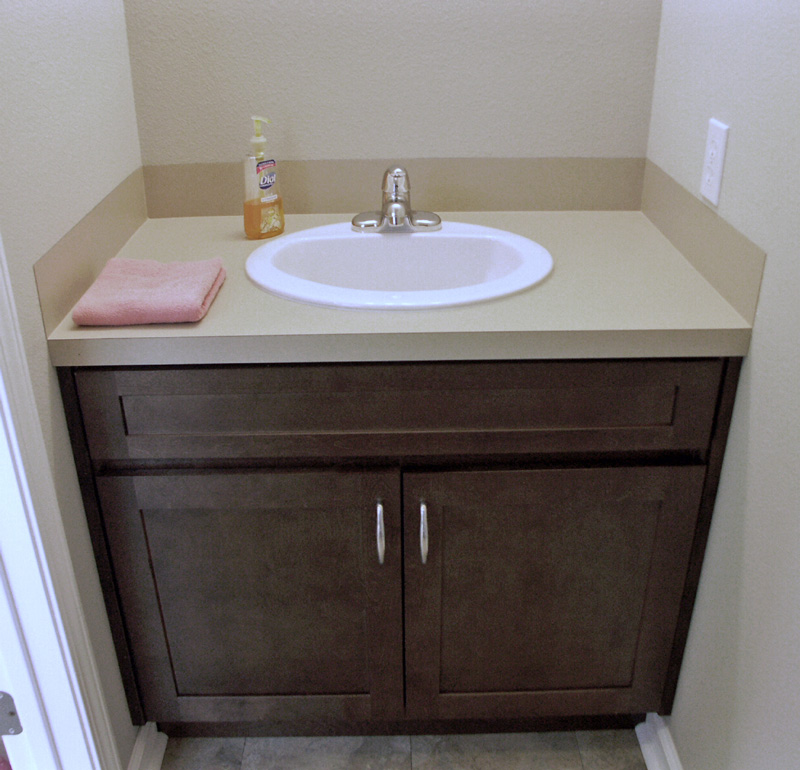
The storage and secondary work surface cabinet. Note the shade of white on it compared to the original white paint on the shelving above.The main work counter. The sink is now installed and I’ll be adding a few other things such as a model paint rack, tool holders, and other “accessories” to aid in my model building. The laminate color is a bit lighter in person than these photos show. It’s a smooth surface with a matt finish, and I’m sure I’ll be happy with it.The lavatory in the rest room is now in service. It just needs the towel rack reinstalled and the mirror hung, both are on hand.
I’ve been working on a “final” list of things left to do and making some pretty good progress. The trim installation is complete in the main train room . . . all that awaits is some caulking, filling of nail holes, and some touch-up paint. After that, all of the remaining layout leg bracing can be reinstalled and the plastic covering removed from the layout.
I’m confident that trains will be rolling this winter!
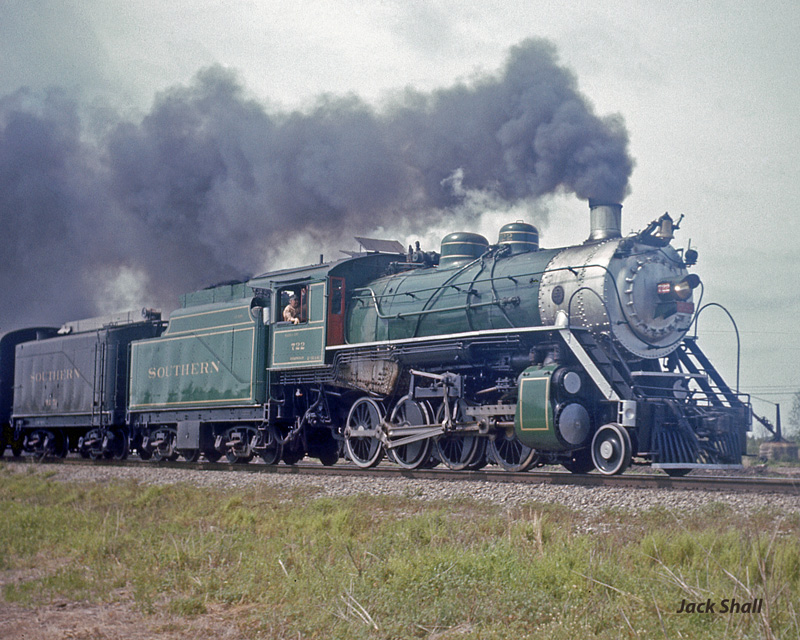
In the early 1970s the Southern Railway ran a series of steam powered excursion trains throughout its system. Steam locomotive No. 722, of a 2-8-0 wheel arrangement, is shown here on the return leg of the day’s journey heading for New Orleans, Louisiana from Hattiesburg, Mississippi. Mr. Walter Dove, a long time employee of the Southern, is at the throttle.
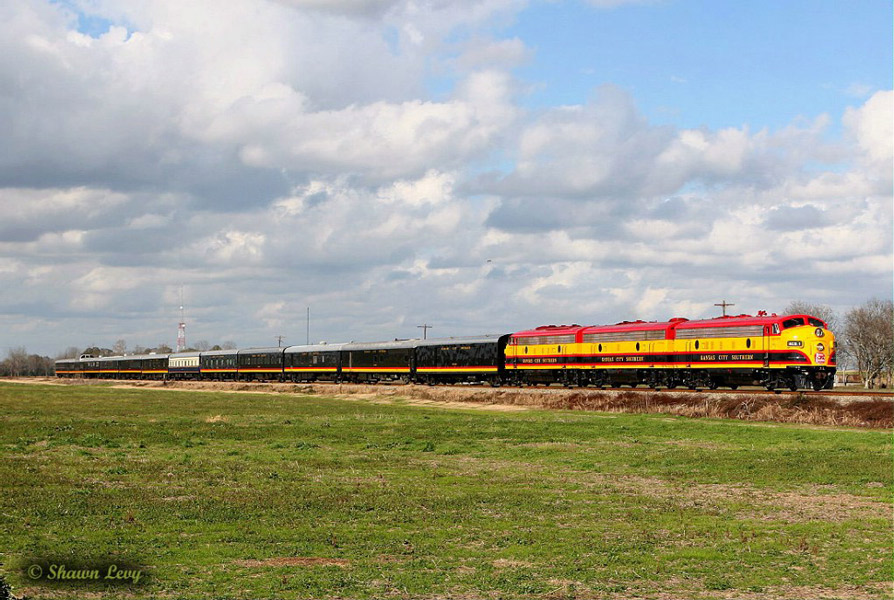
It’s 2008 and the Kansas City Southern is running their business train to New Orleans in time for the BCS Bowl Championship Game. The locomotives are looking good in their “retro” paint scheme. Shawn Levy has captured this image at a perfect angle, and within excellent surroundings.
The local LSU Tigers prevailed in the contest against the Ohio State Buckeyes, with the final score of 38-24.
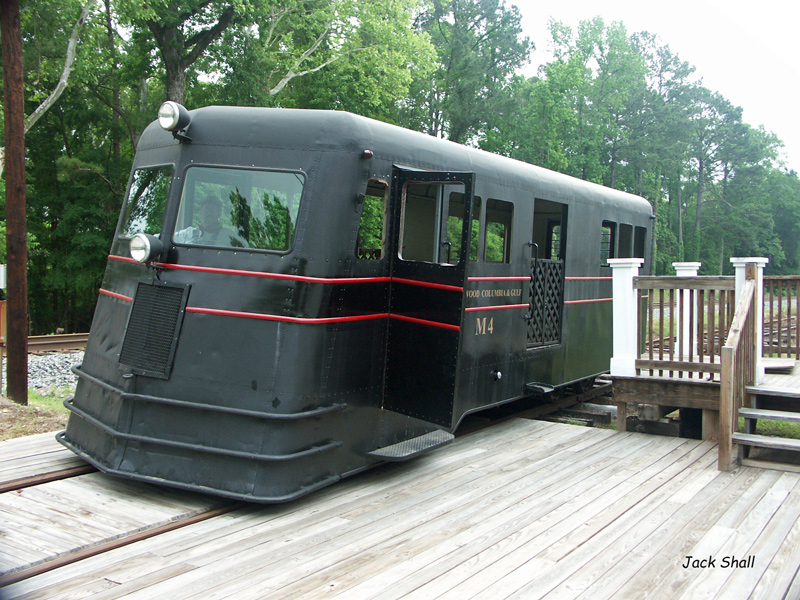
Making a station stop is the former Fernwood, Columbia and Gulf Railroad’s motorcar, number M4. She is presently undergoing restoration, and is in operation at the Southern Forest Heritage Museum located in Longleaf, Louisiana. She was donated to the museum some years ago by railfan and historian Louis Saillard. The museum sports a large oval of track running around the perimeter of the compound, and they like to run the motorcar on special occasions.
This photograph was recorded in April of 2011. The restoration of the car had slowed considerably for a number of years. However volunteers have been quite busy recently in the process. She now has glazing in her windows, and much work has occurred in the interior with a new roof liner and a new permanent dashboard for the operator. The exterior sports a new air-horn and rear view mirrors.
Ex-Southern Pacific steam locomotive #745 steams over the Bonnet Carré Spillway during its break-in run in December of 2004. The engine had just been restored by the Louisiana Steam Train Association. The 745 is a class Mk-5 Mikado (2-8-2), and was built in the Espee’s shop in Algiers, Louisiana back in 1921. She operated on the Texas and New Orleans subsidiary of the Southern Pacific.
The Bonnet Carré Spillway is a flood control operation in the Lower Mississippi Valley. Located in St. Charles Parish, Louisiana, about 12 miles west of New Orleans, it allows floodwaters from the Mississippi River to flow into Lake Pontchartrain and thence into the Gulf of Mexico. Both the Kansas City Southern and Illinois Central Railroads built trestles spanning the spillway, and they provide an interesting place to photograph a train. This scene of the 745 was recorded by a small, but dedicated group of railfans during this “historic” run.
A major milestone has been reached in the restoration of the Louisiana Central Railroad layout room with the installation of new flooring. Initially I’d planned to simply show a few snap-shots of the finished installation. But I then decided that maybe some would be interested in how the project was accomplished. So I’ve put together several photos that I took along the way.
I had to install flooring in the room to replace the tight-pile carpet that was formerly in there. That carpet was pulled out after the Great Flood of 2016. But the hardened glue remained on the concrete slab, and I decided that it was impractical to remove after speaking with people with experience doing just that. Also compounding my flooring problem were the 55 legs supporting the layout benchwork.
I ultimately decided to use a “floating” floor of Luxury Vinyl Tile (LVT) as I reasoned that it could be laid over the glue. I also decided to use a foam underlayment with a vapor barrier on it’s bottom. I used a floor scraper to remove chunks of drywall mud, and to smooth the floor surface as best I could. The LVT “planks” I used are 9″ wide x 60″ in length. However I would have to provide temporary layout support to allow the 43″ width of the underlayment to be rolled out. I thought about how to do that for some time, and finally came up with a solution.
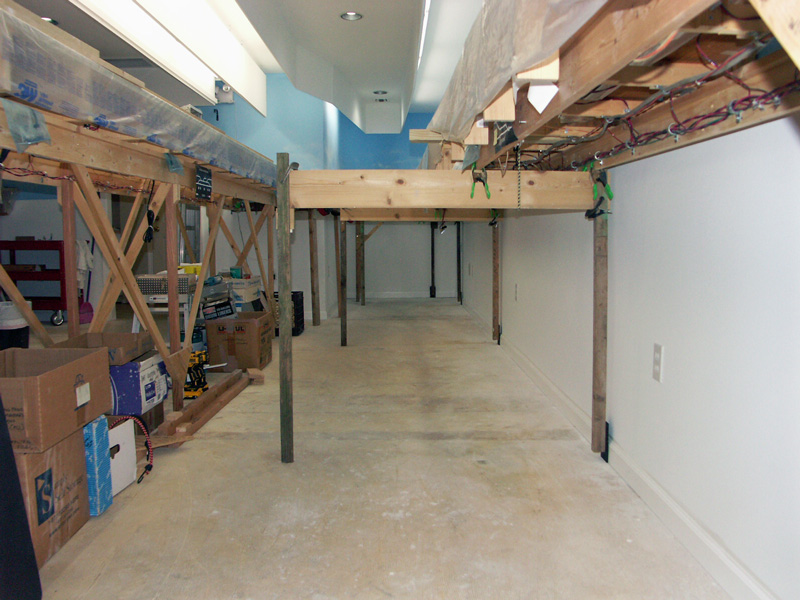
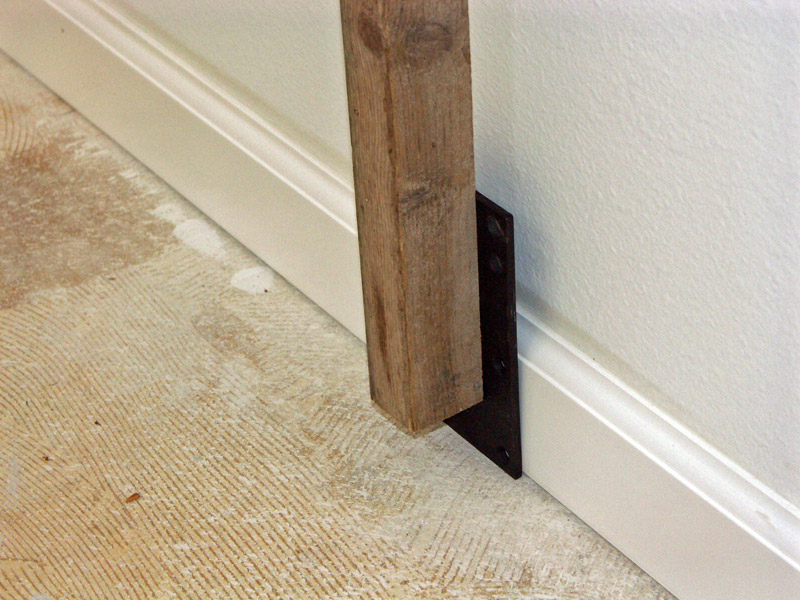
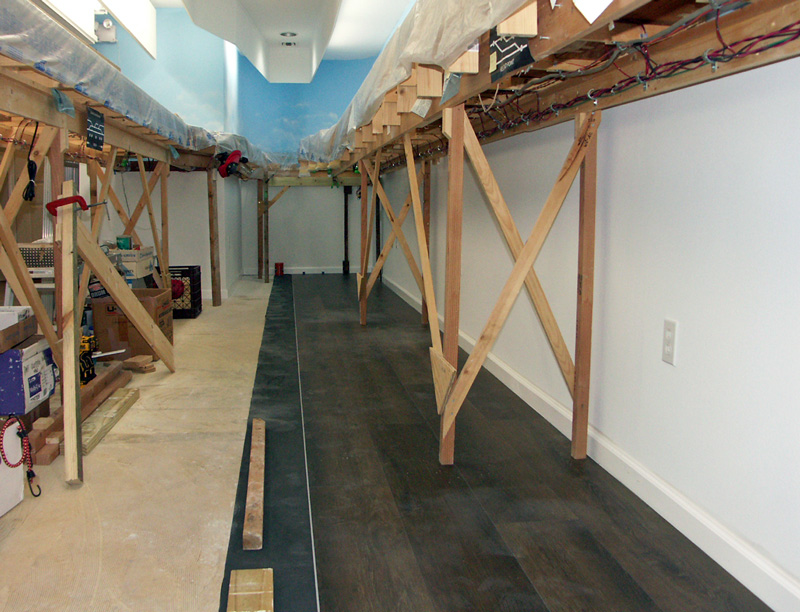
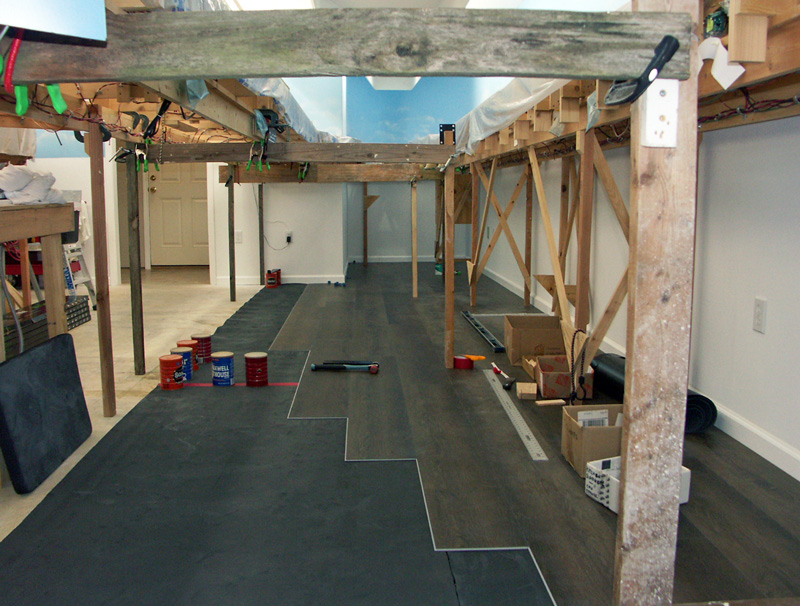
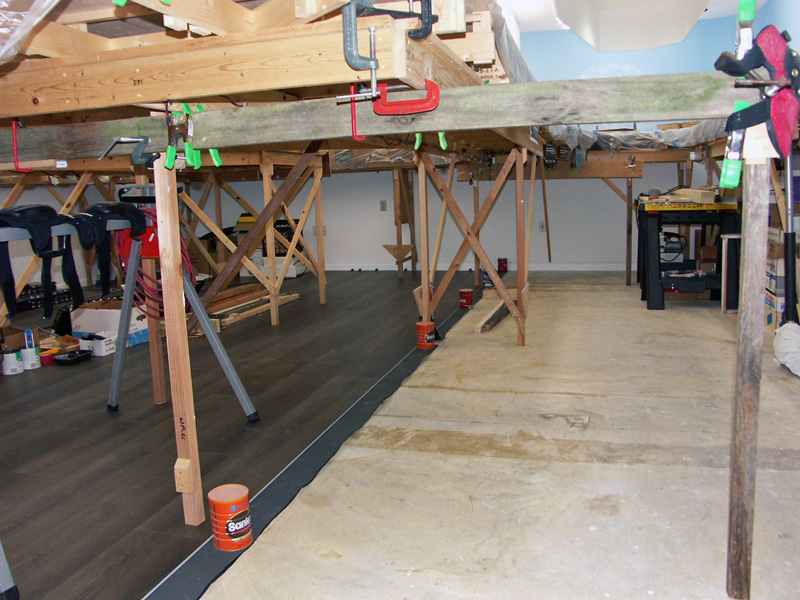
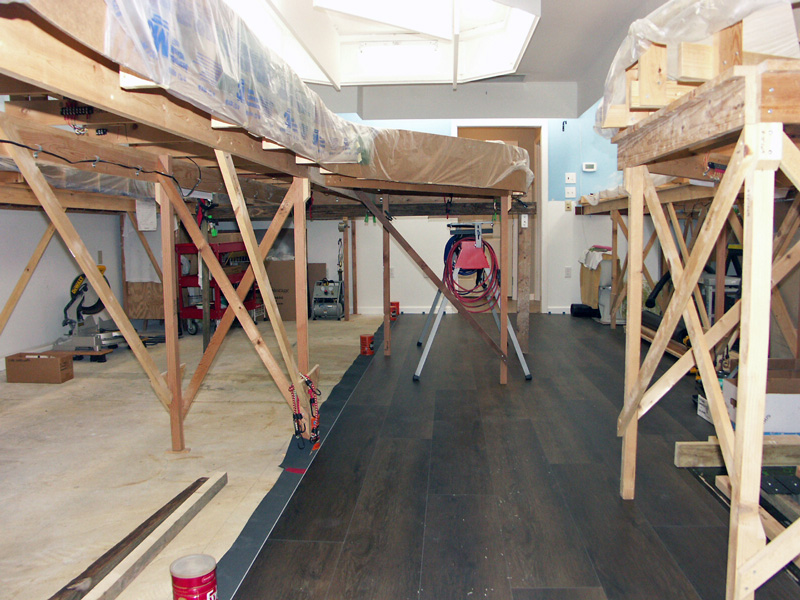
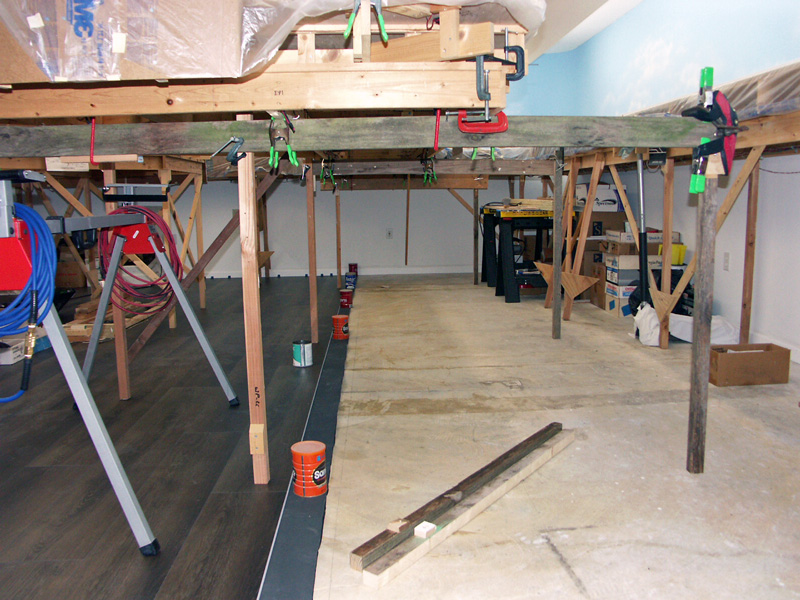
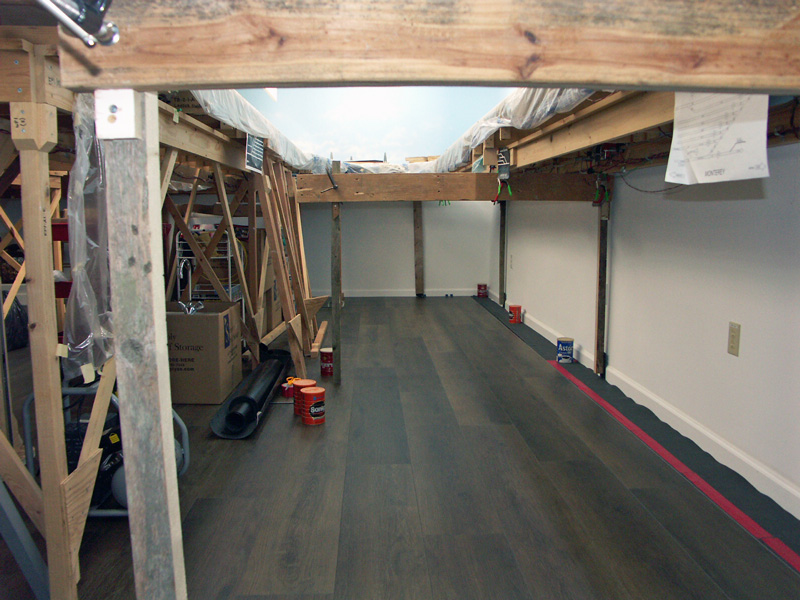
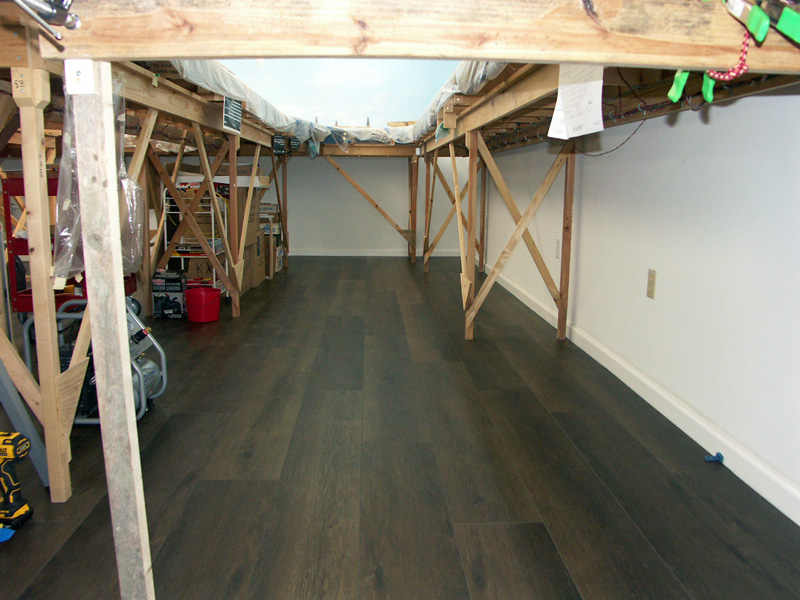
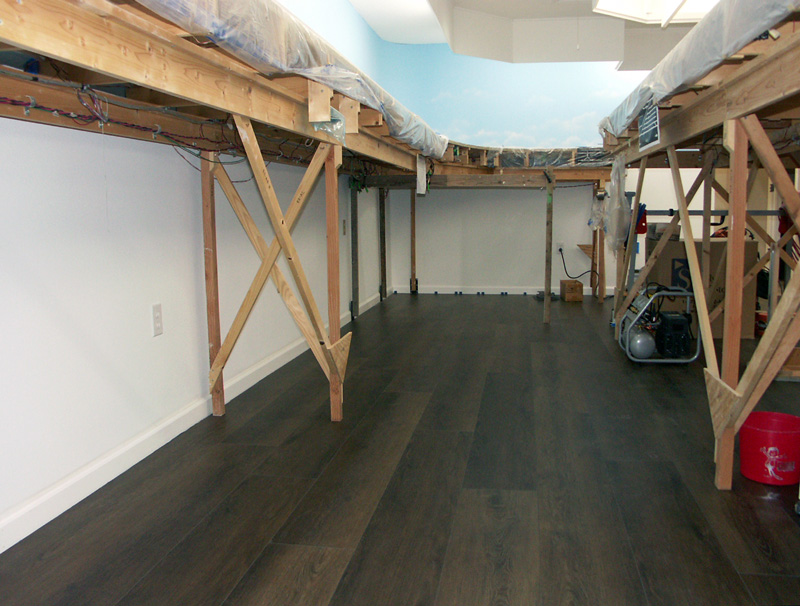
This view shows all of the permanent legs and bracing removed from a layout section along the wall, and the temporary legs and cross member set in place . The spacing is wide enough to allow for the 43″ wide underlayment to be rolled out. The legs against the wall have support plates attached, these explained in the next photograph.The first problem I had to overcome was how to support the layout at the wall side. Obviously I couldn’t have a leg where the flooring had to be laid. I also noted that the flooring requires a 1/4″ gap from the baseboard for expansion purposes. I pondered and prayed about this for some time, and this solution came to me. Those black steel plates are 3/16″ thick and they’re screwed to the wooden legs allowing the leg to be a couple inches off of the floor. With the plate against the baseboard, I’m able to lay the flooring and allow for my 1/4″ gap. The solution worked perfectly!I’ve laid four rows of LVT planks down, and I’ve started reinstalling the permanent legs and bracing. I’m holding off installing the bracing along the wall side to make installing the quarter round molding against the baseboard a bit easier. That molding will cover the expansion gap. When complete, I’ll add the remaining bracing.Here I’ve installed temporary supports across the aisle between benchwork sections, and extending under the edge of one of the two peninsulas of the layout. I’ll get five rows of planks down in this setting.I’ve gone to the other end of the room for this view. Here the planks have been laid completely beneath that first peninsula and are already up to the edge of the second peninsula. In the foreground the first temporary supports have been installed and will take things to the center of another aisle.And now I’m back at the rear of the room looking at the same area as the previous view.As the flooring advances, it’s necessary to keep relocating the temporary supports so that the next roll of underlayment can be rolled out. I’m ready in this view to do just that.We’re jumping nearly to the end here. The second peninsula at left is complete, and all the permanent supports are back in place. The final set of temporary supports span all the way across the aisle, beneath the benchwork and up to the wall. Note that only one row of planks remains to be installed.The last row of planks is down, and the flooring is done! I’ve reinstalled several permanent supports, and have a few more to go (one right in front of me).Going to the opposite end of the room again, here’s the view of the completed flooring. The temporary supports will soon be replaced by the permanent ones. As seen, much of the cross bracing hasn’t been installed to make it easier to access the wall for the installation of the quarter round molding that will overlap the edges of the new floor. When that’s completed, I’ll reinstall the remainder of the L-girder support bracing.
As you have probably imagined, yes, this was a massive undertaking. Over six weeks have been consumed doing this work (working 4-5 days each week). By far, most of the work was building up the temporary supports, removing the permanent supports, then reversing that after the flooring was down. I estimate that only about 20% of the time spent was actually installing the floor.
But I’m pretty pleased with the result, and hope I get many years of good service from this floor.