LCRR Avatar

About Jack Shall

I've been a model railroader and railfan for well over 60 years now. My interests lie in the steam era and the early diesel era. My modeling has been in HO, but I do have a closet interest in Fn3 :-) It's been a number of years since I've done any layout construction, and the new Louisiana Central pike under construction is by far my most ambitious effort. Follow along with me on this new adventure of the Louisiana Central.

Clyde F. “Bill” Williams

I would suspect that by now, most of you reading this blog have received word of Bill’s passing. It seems like only yesterday we lost Shawn Levy, and now this.

I am still in a state of shock. Even though in the past couple decades I only saw Bill roughly every six weeks, I considered him one of my best friends. Bill and I met years ago when he and I were both members of the Crescent City Model Railroad Club in New Orleans. At that time we were operating at Lou Schultz’s place in Lakeview, on the layout located up in the attic.

Bill and I have always kept up a spirited banter, though it’s always been in the spirit of friendship. I can’t imagine going to operating sessions now and not seeing and hearing him.

Bill had a lot of eccentricities, but I wouldn’t change a single one because that is what made Bill such an interesting character. I’ll miss him dearly.

Another one of the truly good guys is gone…

R.I.P. Bill

-Jack

Lenz Equipment – SOLD

I’ve got some surplus Lenz DCC equipment that I’ve decided to sell.  I could use the cash for some of the other things that I need for the new railroad.  For sale is an LZ100 Command Station and an LV101 Power Station (booster).


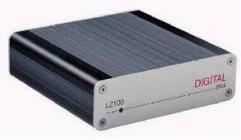
Photo of Lenz LZ100 Command Station This LZ100 Command Station has been upgraded to version 3.6, which is the current Lenz software.  It has all the features of the current Lenz product except Railcom.
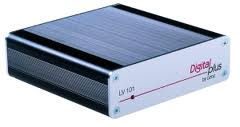


Photo of Lenz LV101 Power Station (booster)The LV101 Power Station (booster) is fully opto-isolated and produces 4-5 amps of power, depending on the power supply voltage.


These items are in absolutely perfect condition…no scratches or dents, they have all the connection plugs, and are in the original box.  They have very little time on them as I only used them for testing locomotives on a test track after decoder installs. The only thing you have to add for a complete system is a power supply and a throttle. And for those of you wondering, I remain a committed Lenz user…these are merely surplus items.

I’ll let the pair go for $199.00 (plus shipping if not local).  If you’re hunting for an inexpensive full-featured DCC system, don’t let this one get by you!  If interested, just leave a comment and I’ll get back to you via email.  Or you can go to the Louisiana Central website and click the email link on the home page.

-Jack

Blog Conversion Complete

As many of you know by now, I’ve been in the process of converting and re-building this blog for the past week.  The original blog was a “canned” application offered by my web hosting site.  It was limited in options, wasn’t powered by the current version of WordPress, and I found out that I couldn’t even back up the site!

Well this last revelation caught me by surprise.  So the solution was to build an entirely new blog by establishing my own database and using the full and current version of WordPress.  It was a lot of work.  The only thing I could pull off the old site were the posts and comments themselves.  Everything else, including the user database, had to be built from scratch.  But what you see here is the result.  I hope y’all are pleased with what you see.

Thanks to those who helped me debug and test things out.  And I apologize for the inconvenience caused to the registered users (by having to re-establish their profile).

Now, let’s get back to railroading!

-Jack

The First Anniversary

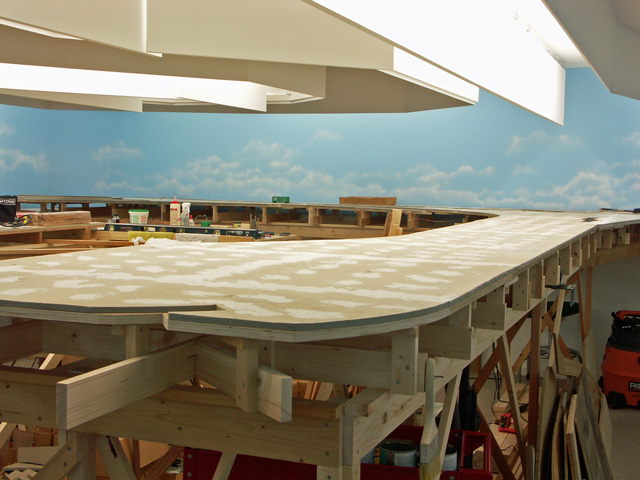
This week marks the first anniversary since the start of my layout construction.  On July 10th of 2012 I completed the backdrop sky and cloud painting, and on July 15th I installed the first section of L-girder benchwork.  This past weekend I stood back and surveyed the state of this 645 square foot layout and pondered the progress.

The entire basic structure for the benchwork was completed.  All of the staging roadbed and structure is complete, along with that of Willis (Willis is the long area to the right of the trackplan, and is where the Louisiana Central and the Illinois Central railroads enter the visible portion of the layout from staging).

The staging track has been laid and the Illinois Central visible trackage is about 70% complete.  The Louisiana Central track from staging has reached the crossing with the IC and will soon be entering the LC’s Willis yard.

The two electrical track buses for this area are in, the track feeders have been installed and the DCC system is complete for these areas.

Much of the sub-roadbed for the Willis yard (located on one of the peninsulas), and the heavy industrial area at Monterey, has been cut out (but not yet installed).

All-in-all, not too bad for a years worth of weekends.

But at the same time it is a bit discouraging to think that this is all that has been accomplished over the course of a year.  I’d estimate that I’m only about 20% done with sub-roadbed and about 13% with track.  That means I have a loooong way to go!

But one bright realization is becoming apparent.  The longer I work at this thing, the less time it takes to do many of the tasks as I begin to hone in on the best way (for me) to do things.

My goal for this next year is to get the entire mainline installed and operational.  A bit ambitious you say?

No hill for a stepper!

-Jack

Disclaimer:  Even with the completed mainline, I will only be at 43% of the total trackage.

Ready for Track

I’ve had limited time to work on the layout the last couple weekends, but did manage to complete the IC mainline roadbed through Willis and around to the east staging track.  The Louisiana Central roadbed coming out of staging and then crossing the IC main is also complete.  I’ve created tapers from the roadbed down to the base Homasote layer (sub-roadbed) where needed for the IC passing siding and the interchange track to the LC.  And I also managed to do a whole bunch of little nitty tasks to finish off areas that were at about 98%.  All-in-all, not too bad for the time I had available.

This weekend I have to start putting track down.  I’ve always spiked down my track in the past and had good results with doing that.  However over these past several years I’ve been reading about folks simply gluing their track down using caulk.  Even Andy Sperandeo seems to have adapted this method.  So (with a somewhat jaded attitude) I decided to give it a try several weeks ago.  I happened to have a partial tube of Dap Adhesive Tub and Tile caulk on hand, so I laid a test section of track down using it.  I was pleased with the result.  So I laid the IC track coming out of staging onto the visible portion of the layout using the caulk.  Again, success.  I think I’ll continue to use the caulk for at least a few more sections to build further confidence in the method before declaring it my new standard, but I’m optimistic about the method now.

I’m getting perilously close to running out of plywood and other materials at this point, so another trip to the lumber yard is in order.  I don’t want to hold up progress on the railroad for lack of materials.

I’ll be seeing many of you folks this Saturday at Lou’s.  Until then, happy railroading!

-Jack

A Surprise from Testors

I was somewhat distressed to read the Testor Corporation announcement a few weeks ago regarding the impending demise of Floquil paint.  In fact, they are discontinuing not only the Floquil line, but also the PollyScale and Pactra lines of paint.  I don’t use the latter brands, but Floquil has been my mainstay paint since back in the 60s.

Floquil has undergone “renovation” at least twice since it was brought into the Testors fold, primarily changing the solvent in the paint to something less volatile and smelly.  I haven’t used the latest formulation, but have read that, while still good, it isn’t quite the same as the old Floquil.

Nevertheless, in my paranoia about having to switch to (probably) an acrylic type of paint (which I’ve never had any particular success with), I decided to stock up with enough Floquil to last me for at least a few years.  Fortunately, MicroMark recently ran a sale with their final price being about 30% off the (ridiculous) retail price.  I ordered 28 different colors, getting multiple bottles of my favorites, to hopefully last me a while.

R.I.P. Floquil.

I’ve done a bit more on the layout since my post a few weeks ago, finishing up those tasks last mentioned.  One of the things I’ve noticed about the Homasote now available is the inconsistency of its thickness.  This is most noticeable (and problematic) when butting sheets against each other.  I’ve tried sanding the high side to match the lower edge, but with limited success.  I’ve had better results using drywall compound to build up the low side.  It’s easy, but time consuming because it generally requires 2-4 applications to do a nice job of feathering the two surfaces into something roughly even.  I’ve done a bunch of that where track crosses the boundaries.  I’ve also roughly filled the seams in where there will be no track.

I prefer yellow wood glue for attaching my Homasote to the plywood base.  At wide panels, I use drywall screws to hold the Homasote to the plywood while the glue dries.  Afterward, I remove the screws for re-use elsewhere.  I back-filled all the holes created to date with the mud so I wouldn’t have scenery materials being swallowed up later by those holes.

I’ve started laying more of the raised roadbed for the mainline, and now have the tracks from the west staging yard actually entering the visible portion of the layout.

This weekend I plan to lay more roadbed and perhaps more track.  Stay tuned for further news.

-Jack

Operations to Resume on the C&O

Operations will resume on Lou Schultz’s C&O Railroad next month after a long embargo.  As you may recall, back in (about) February Lou had some health issues to deal with and that led to a temporary suspension of operating and work sessions on his layout.  Lou’s doing better now and for several weeks work crews have been feverishly working on the layout in an attempt to correct some bugs and other problems.  The next operating session is scheduled for June 22nd, and I’m looking forward to seeing the crew again.

This session will be in 1951 which means we’ll have a mix of steam and diesels running.  I really love seeing those Alleghenies running down the mainline, but have to confess that I’d much rather operate a lash-up of diesels because they simply operate better on Lou’s layout.

Photo of C&O Railway 2-6-6-6 Allegheny Locomotive

When the time moves up to 1955 in sessions later this summer, I’ll be bringing my trusty (Atlas/Kato) ALCO RSD-5 to the sessions.  She is equipped with a Tsunami decoder and she runs and sounds great!

I’ve been busy each weekend working on the Louisiana Central.  The sub-roadbed (tabletop) is complete along the entire north wall of the room (that’s the wall on the right side of the track plan).  The Illinois Central sub-roadbed leading into the staging area on the east wall (bottom wall in the plan) is almost complete…just one more “section” to go on to the end to finish that.  While doing that, I’ll probably go ahead and extend that sub-roadbed to the far side of Monterey as this will become the Texas and Pacific hidden staging track at that point (again, check the plan so what I’m saying becomes clear).

The sub-roadbed (and tabletop where applicable) is starting to get “easier” as I learn and find better ways to get the construction done.  I’m lagging on the trackwork itself because of my focus on the supporting structure, but that’s okay because trains won’t roll until ALL of it is done.

As usual, comments are welcome.

-Jack

Progress thru Willis

I thought I’d post a little update on the layout construction.  The staging yard trackage on the (railroad) west end of the layout is complete including wiring.  I’ve been working along the north wall of the train room these last several weeks (the area along the right side of the layout plan).  This area is the City of Willis and will have a business district along the wall (those buildings will conceal some of the hidden Louisiana Central staging trackage).  The Illinois Central also makes it’s entry into the layout here with the mainline passing through, along with a short passing siding and the interchange spur with the Louisiana Central.  I’m using sheets of plywood topped with Homasote along this wall and most of it has been installed.  I’ve installed some of the raised roadbed coming out of the IC staging yard and through the town.  I’ve one more odd-shaped piece of tabletop to install before completing that.  From there, the IC track will disappear behind an industry building and head into the hidden staging at the east end of the line.

I’ve also starting laying the tabletop sub-roadbed into the Willis yard of the Louisiana Central.  This is the peninsula coming off the benchwork along that aforementioned wall.  I’ll probably go ahead and put in the tabletop for the entire Willis yard now so that I can start working with that area.

Generally, in yard and town areas I’ll be using the plywood/Homasote tabletop surface.  In mainline areas between towns, I’ll be using just roadbed wide sub-roadbed.  I still haven’t decided what method I’ll use.  I really wanted to use spline sub-roadbed for all these areas, however since I’m usually working alone, it might be easier to simply cut out plywood sub-roadbed and top that with my Homasote roadbed.  Of course that greatly increases the cost (relative to the spline sub-roadbed), what with having to purchase so much plywood, and there is always a huge amount of waste when using this method.  But that method is much easier, I think, for one person to cut and install.

Anyway, things are beginning to take shape.  I’ll probably post a couple more photos on the website in a few weeks.  Most pictures that I post now will be after I actually get the track laid in an area.

If you have any questions about anything, please feel free to comment.

-Jack

Remembering Shawn Levy

I’m sure most of you reading this have heard that Shawn recently passed away after a brief bout with cancer.  I last saw Shawn while he was undergoing diagnosis over at the North Oaks Hospital in Hammond.  I visited with him for a couple hours and although I could see he was exhausted, he was still his usual upbeat self.  In a couple email exchanges after that (the most recent was a week or so before his passing), he had a positive attitude and didn’t even hint that this cancer was a real problem.  He was just being Shawn . . . ever optimistic.

So it was with great surprise that I received the message of his passing.  On the one hand I suppose that I should have seen it as almost inevitable, but yet with Shawn, you just can’t make that assumption as his spirit was contagious.  His loss weighs heavily on me.

For several days after his death I read a dozen or so posts on the LRMRG Yahoo Forum, and I’ve received quite a few emails about this also.  One thing that I repeatedly read was the writer’s claim that Shawn was such a close friend; in fact, many of the writers felt that their friendship with Shawn was perhaps special; closer than those other folks around him.

Then it suddenly hit me.  They were special and close to Shawn, each and every one of them.  That’s because Shawn had a way of making each person he spent time with feel that he considered them a special friend.  He would talk to you one-on-one.  He would spend time with you and listen to your stories and viewpoints.  He would relate to you and always seemed to have something in common with you.  He was a bright, gifted, funny and outgoing individual, but he never portrayed himself as superior.  It was easy to be a close friend to Shawn because he made you feel that he considered you a very close friend.

So as it turns out, everyone was accurate in what they said.

Rest in peace Shawn, my good friend.

-Jack

Control and Operation

Fellow modeler Bill Williams and I have discussed these topics, but I’ve not said much about them with others.  So I thought I would share some of my plans and ideas with the rest of you folks.

The Louisiana Central will be a somewhat laid-back type of operation.  There won’t be a parade of fast-running passenger trains or long freights running up and down the mainline such as Lou Schultz has on his C&O layout.  Rather, our operation will be closer to what you see on the Greenbrier subdivision at Lou’s.  There will be more trains than on the Greenbrier, but the atmosphere will be similar.

In overall length, the LCRR will be about the same as the Greenbrier branch, but there will only be half as many towns (five towns actually modeled), and there will be the Spencer logging operation, which will be much more involved than the Mower operation at Cass on Lou’s pike.

The railroad is designed for a rather small crew, two to -maybe- five folks at best.

I’ll be using a Lenz DCC system for train control and all track switches will be powered by Tortoise switch motors.  The Tortoises will be controlled via toggles located on the fascia (nope, I’m not interested in controlling them with my throttle).

The line will be dark territory; the only signals will be near the Little River bridge.  Here the Spencer Lumber Company has trackage rights on the Louisiana Central for just enough distance to get across the river.  The signals will be tied to the mainline switches at either side of the river where the Spencer line joins and leaves the LC main.

Primary operating authority will be by timetable and train orders.  Actually, we’ll be using a “simplified” version of this, with a minimal amount of paperwork.

I plan to generate traffic with a home-brew software program that I’ve been working on over the years.  The program is based on industries needing cars to move product and will generate waybills for each car at the start of each session.  Each waybill will contain only the information pertinent to the car’s movement for that particular session, so it should be easy using them.

My general philosophy is to keep things relatively simple.  I’m not adverse to computers connected to railroad functions and operations, but don’t feel compelled to use the computer for everything possible.

There is so much more to all this than what I’ve put forth here.  If anyone is interested in more detail than what I’ve written or wants to discuss other aspects, just post a comment and I’ll be glad to expand on it.

-Jack

“How do I comment on a post?”

This is a question I’ve been asked twice in the past week.  And I concede that WordPress (the software that this blog uses) is not particularly intuitive in that regard.

If you wish to comment on a post, click the Comment word at the bottom of the post.  IMHO this is why it isn’t intuitive.  At times the “button” will say No Comments, and at other times it’ll be something like 1 Comment or 2 Comments (or however many comments exist for that post).

Click it and you’ll come to the log in link, or if there are already some comments, go to the bottom and you’ll see the prompt to the log in link there.  Once you get logged in, you can comment to your hearts content.  Also, once logged in, you can comment on any other post without additional hassle.

The reason for all this is to help control idiots, spam and bots.  That’s the way the software is set up and I have no control over that.

So, comment away folks.  Really, it took far more time for you to read this than to log in and comment.

-Jack

P.S.  I got a chuckle when I was about to post this and the WordPress spell checker kicked in.  The word that was flagged as misspelled was WordPress.      A Big Grrin

So is the Blog Working?

A few days ago my web hosting site advised me that the blogging software was being updated.  I suppose that is good, however as I examined the various parts of the blog, I noticed that some things had changed, some things had simply disappeared and my preferences were shot to hell.  I think I have most everything put back in order now.

One of the big things that changed was the subscription plug-in.  Most folks know that you must first register with the blog (a one-time thing) to be able to post comments (that’s to help control spammers).  However, subscribing is totally optional.  Subscribing simply means that you’ll receive an email whenever I make a new post to the blog advising you that there is fresh material for you to enjoy, laugh at, sneer at, or swear at (your choice).

It is unclear to me whether the subscription list is intact after this transition.  If you receive a notice of this post and you’re not presently a subscriber (and don’t wish to be), please feel free to unsubscribe -or- drop me a line and I’ll get your name off the list.

Sorry if this inconveniences anyone.

The weekend is nearly here, and I’ve already got my plans in place for the next construction on the layout!

-Jack