LCRR Avatar

About Jack Shall

I've been a model railroader and railfan for well over 60 years now. My interests lie in the steam era and the early diesel era. My modeling has been in HO, but I do have a closet interest in Fn3 :-) It's been a number of years since I've done any layout construction, and the new Louisiana Central pike under construction is by far my most ambitious effort. Follow along with me on this new adventure of the Louisiana Central.

Banning the Belt

Work has picked up on the Louisiana Central these past weeks.  Mainline trackage is going down through Willis yard and will be heading west beyond Willis within a few weeks.  This represents the first trackage of the Louisiana Central beyond the staging areas onto the visible portion of the layout.  In addition, the first industrial spur track on the layout has been installed.

The initial 8 feet of sub-roadbed (tabletop) has been installed in West Monterey.  This will be the area with the large plywood and paper mill complexes that will be the basis for the loads in/empties out scenario.  I’ll be starting with the sub-roadbed at the east end of Monterey soon, building toward the center of the Monterey area.  I’d like to get a little more work done and will then update the website with a few more photos showing the latest progress.

I’ve made the decision to ban my belt sander from the layout.  Three times I’ve tried using it to sand Homasote panel joints to even the ends and the results weren’t very good, requiring a judicious application of drywall mud to even and level out the area afterward.  My most recent effort was trying to sand a taper into the cork roadbed where it butted up to some Homabed roadbed of a lesser thickness.  Despite partially supporting the sander above the work and just applying a few “bumps” of the trigger, I still managed to gouge everything badly.  I’ll try to use the drywall mud again to fill and level the area.  If that doesn’t work, I’ll have to scrape out about 16″ of roadbed and start over.  When will I learn?

We’ve had an unusually cold winter thus far, but the train room has remained warm and cozy through it all.  Having worked through both hot, humid summers and cold winters in the room, I can say the heavy insulation and weatherproofing of the building has paid off.  It’s a pleasure working in it’s comfortable environment.

Again, I extend the invitation to anyone interested in seeing the layout to come by for a visit…just give me a buzz or drop me an email and we’ll set something up.

-Jack

A Great Saturday

Yesterday my friend Ron Findley and I attended the annual banquet of the Mississippi Great Southern Chapter of the NRHS.  The banquet was in Hattiesburg, MS just a few blocks from the Amtrak depot (former Southern Railroad depot).  Hattiesburg enjoys rail service from the Norfolk Southern, Canadian National and the Kansas City Southern railroads, and has a nice railroad heritage.

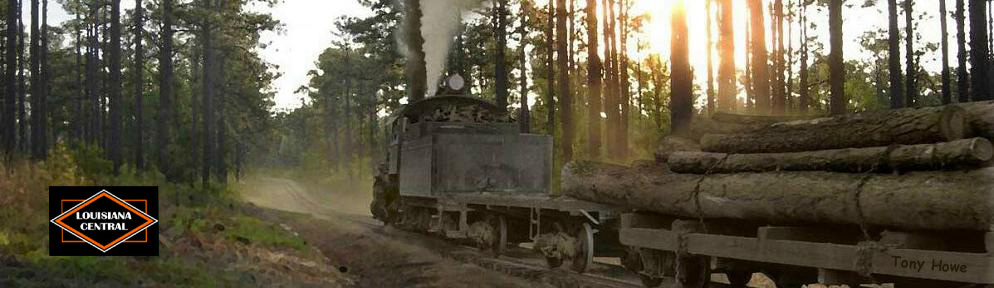
As usual, the event was excellent, with a really nice crowd of folks.  There were a few exhibits and several model railroad vendors peddling their wares.  Present was Tony Howe with a nice selection of his art prints (the piece at the top of this blog is by him), and as usual, I couldn’t resist picking up yet another print.

Also as usual, the lunch was tasty and plentiful; barbeque chicken, pulled pork, baked beans, potato salad and rolls, all chased down by sweet iced tea and dessert – a typical Southern dinner.  I saw and visited with a number of friends, and also a few that I only see annually (special surprise, Mike Palmieri was there…I hadn’t seen him for several years edit: 7 years).  It is splendid seeing friends at these get-togethers!

The real treat after lunch was the presentation by the special guest, Wick Moorman, the chairman and CEO of the Norfolk Southern Railroad.  He gave a brief bio of his career, then spoke about the Heritage Locomotive program, the new Steam program and a bit about the PTC system that NS and the other railroads are in the process of building.  He then opened himself up to a nice question and answer session.  It was all very interesting.  Wick’s speaking was laid back and entertaining, and he has a nice sense of humor.  He is somewhat of a railfan and in one of his side-line anecdotes, he spoke of the time when he got to handle the throttle of the ex-Nickel Plate 765 while traversing the Horseshoe Curve.  His words, “How cool is that?“.

I’m already looking forward to next years banquet.

And this Saturday coming we’ll be attending the banquet of the Southeastern Louisiana Chapter of the NRHS.  Man, just can’t get enough of this stuff!

-Jack

Louis H. Schultz

Yet another dear friend and great model railroader has passed away.  Last night I received word that Lou had left us earlier in the day.  Lou had been in declining health for some time, so his passing probably wasn’t a big surprise to most of us.  But it’s still painful when a good friend does leave.

Back in the early 60s, while I was visiting Hub Hobby Shop in New Orleans, Andy Sperandeo introduced me to Lou.  They revealed to me the existence of the Crescent City Model Railroad Club.  Shortly after that I was invited to visit the CCMRC, which soon led to my joining the club as it’s first junior member.  Lou was one of the founders (maybe the founding member?) of the club back then.  He and the others made this young teenager feel welcome, and I’ve enjoyed railroading with Lou many times over all the years since then.  Even during periods when I lived too far from the New Orleans area to make any sessions, Lou maintained correspondence with me so I always felt a sense of continuity with the state of railroading at his place (and the CCMRC in earlier years).

Lou has always been one to share his various layouts with friends over the years.  I especially enjoyed operating on his present layout in Covington (the “monster” he called it during a discussion we were having one day).

We’ve lost three great friends now within the span of about ten months…kind of unnerving in a sense.  It will be difficult not seeing or talking with Lou (Der Führer as we affectionately referred to him) at his operating sessions, as well as with Bill Williams and Shawn Levy.

Rest in peace Lou, my good friend.

-Jack

Train Day at the Library

This upcoming Saturday, January 18th, will see the second annual Train Day at the Library event over in Baton Rouge.  The main features of the event are the numerous railroading slide presentations.  There will be a number of other displays hosted by a couple local model railroad clubs, the Southeast Louisiana chapter of the NRHS, a few individuals and of course, the Operation Lifesaver display presented by a couple of the railroads in the area.  The event will be at the Jones Creek branch of the library, located at 6222 Jones Creek Road in Baton Rouge.  The show opens at 10:00 am and runs until about 4:00 pm.  Hope to see a few of y’all there!

A bit more progress has ensued on the layout.  I have the infrared LEDs installed and wired up at Monterey (these are the light sources for the optical detectors recently installed).  The final track bus run for the second booster district has been installed and connected, leaving only the third (and final) booster district to wire.  I even got a start on the trackwork at the east end of the Willis yard and hope to continue that next weekend.

As most of you folks reading this know, Lou Schultz is still struggling with his foot issue, along with low oxygen levels.  I miss going over to his place for the operating sessions, and seeing him and the other guys in the group.  Please keep Lou in your prayers for his recovery.

And finally, there is a fellow up in Canada that is building a nice layout which he calls the Port Rowan.  It’s a model of a Canadian National branch line set in the 1050s.  Trevor Marshall is his name and he regularly posts updates with photos, along with other trivia to his blog.  I admire his modeling skills and find his blog entertaining, so I thought I’d pass along the link:  Port Rowan in S Scale .  Give it a look.

-Jack

Years End Reflections

Well, the year is just about gone, Christmas festivities are winding down, and another year is about to roll upon us.  Looking back over the past year, despite loosing much of the past three months of construction time, much has still happened on the Louisiana Central.

The staging trackage is largely finished as well as most of the Illinois Central trackage.  The Louisiana Central main has entered the layout and is ready to enter the Willis yard.  Subroadbed and roadbed have been completed heading though and west out of Willis and up to Maynard, the next town on the line.  Actual track construction will start along that section hopefully soon.

A lot of electrical work has been done below the layout.  About 60 percent of the track buses are complete.  The booster bus is complete.  The optical detection system at the staging behind Monterey is coming along quite nicely, mostly needing the actual panel be built and installed and a few other connections here and there.  The OD system at the other side of the layout (behind Willis and under the logging branch) has about half of its detectors installed.  As mentioned in an earlier post, I’ve settled on my control panels and will start construction of them once I start putting the fascia up.

It was disappointing to lose so much time this fall and early winter due to my health issues.  Even though I’m not through that yet, I’m still able to get some work done even if on a limited basis.

I plan to snap a few pics sometime during the upcoming week which I’ll post on the website under the benchwork construction photos section.  That will update the website to where the layout stands visually.

I hope all of y’all had a Merry Christmas, and I wish you the best for a Great New Year!

-Jack

Forging Ahead

While my medical woes are still ongoing, I manage to get some work done each weekend on the layout.  This past weekend I even got a nice chunk of sub-roadbed installed; the mainline heading west out of Willis yard.  It was satisfying to cut wood again and assemble risers and sub-roadbed.  As is my habit, I topped the plywood sub-roadbed with a layer of Homasote.  Track can now be laid here.

I’ve pretty much finalized the layout for all of the controls panels that I spoke of in the previous post.  I’m going to build a “test” panel and verify that I’m satisfied with the design.  I’m still toying around with the method that I will use to mount the panels to the fascia.  The test panel will be helpful in my experiments with that.

With winter just around the corner, I’ve been giving thought to making a couple field trips.  I’d like to once again travel the planned route of the Louisiana Central to grab a few more photos.  Wayne Robichaux and I have already done this a couple times back when I was planning the layout.  We tentatively laid out the track route on a map, then set out to see how closely we could actually follow that route.  We made tweaks to the route on the map as we traveled, and the plan came out rather well.  You can take a photographic journey of this route on the main website.

The other field trip I’d like to take is to the Southern Forest Heritage Museum up in Long Leaf.  This museum features the former Crowell Long Leaf Lumber Company’s mill operation.  I’ve written about this place in an earlier post, and I love to visit there.  The Spencer Lumber Company on my layout will be loosely based on the Crowell mill.  I don’t plan to model the specific structures at Long Leaf, but seeing and understanding the operation and the flow of the work will aid me in laying out a reasonable mill site on my layout.  I’ve already taken dozens of photos, but want many more.

As always, give me a holler if you’d like to visit or if you have any questions.

-Jack

October Happenings

Well, benchwork and trackage have taken a back seat for the past 6 weeks or so.  I’ve been dealing with some medical issues and am having difficulty doing many (most) tasks required in the layout’s construction.  But in spite of that, I’m still doing things as I can each weekend.

I managed to get about two-thirds of the optical detectors installed prior to my troubles.  In recent weeks I’ve installed a bit of roadbed at the Willis yard and I’ve made very good progress on my control panel designs.  I plan to have approximately 15 control panels around the layout.  Two of them will be for the yards at Monterey and Willis, and the rest will be “mini-panels”, typically 5″ high x 8″-10″ wide.  These smaller panels will be at the various towns along the line and will contain track plan snippets along with switch position indicators (LEDs) and the toggles used to control the Tortoise switch machines.  A few of them will be used for the hidden staging tracks, with the LED track occupancy indicators giving the engineer visual cues as to where his train is.

I’ll be using the tried and true “sandwich” method of panel construction.  I’ll sandwich a print-out of the appropriate plan between a piece of 1/8″ Masonite and some 0.1″ acrylic plastic.  Next drill the holes for the toggles and LEDs, install and wire same, then mount the panel to a box or directly to the fascia.  I used this method on my last layout and was quite pleased with the result.

Over the past month I ordered all the electrical components I’ll be needing from Jameco Electronics, so I’m now ready to build a mock-up of a panel.

I’ve also been acquiring several other items and materials that I’ll be needing so as soon as my health issues are resolved, I can get back to the heavy-duty construction.

We’re also getting into that time of year where all sorts of railroading events take place.  The calendar is already starting to fill out with planned activities.  I hope to see some of you folks at some of these.  The only event that is still missing is a good train show with vendors.  It’s a shame we aren’t on the regular circuit for one of those.

Any questions or comments?  Please post or drop a line…I like hearing from you.

-Jack

Second Time’s the Charm

If you are regularly following this blog, you’ll recall the comedy of errors I committed while installing the wiring for the optical detectors a few weeks ago.  I mentioned in that post that I’d decided to rip everything out and start over.

This past weekend I did finish ripping out the old work and I completed the new and improved wiring installation for the phototransistors in the west staging area.  The results were much better than my original efforts.  Armed with the success, I will now repeat the lessons learned over at the east staging area (which is twice the size).

I also have to put in the illumination for all those PT’s.  I’ll be using infrared (IR) LEDs attached to overhead supports, one over each PT.  I have no specs for the IR LEDs that I have, so I’m going to have to assume their characteristics in order to select the current limiting resistors that will be required.  I’ve never worked with IR stuff before, but I’m told that if you look at an IR LED that is turned on through a digital camera, that you can see the light.  I hope that is so, as I think aiming and adjusting will be much more difficult if I can’t even see what I’m trying to do.

Plenty of other things have occurred over the last couple weeks, though mostly things that don’t really show any progress.  I finished installing all the cable hangers for the main cable runs throughout all of the benchwork (a significant task itself).  I finalized what control panels will be required and their locations.  I’ve even started some preliminary drawings for panel layouts.  I’ve coordinated where other things will be on or under the layout’s fascia once it’s installed, particularly the work shelves and throttle plug-ins.  I’ve got the Willis yard ready for track installation now.  I keep a marker board filled with a running list of tasks that need to be done, and I manage to erase a couple each weekend.

I’ll likely be doing wiring for at least several more weeks before moving back to the roadbed and track.  But I figure it’s good to try keeping the electrical and roadbed/track current with each other.

Most of you that are subscribers to this blog are relatively local, so if you’d like to visit to see things for yourself, you’d be more than welcome.  Just drop me a line, and we’ll make it happen.

-Jack

Electrical Wiring…Arrghhh!

Let me start by stating that I don’t consider myself electrically inept.  In fact, I have formal training in the electronics field.  But sometimes you can let a project get the best of you.

Let me back up a bit.  The Louisiana Central will have four staging areas.  On the west end of the layout, there will be a hidden staging track for an Illinois Central train and another for a Texas and Pacific train.  Over on the east side, there will be four staging tracks, two for the Illinois Central and two for the Louisiana Central.  Since the tracks will be hidden from normal viewing angles, I decided to install an optical detection system which will light up LED indicators on panels showing when a train is nearing the end of a track, and also the clearance point at the entrance to the track.  Simple enough.  In researching the task, I found a fellow up in Canada who offers nice, tidy, little circuit boards that will fill the bill perfectly.  All one has to do is install the phototransistors (hereinafter referred to as P.T.s), the infrared LED light sources, and the LED panel indicators.  Bring all the wiring from these devices to the little circuit boards, hook up a wall-wart power supply, and you’re done.

I have procrastinated for months starting this installation.  It wasn’t because I was intimidated by the wiring, rather it was because I just didn’t feel up to the tedium of the task…running all the wire, making the hundreds of wiring connections, fabricating mounting brackets for the devices, making the panels, etc.  The time to do the task is while the staging track is visible and easily accessible.  I don’t want to install any sub-road in front of the staging until that is complete.  Well, that time has come.  Further progress cannot be made at Monterey (the west end of the line) or to the LC mainline, or the Spencer logging operation between Whitcomb and Maynard until this work is done.  So I resolved myself to installing the system at Monterey this past weekend.

Things started out well enough.  I bored holes at the appropriate locations in the track to receive the P.T.s.  They slipped right in and held firm just by the friction in the hole…great!  I planned to use a recycled 25 pair telephone cable (donated by a friend), so I unrolled the cable and stretched it out along the top of the joists adjacent to the staging tracks.  The only way I could think of to splice into the cable at various points was to go ahead and pull open the outer jacket for much of the length of the cable, a task made easy by the little ripping string provided within the cable bundle.  I figured I would wrap electrical tape around the cable every 8 inches or so to keep things together.  So far, so good.

This is where things started going south.  I decided to use the black/white striped wire along with the white/black striped wire in parallel as the common negative wire (using two wires for less resistance and for a margin of “backup safety”).  I selected those and one other cable and soldered them to the pigtail leads from the first P.T.  To insulate the joint I had planned to use small wire nuts which I thought were made for this light gauge wire.  They didn’t work…wouldn’t bite onto the wire.  So I pulled out my Scotch 33+ electrical tape and proceeded to wrap it around the wire nut and wire to hold it all together.  After using what seemed like a yard of tape, I had the joint secure and insulated.  It looked like something from a Chevy Chase movie.  I did the next couple P.T.s like this and finally decided that this was ridiculous.  So I went searching and found an old stash of heat shrink tubing.  I clipped off an inch, slipped it on my next joint and shrunk it down.  Finally, a decent looking insulated joint!

As I progressed, I found that removing about a foot of the outer jacket at the spot where I wanted to make a connection, then forming a loop in the cable, allowed me to easily grab a wire, clip it and solder it to the P.T. pigtail.  When I got to the 7th P.T. down, I noticed my next mistake.  Despite writing all the wire colors down as I used them, out of the 50 wires available to me, I had managed to use the same color twice for two P.T.s.  Rats!  Since I had severed the twice used cable at the 7th connection, I had to go back to the 1st (where the color had initially been used) and select another wire to re-do that connection.  Plus, the pigtail was now a tad too short, so I had to make an extension for it to reach the bundle.

OK, now I have all the P.T.s connected and I have to anchor the cable down.  I performed that task without incident.  But the joy wasn’t to last long.  As I began inserting the P.T.s into their respective holes, when I got down to number 7, I found that the leads weren’t near long enough for it to reach it’s hole.  While connecting the P.T.s the entire cable had shifted on me without my knowledge since I hadn’t anchored it at the beginning.  Arrghhh!  About then, two other realizations hit me.  One, I had attached the cable to the top of the joists.  But now I realized that once the sub-roadbed for the Monterey yard was installed, those cable mounts would be forever inaccessible.  This means that the cable would automatically be in the way of every future thing that would have to be done under the layout and there would be no way to move it.  Realization number two: I had forgotten to run the cable to the indicator panel location.  Aw, geez!  I put the tools down, killed the lights and retired to the house for the night.

Sunday morning I mulled over the entire fiasco while consuming a couple cups of coffee.  I analyzed all that had gone wrong, what was needed to correct the mistakes and what course of action I should take.  I finally decided that the only reasonable thing to do to fix everything was to simply tear out what I had done and start over from scratch.  Painful, yes.  But not nearly as painful as the potential headaches I would face later if I simply tried to patch what I’d already done.  So armed with the knowledge gained, and a renewed hope of success, I headed back out there later that afternoon (after watching the sweet Saints victory over the Texans).

I started where I should have in the beginning…at the indicator panel, then routed the cable over to the back by the staging tracks.  This time I routed the cable below the joists and supported it by the hangers (simple EMT conduit clamps) screwed to the bottom of each joist (screwed is key to easy shifting or removal of the clamp later if need be).  I taped the opened outer jack at each hanger and also between hangers and that has worked nicely to keep things orderly.  I stopped when I reached the first P.T. location; this is where I’ll pick-up at the next work session.  I plan to attach new longer leads to the P.T.s and simply coil the excess length so I have it if I need it later.  The loops I make in the cable will be directly at joists so they may be supported properly rather than drooping down between the joists as they were initially.  And the cable will be anchored as I go so it will stay in place.

I feel much more confident in this latest approach, as I’m trying to think this through much more thoroughly and apply what I’ve learned from the mistakes I’ve already made.

But just in case, wish me luck!

-Jack

Willis Yard Sub-Roadbed Down

The Willis yard sub-roadbed (the tabletop) is installed and after a bit of surfacing work, it will be ready for track.  The surfacing work is primarily sanding and filling around the joints in the Homasote panels.  As I’ve mentioned in other posts, the Homasote sold today isn’t very consistent in it’s thickness and there is invariably a height mismatch when butting panels up to each other.

Benchwork-Willis_Yard-05But the really good thing about getting this area done is the fact that the actual Louisiana Central mainline can now be laid.  Up to this point, the only LC trackage was that in staging and the lead up to the crossing with the Illinois Central.  This is a new milestone in the construction.  In addition, the sub-roadbed can now proceed west of Willis, heading down the backside of the peninsula and up through Maynard.  This will be some real progress when that is done, and it shouldn’t be that far into the future.

In keeping with my preference for construction first at the wall, then progressing toward the aisle, it is near time for me to start thinking about the Spencer logging operation.  The line going up into the woods (between Maynard and Whitcomb) must be constructed before the LC main (which is near the aisle) between those points can be installed.  These next several months will be quite busy.

Wiring is keeping up nicely.  Four of the seven booster districts have been completed; only track feeders have to be added as additional track is laid.  The other three will be required as the track I just wrote about is installed.

I’m also starting to think about the fascia for the layout edge.  While I don’t plan to install it immediately, I do plan to build sections soon after the trackage in an area is essentially completed.  Since all the controls will be mounted on the fascia, it would be nice to have it installed when I start wiring up all those controls so there is a place to put them.

-Jack

A New Look

As I think you’ve noticed, the home page here has a bit of a new look. The beautiful logging railroad scene is by Tony Howe, and is used here with his gracious permission. I think it really adds life to the blog, and I hope y’all enjoy it as well. Tony is a prolific rail artist and his work can be seen (and purchased) at his web site Tony Howe Railroad Art.  He and his cohort David Price also have a nice railroad historical website, Mississippi Rails.  Be sure to check it out (where you’ll also see the full version of the logging scene pictured above).

And as usual, my progress update: the layout is moving right along. The Willis yard peninsula is about 80% complete and the track will soon start going down there. The DCC bus wiring is complete for all areas constructed and those near completion. Wayne and I made another lumber run earlier in the week, and today we ripped enough joist, riser and cleat material to carry me for quite awhile.

I still haven’t posted any new photos on the web site, the last being taken in late May. But I really should take a break and shoot a few more. A good bit of work has been completed since the last pictures were posted.

Edit: some new pics have been posted on the website.  Click the link in the header to go there.

-Jack

I.C. Mainline Complete

The Illinois Central mainline has been completed.  I.C. trains can now roll from the west staging yard, through Willis, and into the east staging track.  The passing siding at Willis remains under construction.

The aforementioned siding will utilize code 70 rail (the mainline uses code 83), and is partially installed.  The interchange track with the Louisiana Central branches off of the passing siding and therein lies the hold up.  I’m using Shinohara track and switches for the layout.  Most of my code 83 switches are the newer “DCC Friendly” variety.  However Shinohara has never upgraded their code 70 products to this same standard.  The problem is that the two point rails are always at the same electrical potential, therefore it is easy to short the track if a wheel happens to bridge the gap between the stock rail and the open point.  With regular DC powered layouts, this generally doesn’t present much of a problem.  With DCC layouts however, things are a bit different.  Within milliseconds of a short, the electronic circuit breaker will shut down the district it serves.  If you are using sound decoders in your engines, this results in the decoder resetting and “starting over”.  Very irritating, indeed!

To correct this deficiency, one must rebuild the points such that they are isolated from each other.  In addition, you must isolate the frog.  The latter is simple; merely cut gaps around the frog.  However, the former is quite a chore.  I’ve read about a couple methods to perform the necessary modifications, but haven’t actually done one yet.  Since I need this code 70 switch installed in order to complete the I.C. trackage, the day of reckoning has come.

I’m also ready to push the sub-roadbed (tabletop in this instance) into the Louisiana Central’s Willis yard area.  The plywood and Homasote have already been cut out.  I only have to build the risers and then install everything.  Once I get the L.C. mainline through Willis, I’ll be free to install quite a large chunk of the L.C. mainline beyond Willis…all the way to Maynard, the next town down the line.

Since I want the entire Louisiana Central mainline installed over the course of this, the second year of construction, I’d best get cracking!

-Jack