LCRR Progress Report – End of 2025

I don’t think I posted a layout progress report in 2024, though a small amount of work on the layout did occur. The train building itself is fully restored and back in operation. As a reminder, the primary reason for this blog was to post updates on my model railroad layout progress. Well, that fell to the wayside primarily after the Great Flood of 2016. But 2025 has seen some meaningful progress, and especially during the latter part of the year. My most recent project was laying the trackwork for the freight yard in the city of Willis, Mississippi. This represents the end of the modeled portion of the railroad, with the eastbound trackage beyond Willis ending in Bude, Mississippi (a staging yard). Here are a few photos of that endeavor.
The Yard at Willis - 1
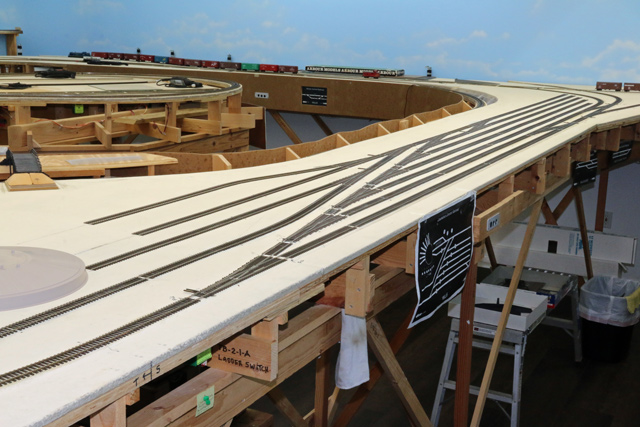
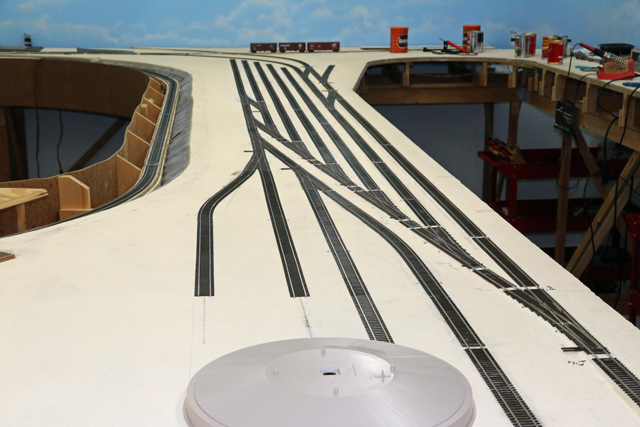
Here’s a birds eye view taken of the Willis yard. The disk in the foreground is the turntable pit (turned upside down), shown here to show its future location. The track approaching the center is the locomotive service track. The track at right ending at the pit is the ready track. Naturally it will curve into the turntable once it is installed. The stub-ended track at far left will be for service (coal, sand, ashes, water and fuel oil). The track at the right (next to the T/T) is for caboose servicing and RIP work. The next photo identifies the yard trackage coming off of the ladder.

All photos of the yard are taken while standing on a stool so that the yard layout is easier to see. The actual yard height is 52″ above the floor. The length of the yard is 14′-2″ measured from the points of the switch in the right foreground to the end of the furthest yard track in the distance.
The Yard at Willis - 2
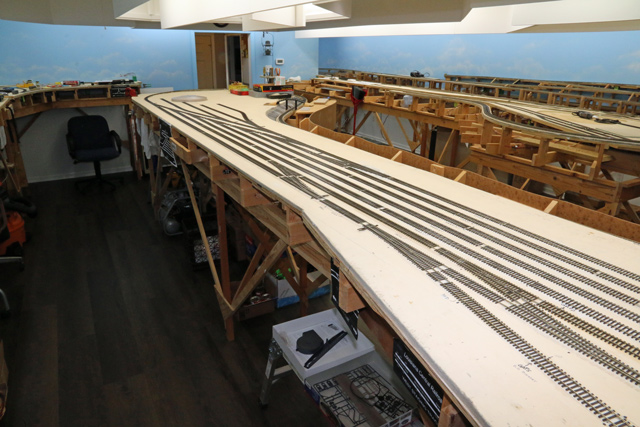
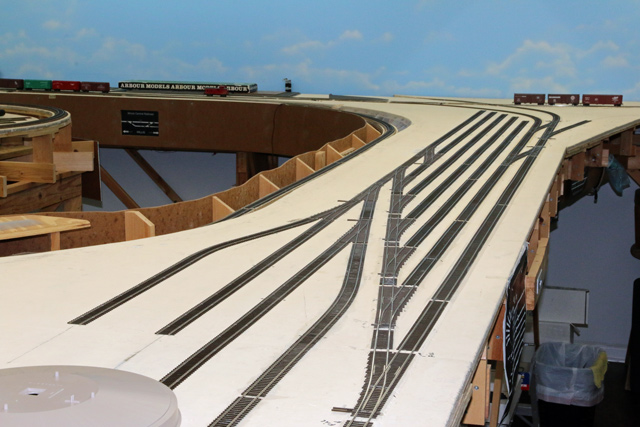
Moving a bit to the right, another bird’s eye view of the Willis yard. In the prior photo, we saw the service tracks. Here, the mainline is the track at far right. The tracks coming off the ladder are (right to left) the passing siding, the yard tracks 1-4, and the house track. The cross-over at the far end of the passing siding will allow a run-around of the longest planned train. The extension of the passing track beyond the cross-over is the interchange track to the I.C.R.R. (the cars in the distance are on the I.C. main). Moving down, the next cross-over is to give easy access to the industrial track at the upper far right (only stubbed out for now, but will eventually serve an industrial complex to the right of this view). The short cross-over near the upper end of the ladder is to facilitate running around cabooses to get them back and forth from the caboose service track to the yard.
The Yard at Willis - 3
And moving to the right even further, this view yields a slightly less compressed view of the yard. The yard control panel will go where the paper mock-up is hanging. The Louisiana Central mainline is heading east and is seen curving just before those boxcars where it crosses the Illinois Central. It then continues down grade curving into hidden staging trackage behind a row of city buildings (yet to come).
The Yard at Willis - 4
Here’s a birds eye view taken from the other end of the yard. The track at bottom left is the lead to the industrial area on the left wall (out of this view). It will curve around behind the photographer, then branch out to several businesses and industries.

There’s still much to do to get the yard operational. All track switches will be powered by Tortoise motors, and those need to be installed. While every length of track and all the switches have power feeds soldered to the rail bottoms, those feeders need to be connected to the power bus. And finally, the control panel needs to be constructed and installed. Lots to do, but it will happen!

Well, that’s it for now. I’ll post more updates next year as the work takes place. In the meantime, I’ll keep posting images of real railroading that I’ve taken a fancy to. 🙂

I hope all of you have a Blessed Christmas, and a Happy New Year!

-Jack
The Little Rebel

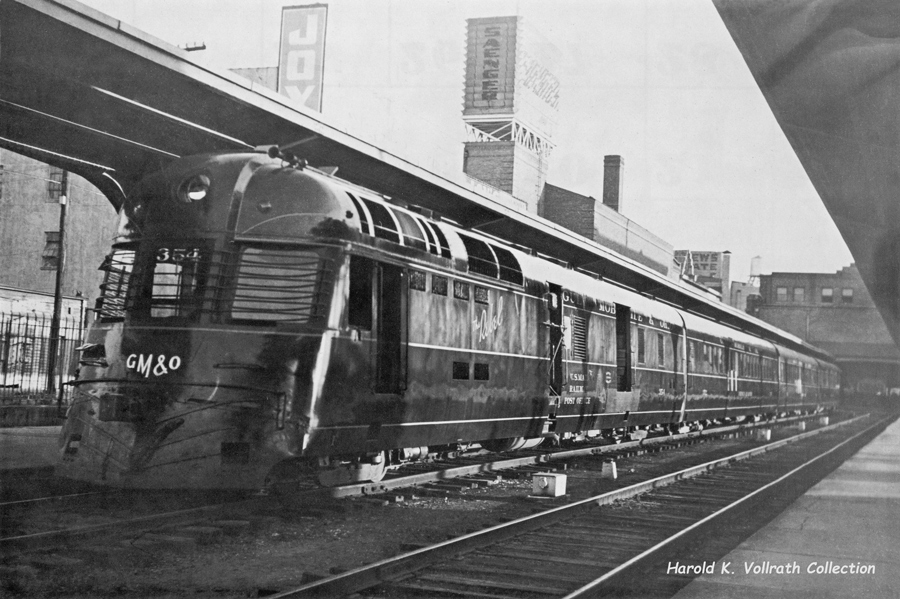
For this first posting in the month of December, I’m featuring a photograph from the 1986 calendar published by the Louisiana State Railroad Museum, it being for their month of December. The caption for the image follows below.

“It is May, 1947, and the GM&O’s “Little” Rebel is ready for her trip north from the Southern Railway’s New Orleans, Louisiana, Basin Street Station. When the new Union Passenger Terminal was completed in 1954, the GM&O decided not to follow across town and dropped the New Orleans terminus. (Photo from the collection of Harold K. Vollrath.)”

The GM&O "Little" Rebel

The Rebel was introduced by the Gulf, Mobile and Northern Railroad in 1935, running between New Orleans, Louisiana and Jackson, Tennessee. The two train sets were produced by American Car and Foundry and were powered by a unique “power car” unit consisting of the cab and engine compartment, an RPO compartment and a baggage compartment. It was equipped with a 600 hp, six-cylinder McIntosh & Seymour 531 prime mover and Westinghouse electric transmission components. It hauled both buffet-coach and sleeper-observation cars in different numbers during portions of its route.

By 1940 the GM&N had been merged into what became the Gulf, Mobile and Ohio Railroad. Sometime after that, it upgraded its passenger service with full-sized cars on the St. Louis-Mobile Gulf Coast Rebel, pulled by new Alco DL-109 locomotives. The original Rebel continued in service, but was now commonly known as the “Little Rebel”.

The train shown here is led by power car #354, the third unit received in 1937. By 1947 the train had been repainted from it’s original silver and crimson colors into the GM&O (former Alton Railroad colors) red and maroon with gold trim.

C&T Train Drifting Down a Grade

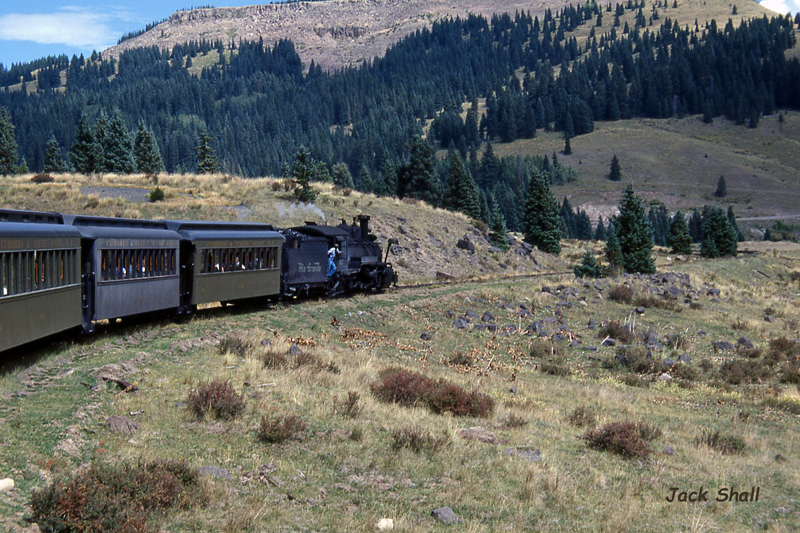
Back in the summer of the year 2000, I took a trip west to Colorado and New Mexico. There, I spent a day on the Cumbres & Toltec Scenic Railroad taking the excursion ride between Chama, New Mexico and Antonito, Colorado. I’d taken this journey some years before, and enjoyed it enough then to repeat the journey again.

Traveling through the mountains, I captured this view of the fireman hanging out of the locomotive’s gangway perhaps getting a breath of fresh, cooler air during his break as the train was drifting down a grade. I liked the mountain peak in the distance, which emphasized the enormity of the terrain compared to the little train.

C&T Train Drifting Down Grade

Another Thanksgiving Season at Cass

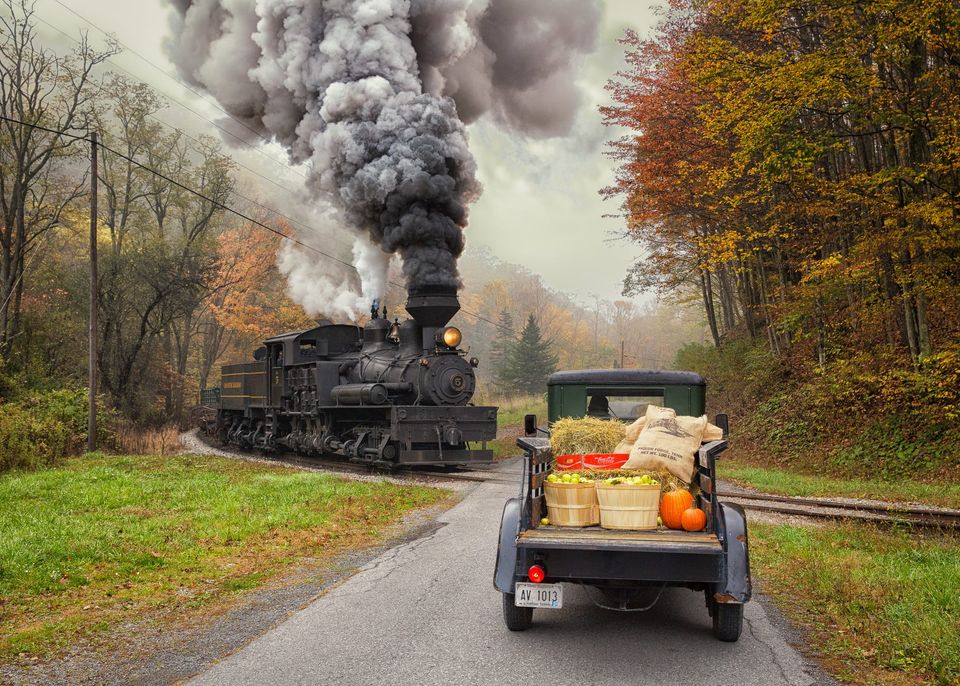
With tomorrow being Thanksgiving day, I remembered this photograph that I’d posted a couple years ago. I had come across this image of a Cass Scenic Railroad train headed up by one of their Shay locomotives. This is in West Virginia and I can’t think of a better railroading scene to represent the fall season and our time of Thanksgiving here in the United States of America. This photograph was taken by Mr. Walter Scriptunas II. The date is unknown to me, but the scene is timeless.

Thanksgiving Season at Cass

The KCS Yard at Vicksburg, MS

In May of 1996 Ron Findley and I spent the day traveling through southern Mississippi to check out the state of railroading up there. And “up there” is in the context that both of us are from south Louisiana, in the lower part of the “boot”. 🙂

Naturally while in Vicksburg, which is located on the Mississippi River, we headed for the yard there. This was a bit over two years since the MidSouth Rail Corporation’s railroad had been absorbed into the Kansas City Southern. There we found a mix of both MidSouth and KCS locomotives parked in the service area.

I had first toured that yard in the early 70s when the facility was under Illinois Central Gulf rule. And the ICG wasn’t the first to utilize the yard in the years before. And over the years it never disappointed in the variety of locomotives, cars and cabooses (the latter in the earlier years). I’m unsure of the yard’s status now in 2025.

KCS Yard at Vicksburg, MS.

The Boneyard

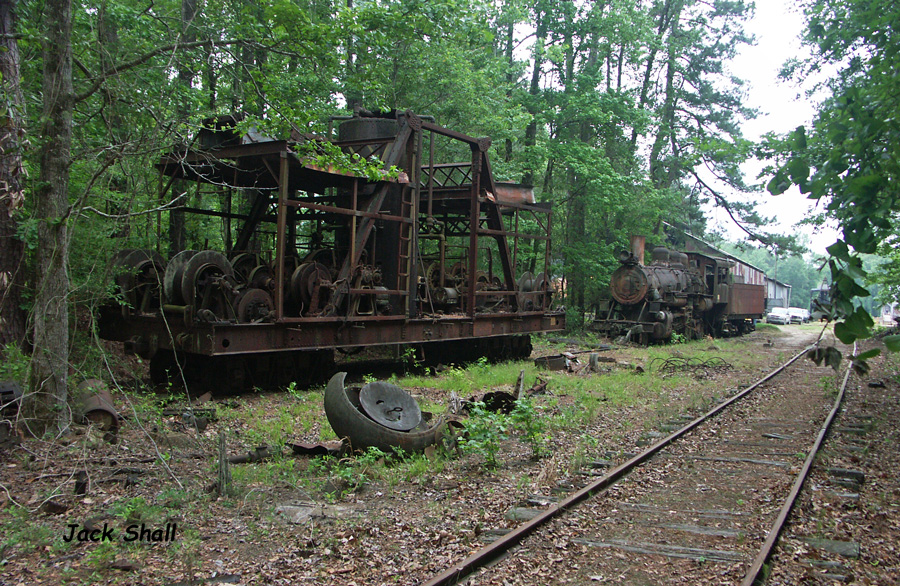
In the spring of last year I posted several photographs taken by the late Ron Findley during our trips to the Southern Forest Heritage Museum up in Long Leaf, Louisiana. Our first trip occurred in March of 1988 when we discovered the former sawmill property. And the first thing we encountered was a “boneyard” filled with steam locomotive debris. It was obviously where locomotives, and perhaps other equipment, were being cut up for scrap. For some reason the scrappers stopped before dismantling a steam locomotive and a Clyde double-ended rehaul skidder. And they had left considerable debris from the process, which was a surprise. Why did they stop and not complete the job, and haul off all of that metal?

I lost the slides I had made during that initial trip as a result of the Great Flood of 2016. Fortunately Ron still had his, and I’ve posted some photographs that Ron had recorded of the #400 steam locomotive and of the Clyde skidder at different times. In April of 2011 Ron and I had gone back to the sawmill (now the SFHM) to see the entire property. But I had forgotten that I had then taken digital images, thinking I was still using the film camera. I recently found the file containing those images. The photograph below is one that I took of both machines together. One can see a few scraps from other locomotives, and these are at the very edge of the boneyard. There is quite a bit more behind me.

SFHM Boneyard

So How Big is a Big Boy?

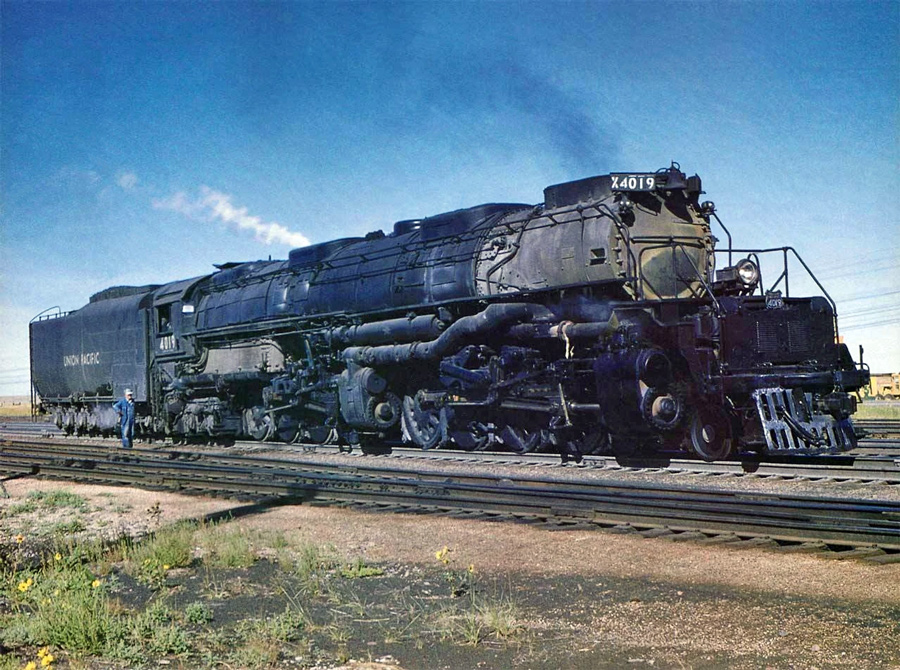
The Union Pacific’s crowning glory was their massive 4-8-8-4 locomotive, known as the Big Boy. Twenty-five in number, they are indeed massive. I’ve been fortunate over the years to see a few of them; the ones on display in St. Louis and in Dallas (the latter now in Frisco). And I was very fortunate to see the restored #4014 a few years ago when she made her trip to New Orleans. I caught her on the move for three days in a row, and it was a sight to behold.

But it’s hard to imagine just how big these machines are when simply looking at a photograph. Well the image below helps with that. And what makes this image different is the crew member (likely the engineer) standing on the ground by the beast. Now you can see how much this locomotive towers over man!

UP Big Boy #4019

Unfortunately, though I’ve seen versions of this photograph many times, I’ve never seen one that credits the photographer. I’ve wondered if it was perhaps a company image which often go without credits.

L&A Steam Locomotive #80

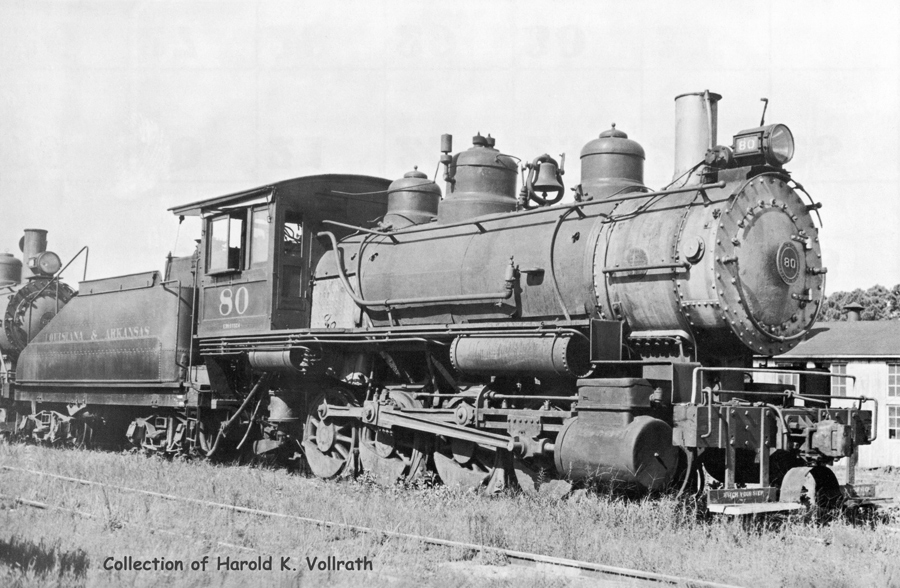
For this first posting in the month of November, I’m featuring a photograph from the 1986 calendar published by the Louisiana State Railroad Museum, it being for their month of November. The caption for the image follows below.

“Baton Rouge, Louisiana and the August heat of 1932 is heavy in the air. A 1906 Baldwin built with slope backed tender, Louisiana & Arkansas #80 was originally built for L&A predecessor Louisiana Railway & Navigation Company. Note the “summerized” engineer’s cab window! (Photo from the collection of Harold K. Vollrath)”

I generally do research on locomotives that I post photographs of. And this is one that I drew a total blank on. I wasn’t able to find a single iota of additional information, or even other photographs of this steamer. It’s obviously an 0-8-0 switcher with a sloped back tender, she appears to be an oil burner, and that’s about it. And I’m curious about that “summerized” cab window that is in the photo’s caption. Even blowing up the image, I can’t figure out what the author means. I’m assuming the window was a three-piece design, with the forward section fixed, the remaining two designed to slide behind the first to give the opening. It appears that one of the slide sections is missing. As for “summerized”, I think the best use for that concocted word would be for the canvas sun shade over the window.

I also suspect that this locomotive is in a dead line. I’m not seeing any signs of grease and oil anywhere on the valve gear and piston rod. Nor any brightness on the driver tires or tender truck wheels.

L&A Steam Locomotive #80

If any reader has more information about this locomotive (and especially about that window :-), then please post a comment.

An EBT Train Preparing for an Excursion

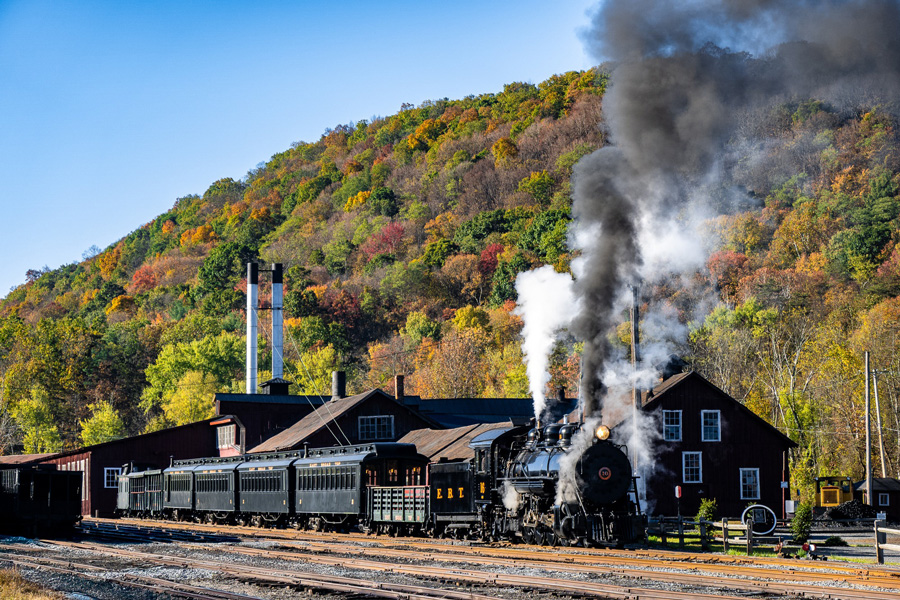
On an early October morning in 2025 an East Broad Top Railroad train is being readied for a Fall Ride excursion. The train is sitting in the shops area of the Rockhill Furnace yard while the engine crew builds a head of steam, and oils around locomotive #16. In the meantime, car knockers inspect the cars making sure all is ready with them. In a few minutes it will roll into the Orbisonia depot just a few hundred yards away, board the passengers, and ride off for an excursion surrounded by the fall colors for all to enjoy.

2025 EBT Fall Ride Excursion

I’ve read about this 3 foot narrow gauge East Broad Top Railroad since back in the ’60s and have long admired this little operation. Located in Pennsylvania, it has existed since 1871, and has an interesting history leading up to its present state. Several years ago the railroad was purchased by a non-profit foundation and regular train service resumed in the summer of 2021. Wikipedia has a nice little article about the railroad and its history, read about it at East Broad Top Railroad and Coal Company

I recently saw this photograph in an EBT posting on Facebook, and thought I’d share it. Unfortunately there was no photo credit . . . if anyone knows the photographer, please let me know so I can give proper credit.

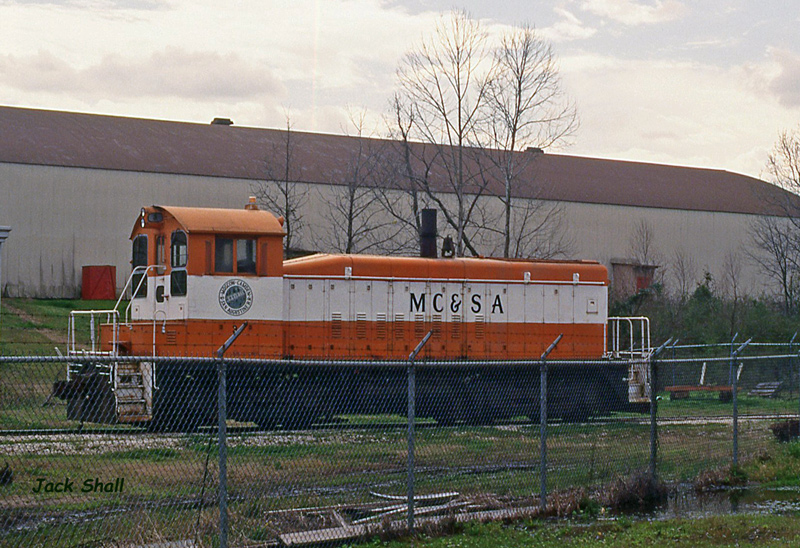
MC&SA Diesel Loco #3

The Moscow, Camden & San Augustine Railroad is a common carrier shortline located in the State of Texas. The line runs from Camden, Texas to an interchange with the Union Pacific 6.9 miles away in Moscow, Texas, the road having never reached the San Augustine in its name. The railroad is now a subsidiary of the Georgia-Pacific Corporation.

I had read about this little railway as a youth back in the early sixties and admired the little 2-6-0 steam locomotive, the #201, that was on the roster at the time. I hoped one day to visit the line, and to witness that little locomotive in operation.

In February of 1998 I finally (partially) got my wish. While on a week-long railfanning expedition with friend Wayne Robichaux, we found ourselves in Camden at the MC&SA. The steam locomotive was not there, having been replaced long ago with an EMD SW900. I recorded this image of the machine at rest adjacent to the mill.

MC&SA Diesel Locomotive #3
Moscow, Camden & San Augustine EMD SW900 #3. Built in April of 1957 for Champion Paper as their #3, she is powered by an 8 cylinder prime mover rated at 900 horsepower. She is still in service today.

As a side note, I had unknowingly gotten my youthful wish of seeing that little 2-6-0 steamer in action. She had been sold in 1970 to the Grisby Foundation, who subsequently resold it to the Eureka Springs & North Arkansas, a tourist line. On a trip up to Arkansas one year, I would witness and ride behind that little Mogul, not realizing at the time that she was the MC&SA #201. 🙂

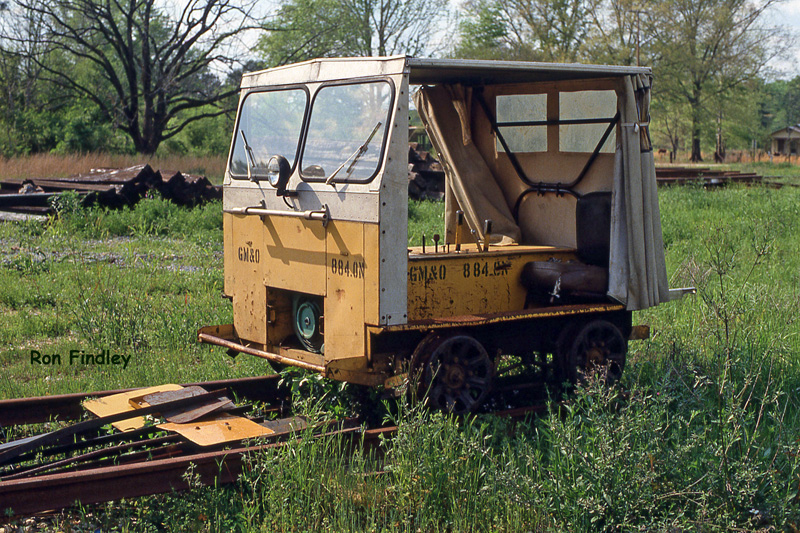
GM&O Motorcar #884.ON

On a sunny Sunday, April 10th of 1988, Ron Findley and I were spending the day trackside, traveling from place to place. We eventually found our way up to Wanilla, Mississippi, where a railroad crossing exists. And there we found parked an old GM&O speeder (a motorcar). It’s probably safe to say that it was unused, but remained in fairly good condition based on our inspection of the car. Ron recorded this view of the machine. Great find on that day!

GM&O Motorcar #884.ON

According to Mike Palmieri, for many years Wanilla was the crossing between the New Orleans-Great Northern / Gulf Mobile & Northern / Gulf Mobile & Ohio running north-to-south between Jackson, Mississippi and Slidell, Louisiana, and the Mississippi Central running east-west between Hattiesburg and Natchez. In 1967 the Mississippi Central became a part of the Illinois Central and five years later the GM&O merged with the IC to form the Illinois Central Gulf, bringing both of the lines through Wanilla under the same ownership. Ron’s interest in Wanilla was because he remembered it as the crossing of the GM&O and the IC, making it an almost sacred place in his eyes! 🙂

Photos Past: An A&LM Steamer

For this first posting in the month of October, I’m featuring a photograph from the 1986 calendar published by the Louisiana State Railroad Museum, it being for their month of October. The caption for the image: “A&LM 4-6-0 #1 with Engineer James W. Smith at the Main Mill Crossing at Huttig, Arkansas, June 1955. Engine retired after last run in May 1958. (Photo from the H. B. Wilson collection.)”. I had posted this photograph just a bit over a year ago, but it’s my favorite image from the aforementioned calendar, so here it is again.

According to the website Mississippi Rails, the Arkansas & Louisiana Missouri Railway has a history going back to 1909. The road was formed initially as the Arkansas, Louisiana & Gulf Railway. In 1915 it was reorganized as the Arkansas & Louisiana Midland Railway. In 1920 it became the Arkansas & Louisiana Missouri Railway, and in 1991 the company was sold and became the Arkansas, Louisiana & Mississippi. It thrives today under the Genesee & Wyoming umbrella.

A&LM #1 4-6-0 Locomotive

From the beginning until the late ’40s the company acquired a roster of about 14 steam locomotives. Their initial locomotive was bought new, but all others were acquired in a very used state. The #1 joined the roster in 1946, and the little ten-wheeler became the last to see operation on the road, her last run being in May of 1958. She was a 1920 product of the Baldwin Locomotive Works, built for the Texas-Mexican Railway as their #1 where she served before being sold to the A&LM.