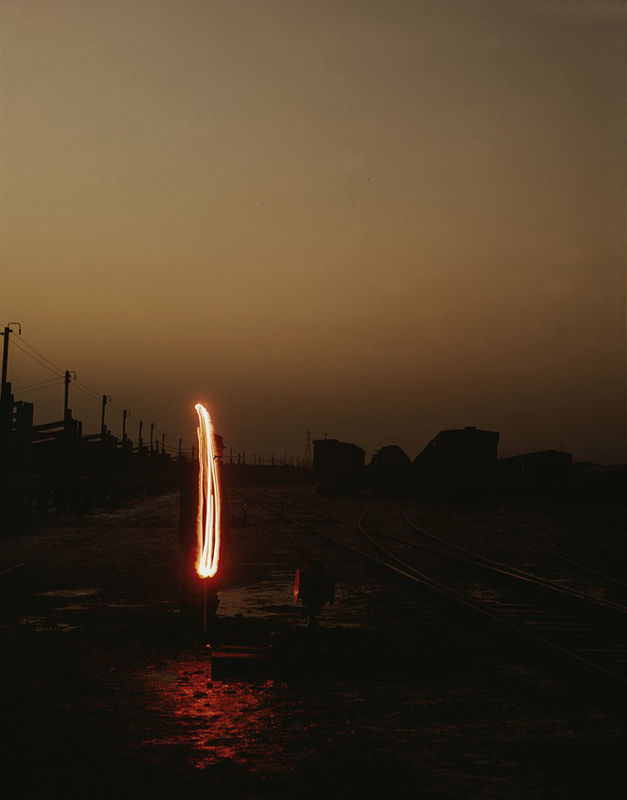
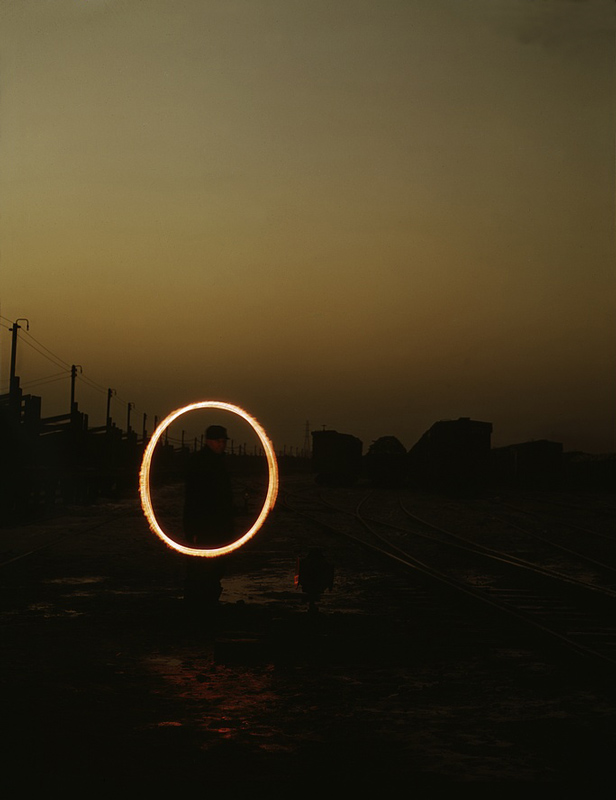
In January of 1943 Jack Delano spent a night in Calumet City, Illinois observing an Indiana Harbor Belt crew at work in the yard. A cooperative crew member demonstrated a few basic signals for Mr. Delano to document with his camera. The switchman is using a fusee (which most non-railroaders would know as a flare). These produce an intense red light, making it highly visible in the dark, especially during rain or snow.
This first signal means Go Ahead (forward) . . . a simple up and down motion, usually done several times. This signal means Back Up . . . a circular motion, usually repeated several times And this signal means Stop(that’ll do in railroad parlance) . . . a back and forth swinging motion repeated several times.
There are several other signals used, but these are the three basic ones used for movement.
While these fusees are very bright and easy to see, it is perhaps more common for the switchman to use a lantern for his signaling, as it will burn for many hours and is more economical. But the fusee can’t be beat when conditions are really bad.
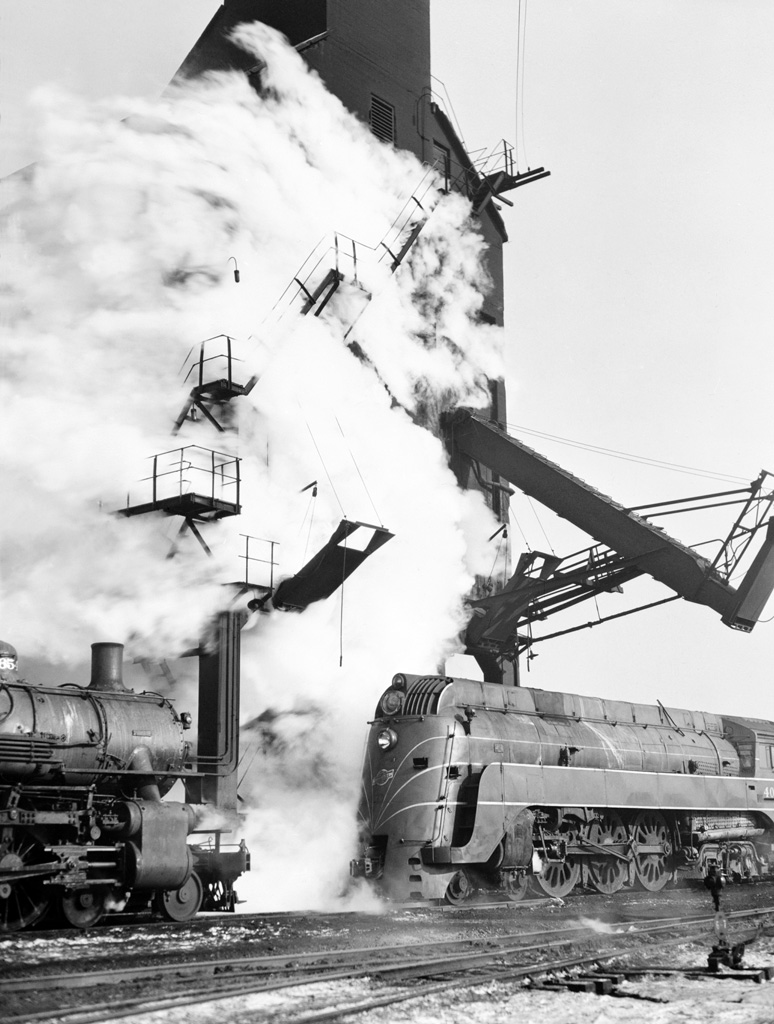
In December of 1942 Jack Delano spent some time down at the Chicago and North Western’s coaling tower in Chicago, Illinois. While there, he captured this image of one of the road’s class E-4 streamlined 4-6-4 “Hudson” locomotives. These steamers, numbered 4001-4009, were ordered from Alco in 1937 to power the C&NW’s famous “400” express passenger trains.
The story is that management decided, even before delivery, that using steam power for their premier trains wasn’t the direction to head. They instead placed an order for diesel-electric locomotives with EMD. Thus the nine E-4s were used to power other trains.
These modern locomotives lived a rather short life, with all retired by 1956. All were eventually scrapped.
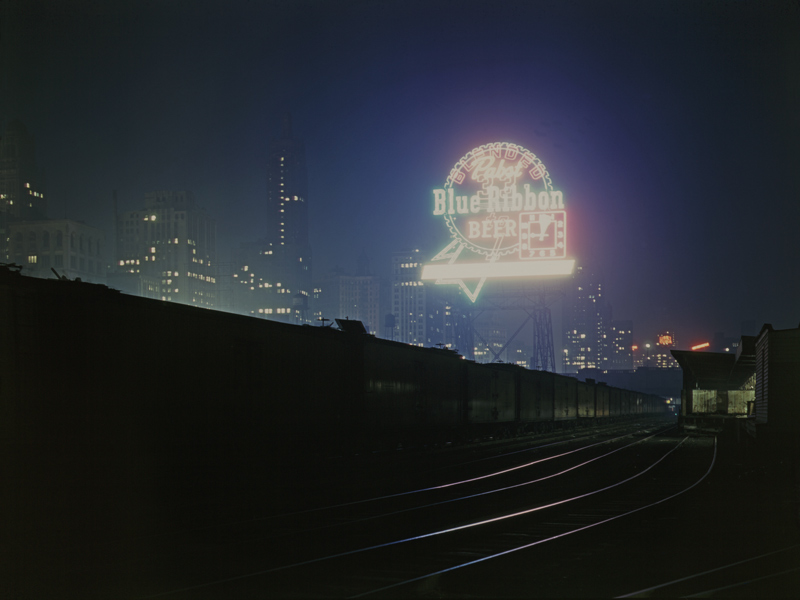
Back in March of this year I posted a Jack Delano image of the the Illinois Central freight depot in Chicago, Illinois. Looming in the background of that photograph is the huge Pabst Blue Ribbon Beer neon sign, complete with a clock. Mr. Delano had also visited that location earlier during the night in April of 1943. And on that night he recorded the sign in all of it’s night time glory, resplendent in all of it’s vibrant colors.
Looking closely below the sign we can make out the image of a string of reefers (refrigerator cars) lurking in the dark shadows of the yard.
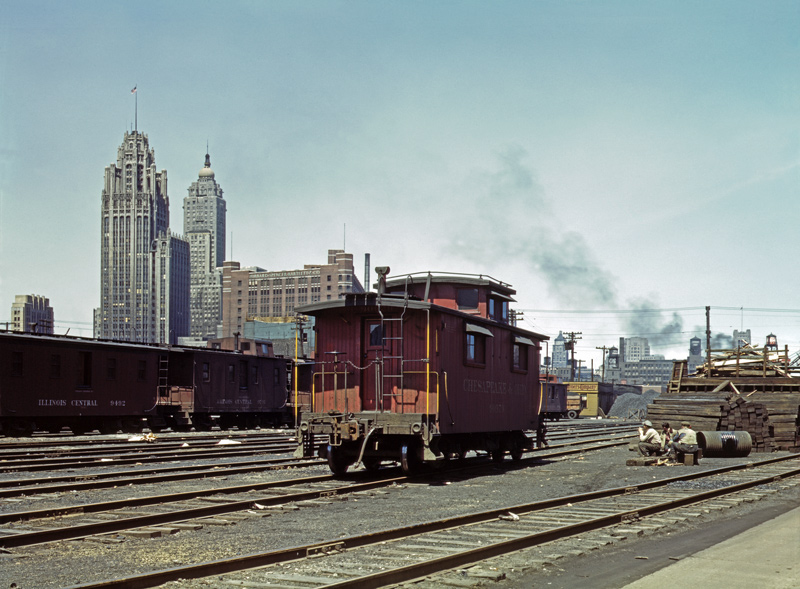
Continuing our tour of the Illinois Central facilities at the South Water Street yard and freight depot in Chicago, we’re at the caboose servicing area. On the far track is a string of Illinois Central side door cabooses (one sans a cupola) waiting their next assignment. But standing out at center is a visiting Chesapeake and Ohio crummy under the watchful eye of a group of workers relaxing near by. The C&O was leasing terminal facilities from the I.C. at the time, hence the explanation for it’s appearance here.
Jack Delano visited the Illinois Central’s locomotive servicing facility near Chicago in November of 1942. He recorded this overview of the sprawling facility while there.
The I.C. was one of the early roads to adapt the new diesel-electric locomotives, and seen at right are one of their TR locomotive sets. These were basically a pair of EMD model NW2 switchers (one without a cab) semi-permanently coupled together, creating what was known as a cow-calf unit. The I.C. purchased three of this example in 1940. The “cow” is the unit with the cab, numbered as 9203A; it’s cabless “calf” (partially hidden behind the water penstock) is numbered as 9203B.
In the background we see a large stable of steamers sitting on the service and ready tracks. It’s interesting to note that while the Illinois Central was an early adapter of the diesel locomotive, it was also one of the last to retire all of it’s steam locomotives, with active steamers on the roster until the early sixties.
We continue today with a photograph taken at another part of a hump yard operation: the pin puller.
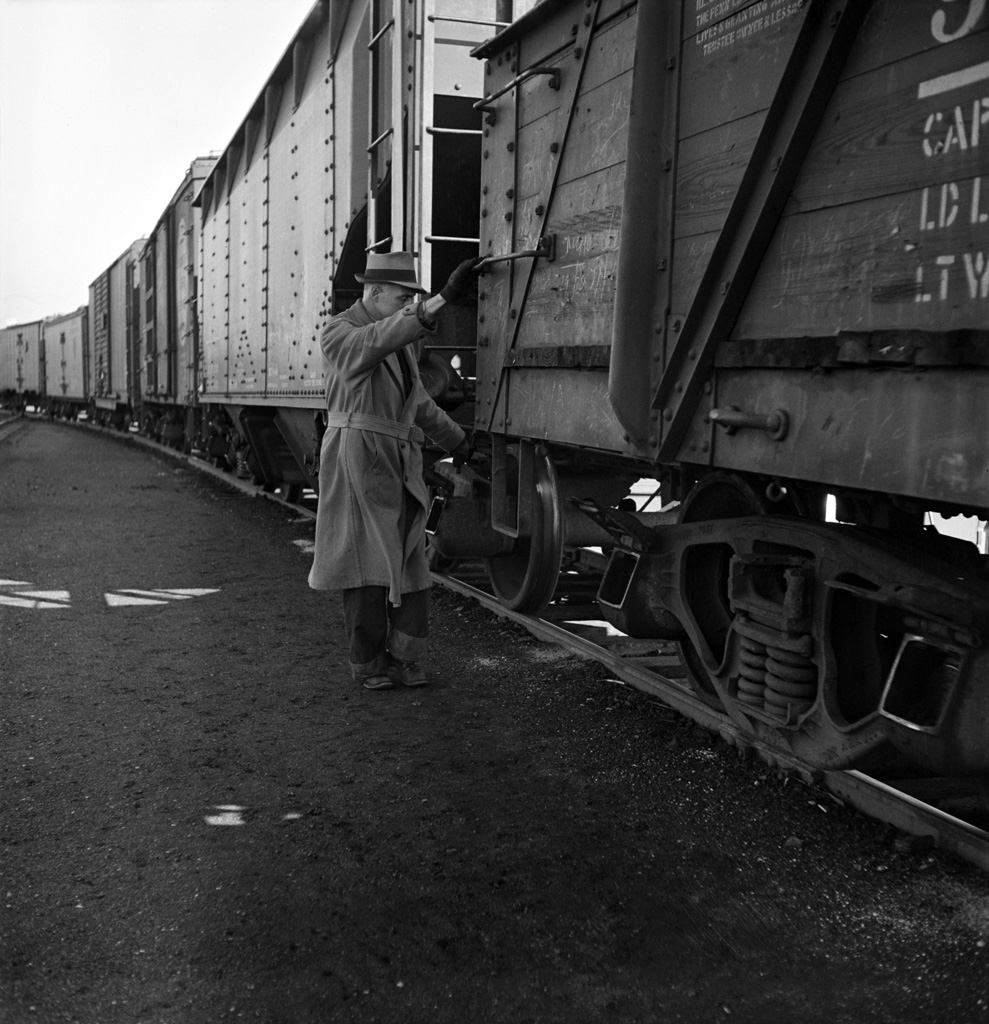
Jack Delano spied this switchman working the crest of the hump in the Illinois Central yard at Chicago, Illinois. It’s a cold day in November of 1942, and the worker is prepared for the day. Don’t let his Fedora fool you into thinking this is management on the hump . . . a look below the overcoat reveals a working man’s dungarees and work shoes. He is preparing to pull the coupler pin on the car just as it crests the hump, allowing for it’s gravity-assisted journey down into the yard beyond.
Sharp eyed readers will notice the open journal boxes on the cars. In this cold weather, workers will open the boxes and squirt some very hot oil into the boxes to aid in the lubrication of the journals in these cold temps. After the car rolls for a short distance spreading the lube, it should easily make it down to it’s destination thanks to this warm-up.
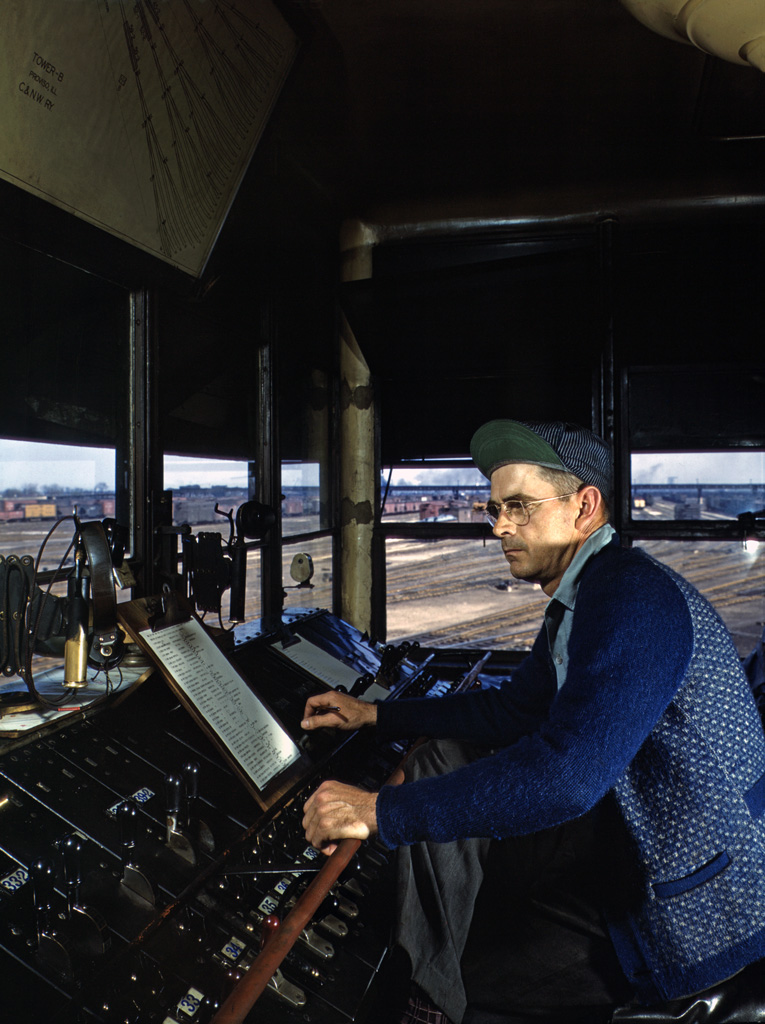
We’re inside the hump yard tower in the Chicago and North Western’s Proviso Yard at Chicago, Illinois. The Towerman, Mr. R.W. Mayberry, is at the controls, and he will line the appropriate switches to direct each car coming down from the hump into it’s assigned track. He’ll also tweak the retarders which will control the car’s speed as required as it descends to it’s final destination. This is state-of-the-art railroading in May of 1943.
As “railfans” and modelers, we often tend to focus on the equipment, and occasionally, the infrastructure of the railroads that we study. One of the things that draws me to the photography of Jack Delano is the way he often included the human element of the railroad. You’ve likely noticed that many (most?) of the images that I’ve posted over these past months contain a railroader doing his or her job.
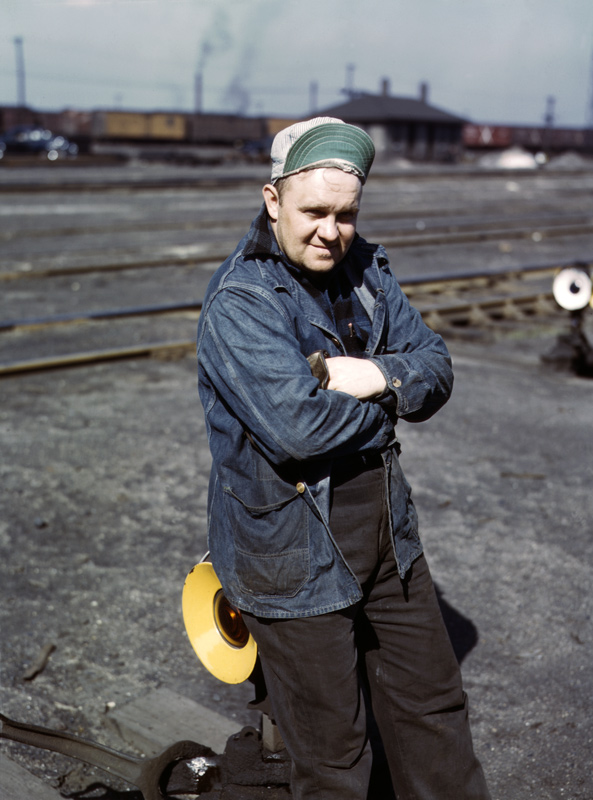
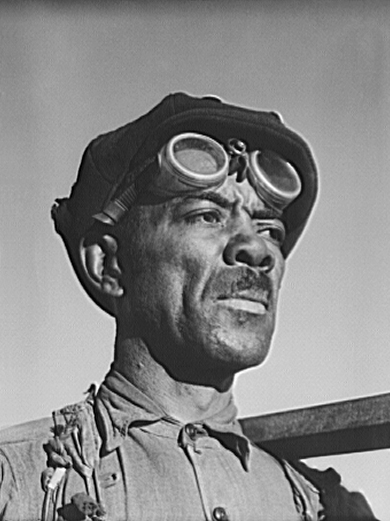
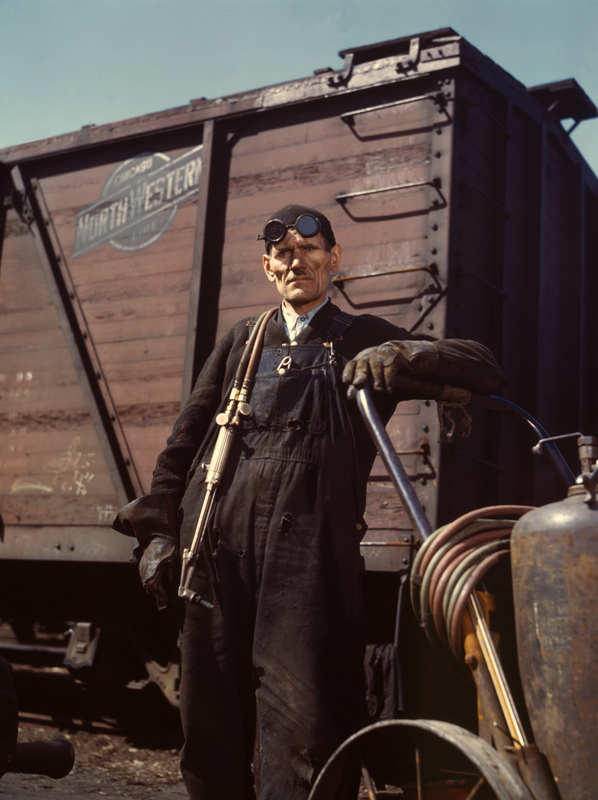
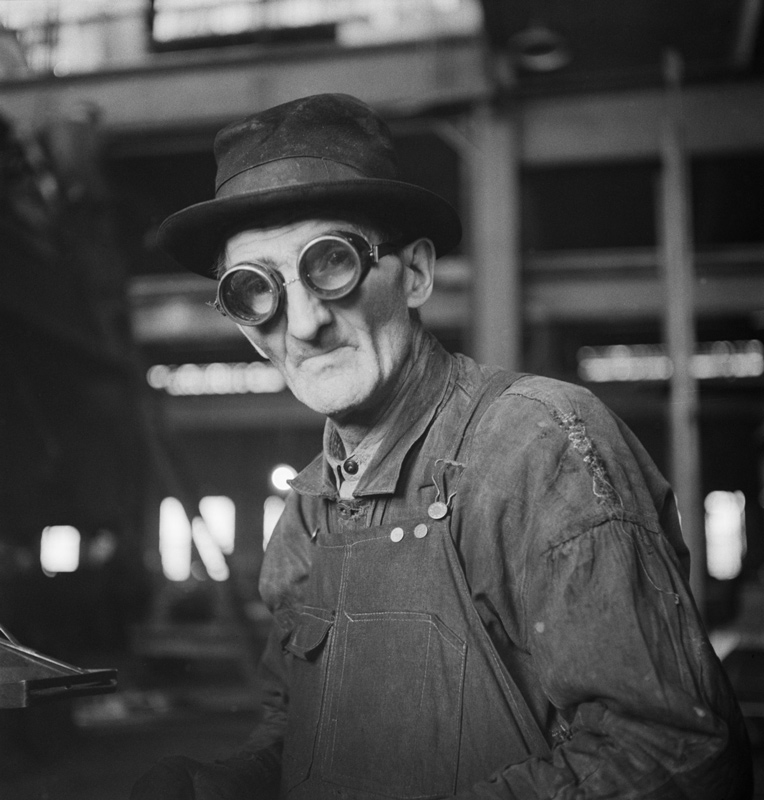
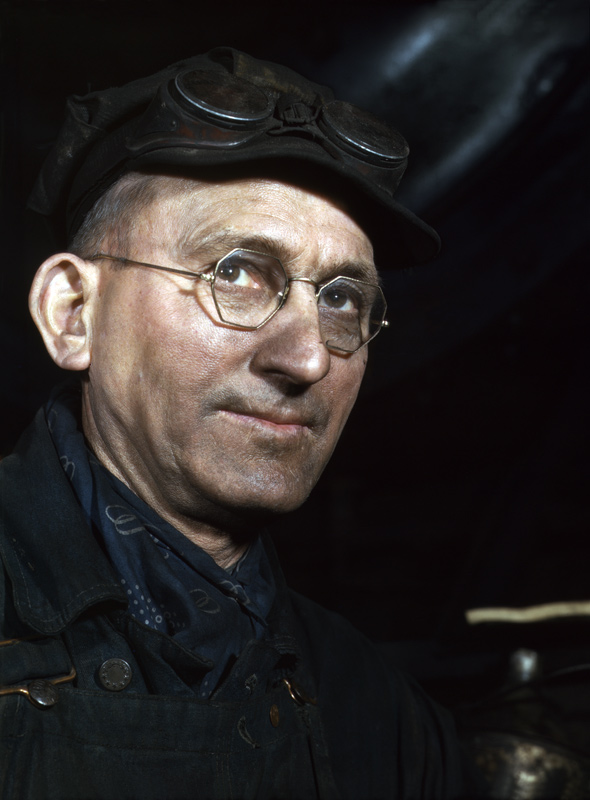
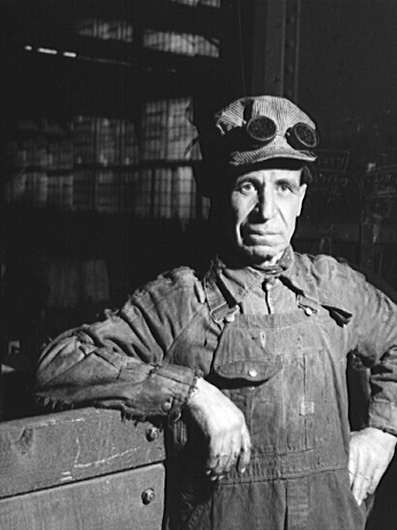
Today I thought I’d focus entirely on those folks. Mr. Delano took the time to take many portraits of the people he saw while documenting the various railroads. Below are a half dozen images representing just a tiny facet of the thousands of railroad employees. I wish it were practical to feature someone from all the various disciplines required to make a railroad function, but that would literally take a volume to do.
Mr. A.S. Gerdee, Switchman at the Proviso yard of the C&NW Railroad, April 1943Mr. Frank Williams, a Carman with the Illinois Central RR, Chicago, Ill, November 1942Mr. Mike Evans, a Welder with the C&NW Railroad, Chicago, Ill., April 1943Unfortunately this gentleman wasn’t identified other than that he was a Shop Worker with the C&NW Railroad, December 1942Mr. James Lynch, a Roundhouse Worker at the C&NW Railroad Proviso Yard in Chicago, December 1942Mr. Joseph Pina, a Boilermaker with the AT&SF Railroad in Albuquerque, New Mexico, March 1943
This post is dedicated to the thousands of workers who contributed to keeping those trains rolling.
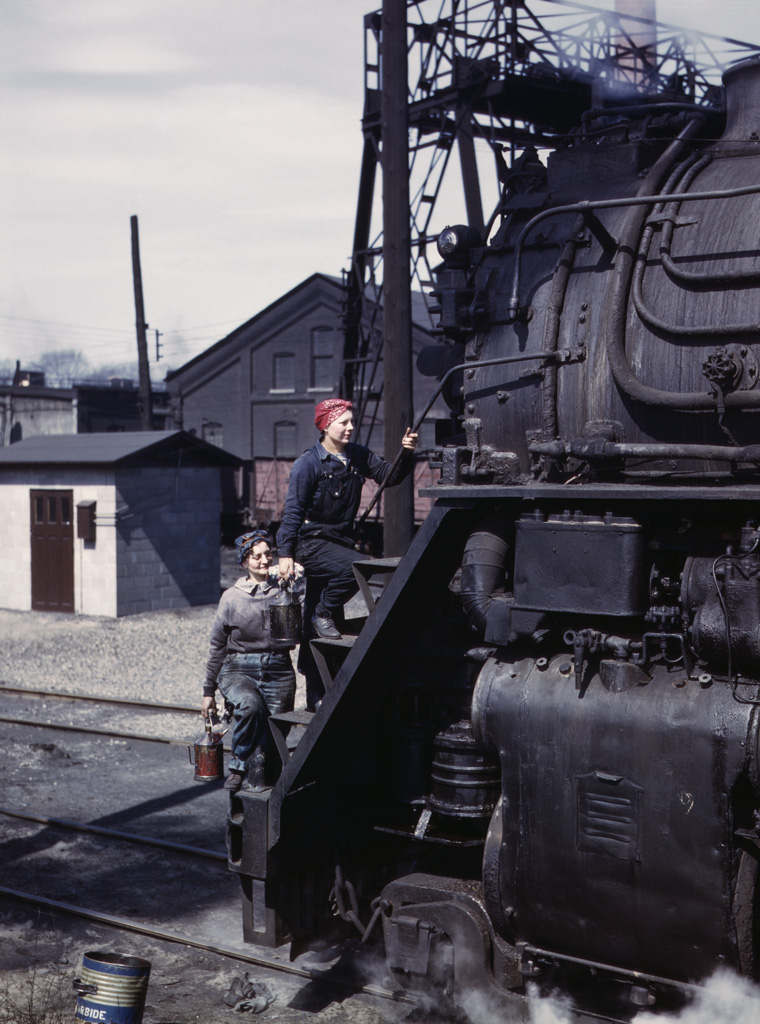
Chicago and North Western steam locomotive #3034 is about to get a good cleaning by a couple of women engine wipers. Jack Delano recorded this locomotive servicing ritual which included a bath and a wipe-down back in April of 1943. Ascending the stairs is Mrs. Marcella Hart, followed by Mrs. Viola Sievers. I noticed that I had posted a photo last year of Mrs. Sievers washing down the running gear of the locomotive . . . she was a busy lady, indeed!
The steamer is a C&NW “H” class 4-8-4 built by Baldwin Locomotive Works in 1929. She boasted 27″x32″ cylinders, had 76″ drivers, and ran 250 psi of steam pressure in her boiler.
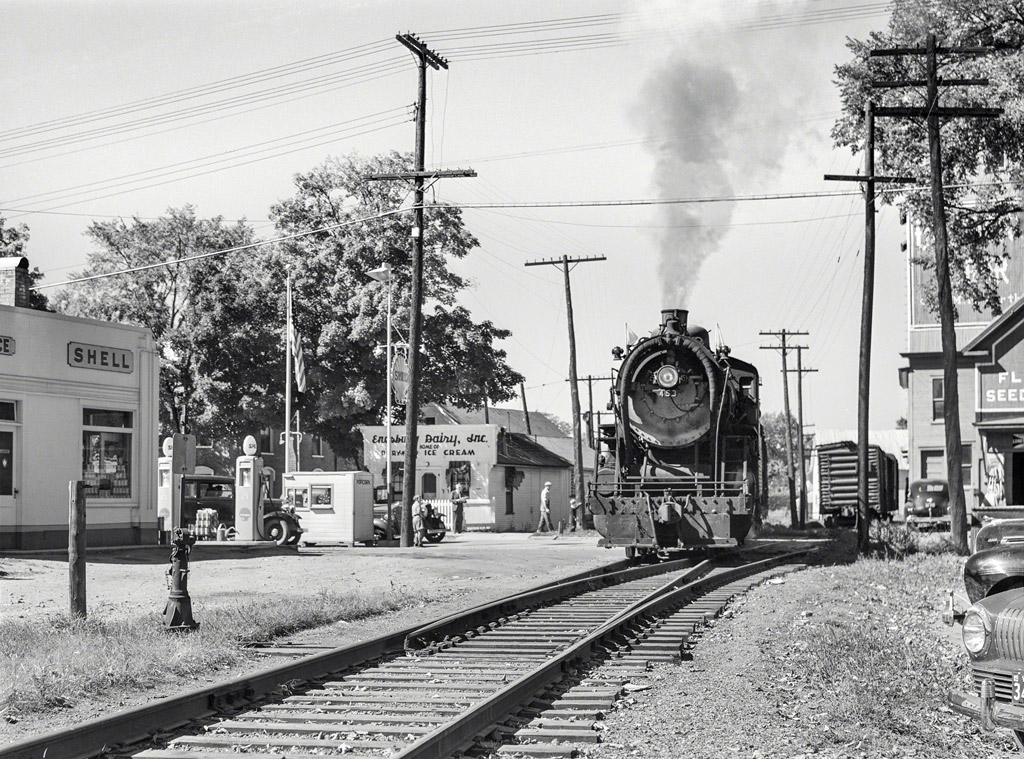
Here’s an interesting Jack Delano photograph that I spied over on Marty McGuirk’s blog. The subject is a Central Vermont 2-8-0 steamer, #453, and the location is Main Street in Enosburg Falls, Vermont. Jack recorded this image in September of 1941. I really like the composition of this photo, and the myriad of detail surrounding the train.
The locomotive itself is equipped with an externally mounted Coffin feedwater heater, which gives the front of the firebox the unusual look of an awning over the pilot deck. It appears that the crew has just spotted a couple boxcars at the feed mill/elevator at right (or perhaps has come to pick them up). The engine sports white flags, indicating that she’s in charge of an extra train. Presumably the rest of the train is a short distance back down the track.
At left we see a Shell service station, while across the street is the Enosburg Dairy store, featuring it’s dairy and ice cream products. And note the tiny popcorn stand with the American flag and a Shell sign on it’s flanks. Just visible beyond the flagpole is the dairy store milk bottle shaped sign, with (likely) a list of their offerings. The train obviously has the attention of a couple of young lads, while the older men pay no attention at all . . . likely they’ve seen it doing it’s work many times.
The automobiles in view span several decades, and it appears that the town hasn’t been completely covered in concrete or asphalt yet. Though it is September, the trees still hold their leaves, and one boy is seen wearing a short sleeved shirt and shorts . . . must be a warm day.
In his blog posting, Marty featured this photograph, along with others, plus a map of the area. He is evaluating this scene for information and details for potential use on his new model railroad. You can catch his blog here: http://centralvermontrailway.blogspot.com/ if you’d like to read what he’s up to. Scroll down to his post of Friday, June 21, 2019.
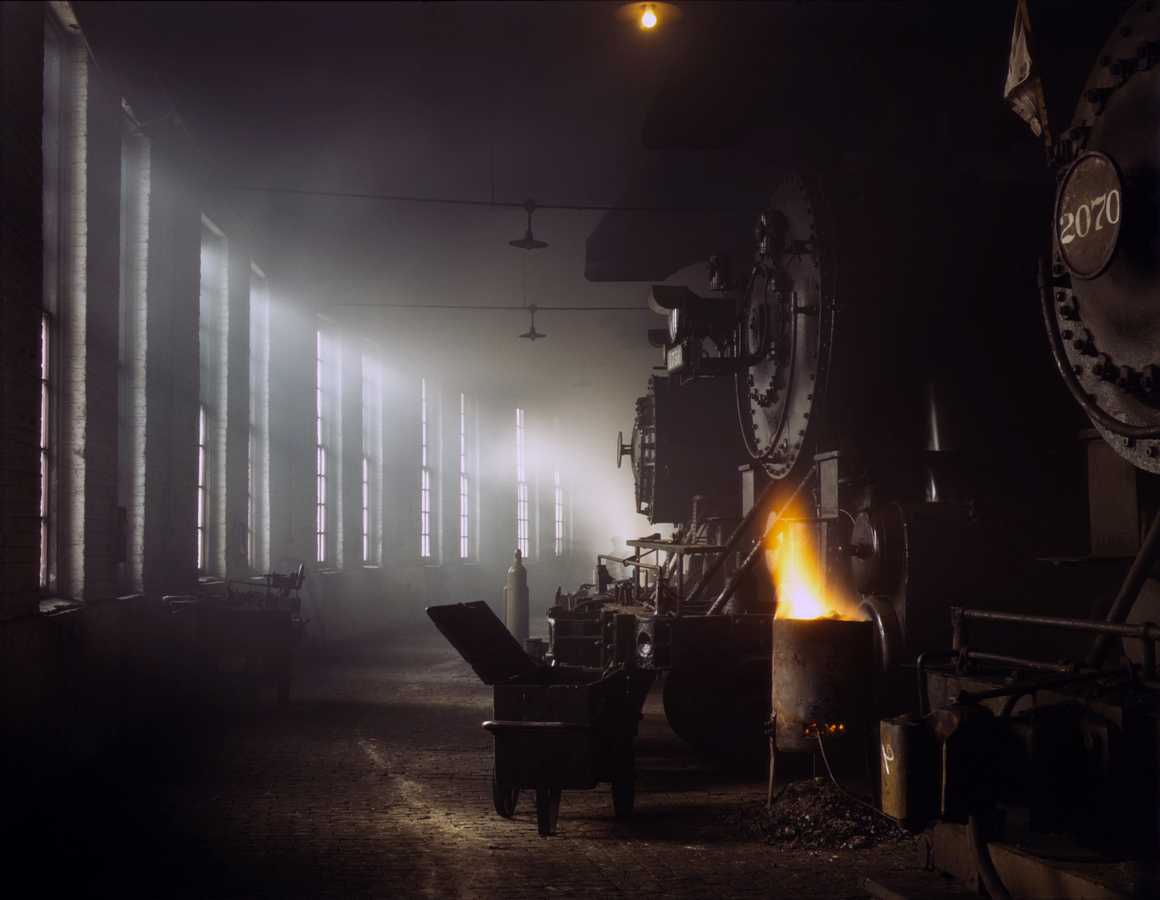
This is one of my favorite Jack Delano photographs. I posted it over two years ago during a discussion about wooden floors sometimes seen in roundhouses, and thought I’d re-post the scene in this series of Mr. Delano’s images.
We’re at the Chicago and North Western’s yard in Chicago, and it’s December of 1942. The roundhouse could be a rather chilly environment, and these workers helped combat the situation by burning coal in open steel “drums” to provide a bit of warmth. I suspect that these heaters were fabricated right there in-house, and I’m sure that they are contributing to the haze inside. Also note the tool carts and acetylene bottle. One can barely discern the silhouette of a worker in the distance just above the pilot of the steamer at center (click on the photo to see a much larger view).
If you look carefully you’ll notice the wooden block floor in this roundhouse. Such floors were fairly common in industrial facilities many years ago. They provided a surface that was resilient and “kind” to the heavy, metal components that would be placed (or dropped) on them. Click on the link above if you’d like to read the post on the topic.
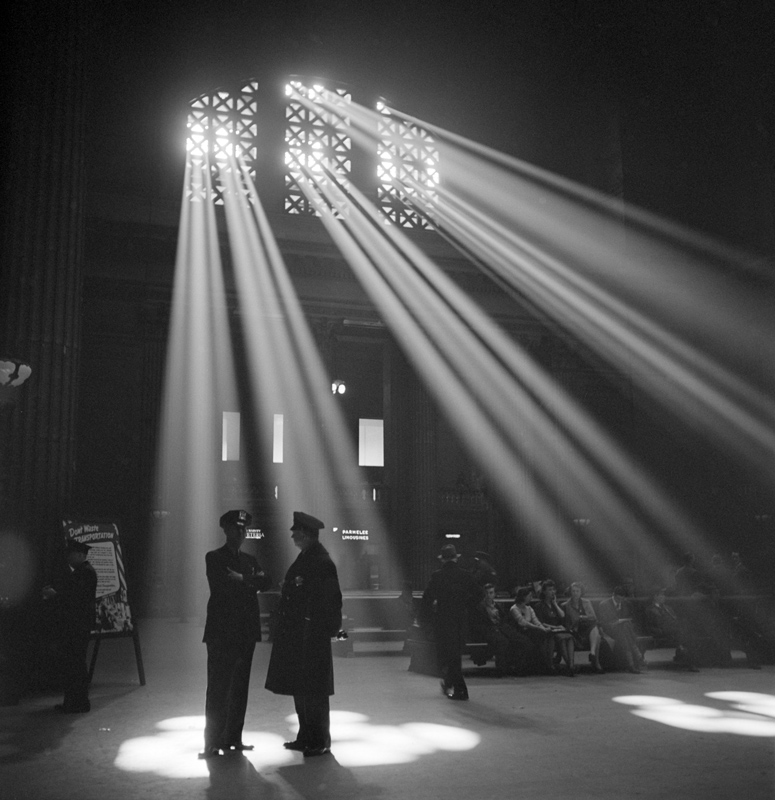
In January of 1943 Jack Delano captured this stunning scene of sunlight pouring into the Union Station at Chicago, Illinois. For many years architects designed such structures with these towering ceilings, and with large expanses of glass allowing plenty of natural light to flood an area. And scenes such as this became commonplace within those facilities.