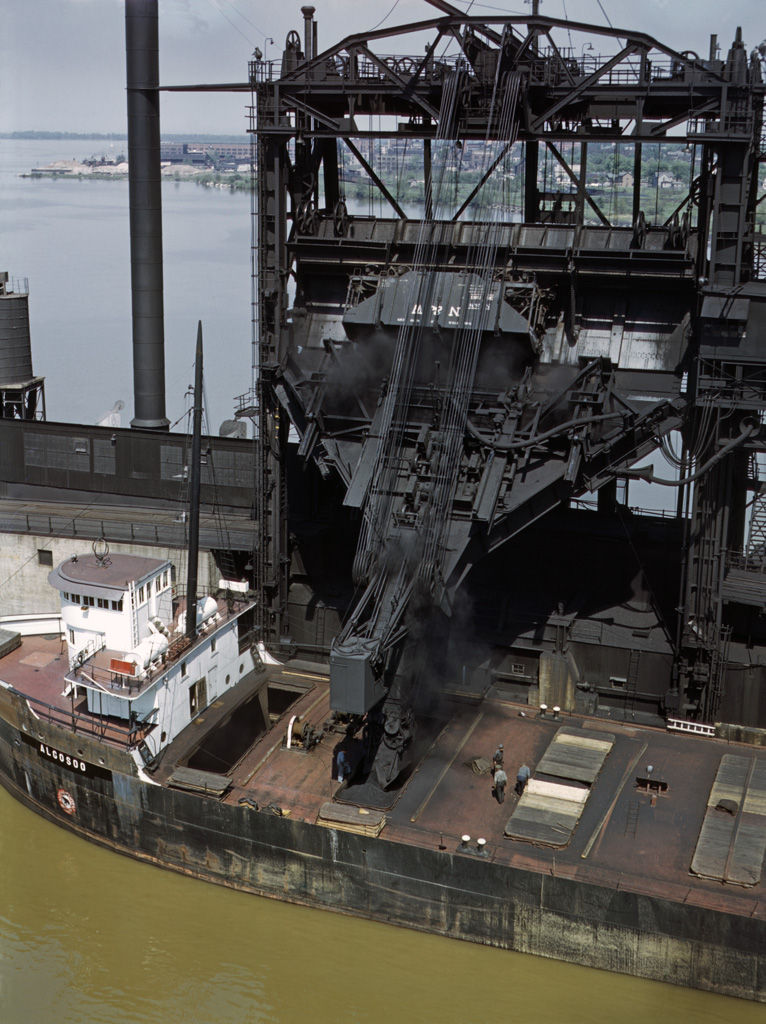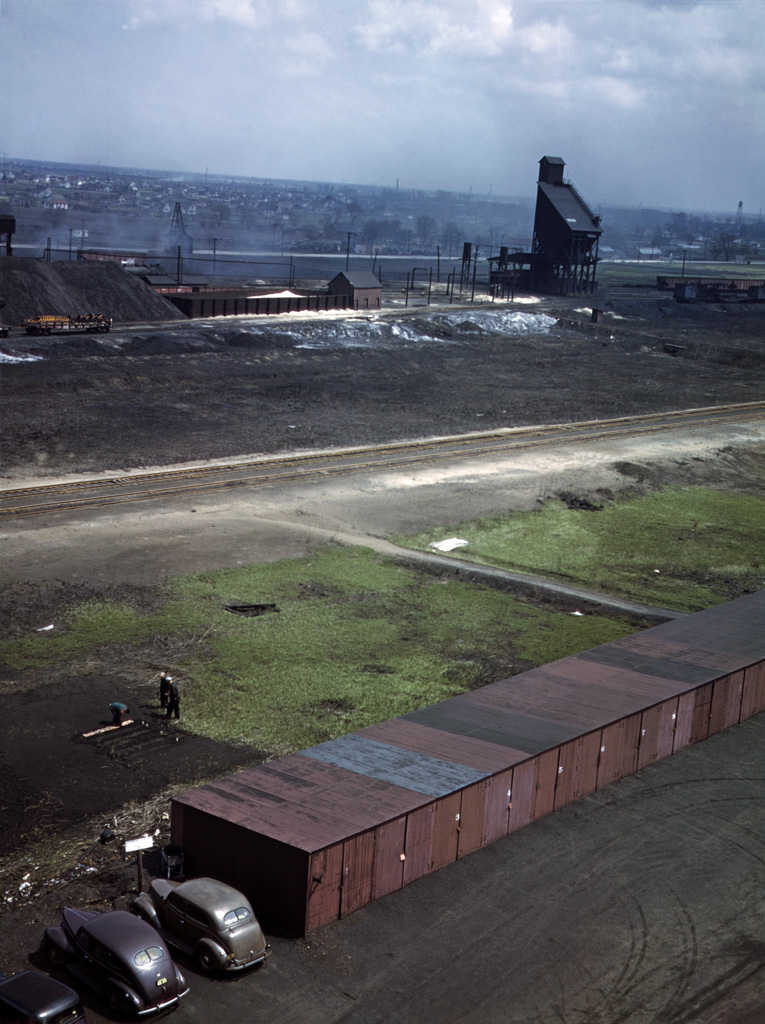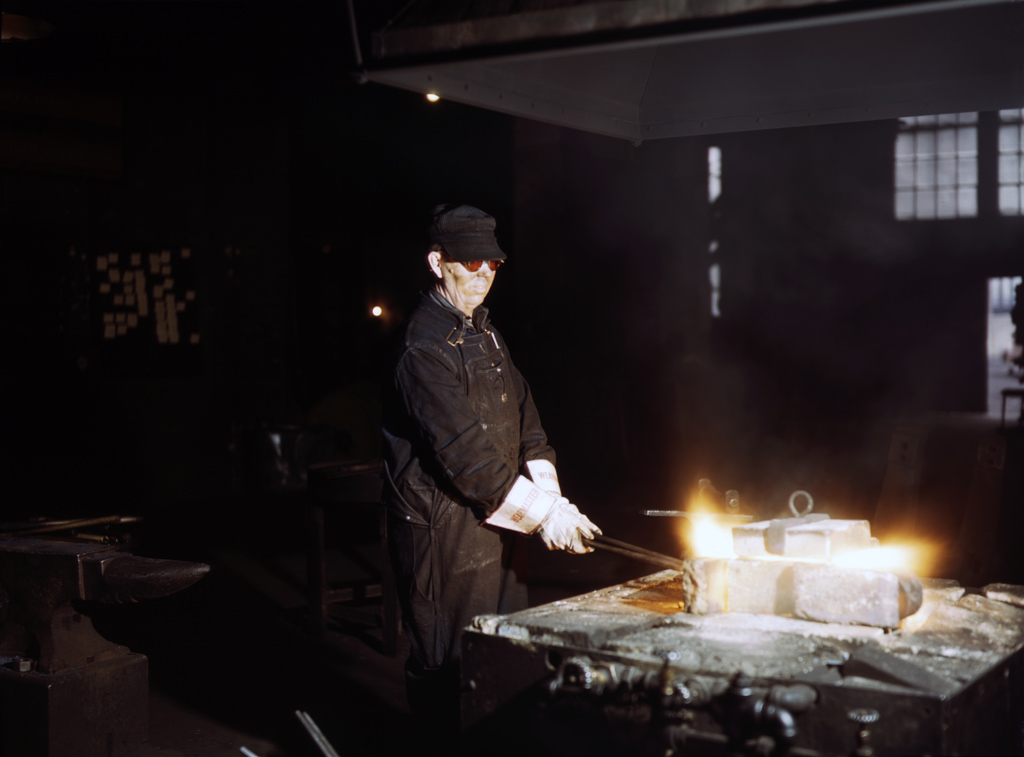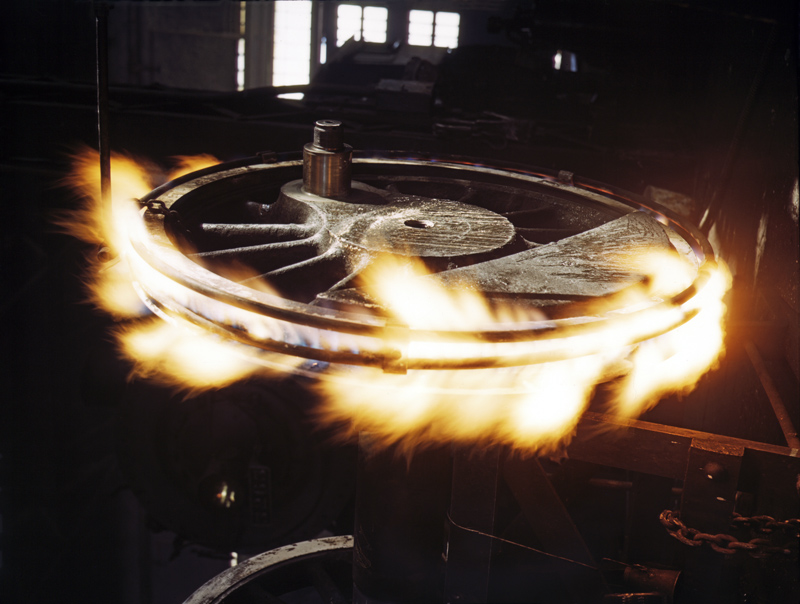
To my eye, an engineering marvel were the massive Hulett machines built to transfer iron ore from lake freighters to railroad hopper cars. Jack Delano traveled to the Pennsylvania Railroad’s ore docks in Cleveland, Ohio in May of 1943. There he documented these huge machines at work, and I’ve selected a few samples of his work to present here.

Above is an overview of the iron ore transfer operation. The Hulett machines ride on a huge bridge carriage that travels on a set of parallel rails. Railroad tracks pass beneath the machine to handle the hopper cars to be loaded.

Here’s a close-up view of the machine. The bucket assembly is suspended from a “walking beam” affair with a smaller boom to keep the bucket arm vertical as it’s raised and lowered. The entire thing rolls back and forth on the traveling bridge, and after picking up a load of ore from the ship’s hold, it is dumped into a hopper bin located between the side rails structure of the bridge. This bin will weigh the ore, and is then rolled over the appropriate hopper car to dump it’s load. Note the tiny locomotive below the bridge, used to position the hoppers.

This is a close-up view of the huge clam-shell bucket as it is rising from the hold of the freighter after scooping up some ore. Look closely above the bucket and you’ll notice the operator of the machine smiling at the photographer. This position enabled him to precisely direct the bucket to the ore pile. Two additional Huletts can be seen beyond this machine.
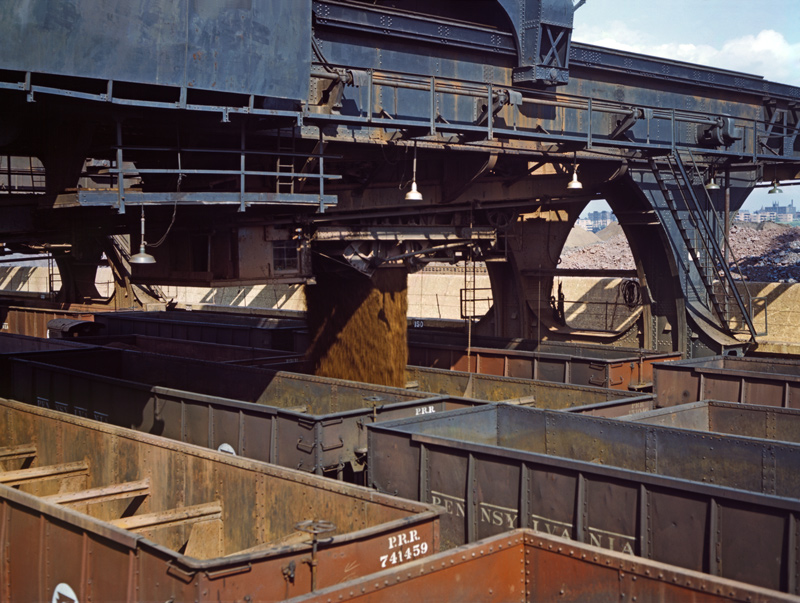
And here’s the view of the hopper car loading. The traveling bin has positioned over the car, and is releasing it’s load. The bin can also travel out beyond the cars on that cantilevered section at the far right to simply dump it’s load on the ground to create a stockpile.
It must have been an impressive sight to see several of these machines working side by side to unload one of those huge freighters. Imagine the time saved from unloading them by hand!