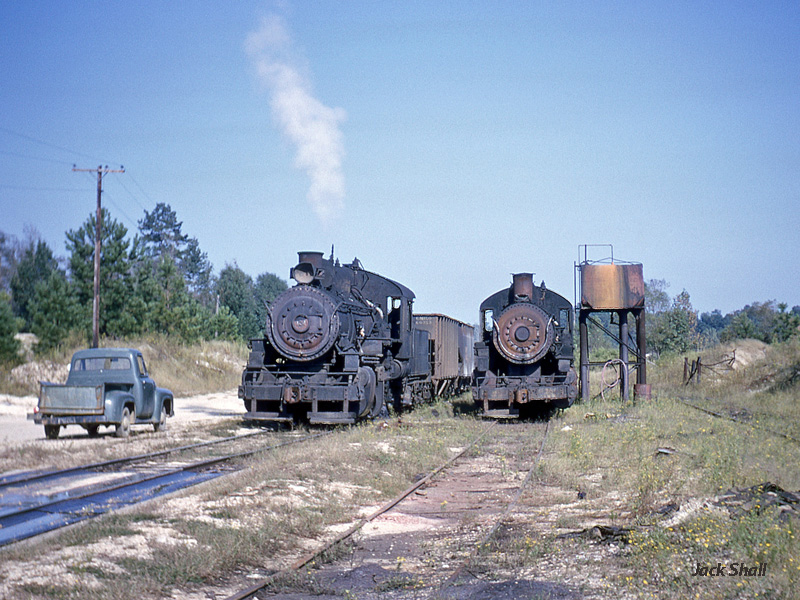
The Standard Gravel Company, part of the Green Brothers holdings, used a number of steamers up through the 1960s. Here are a couple of old and tired ex-T&NO (SP) 0-6-0 switchers still in service at the pit near Franklinton, Louisiana in 1965. Engine #124 on the left has finished its work for the morning and rests patiently while the crew goes to lunch. If you look closely, you’ll notice the tender tank is upside down. The tender was leaking badly and some enterprising soul solved the problem by inverting the tank, modifying it as necessary. The engine #156 on the right has one of the unusual “sausage” tenders that the SP used.
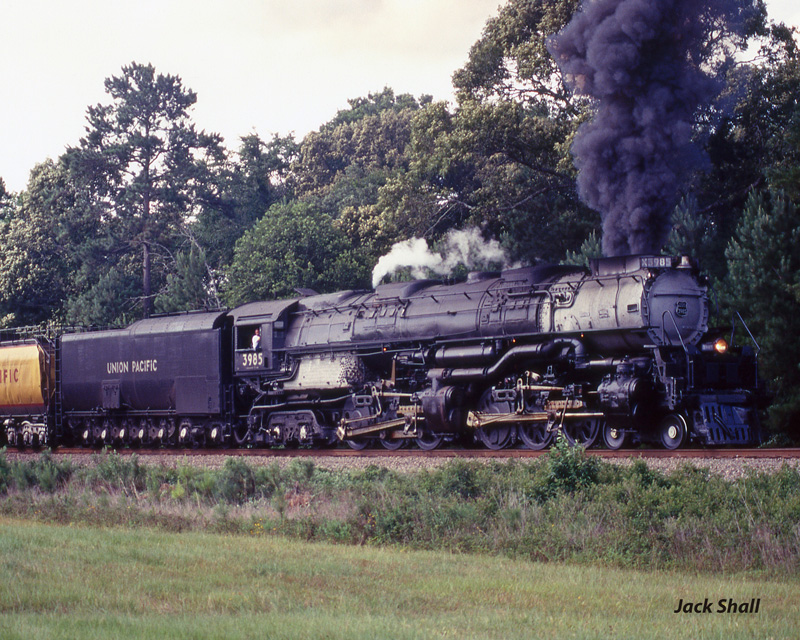
The Union Pacific Railroad ran an excursion special between Houston and College Station, Texas back in the summer of 1995. At the point was U.P. steam locomotive #3985, a 4-6-6-4 Challenger. At the time it was the largest operating steam locomotive in the country. Here she is pulling the train on the return leg of the journey heading toward Houston.
The Union Pacific side lined the locomotive after the 2010 season as it was in need of serious overhaul work. The U.P. instead decided to reacquire and restore one of their famous “Big Boy” 4-8-8-4 locomotives, the #4014. In 1962 it had been donated to the Railway and Locomotive Historical Society, and was on display in Fairplex at the RailGiants Train Museum in Pomona, California. As a result of this decision, the #3985 was officially retired in January 2020.
But there is good news for the steamer, as a deal was made with the Railroading Heritage of Midwest America to acquire the locomotive. It has been moved to the former Rock Island Railroad Silvis, Ill. shops, and its re-building is underway. The Challenger will eventually be back in service!
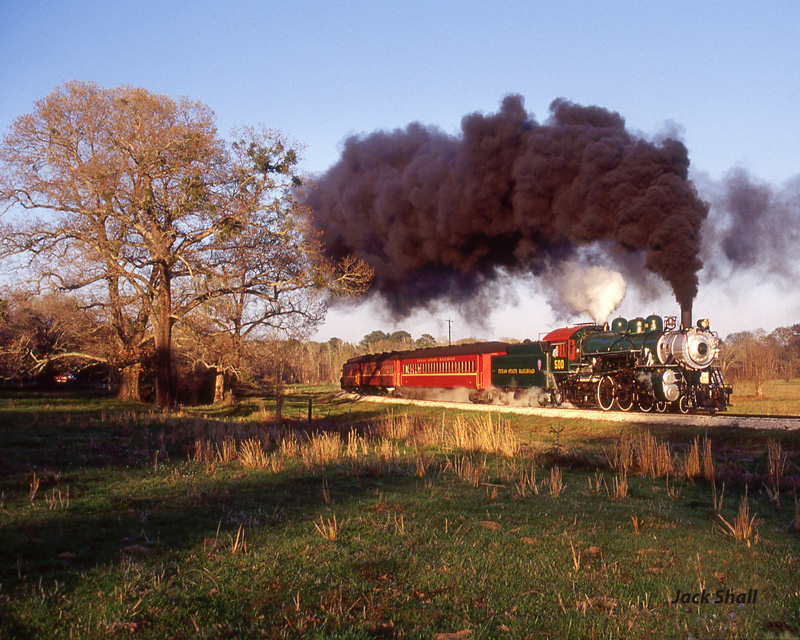
The Texas State Railroad, a Texas state park, frequently runs steam powered trains on its system. Locomotive No. 500, a 4-6-2 Pacific of AT&SF heritage, is shown here rounding a bend in the late afternoon as she heads toward Palestine, Texas with its train in tow.
The tidy little Pacific was built by Baldwin in 1911 as Atchison, Topeka & Santa Fe #1316, Class 1309. She is currently out of service and on display at the Texas State Railroad.
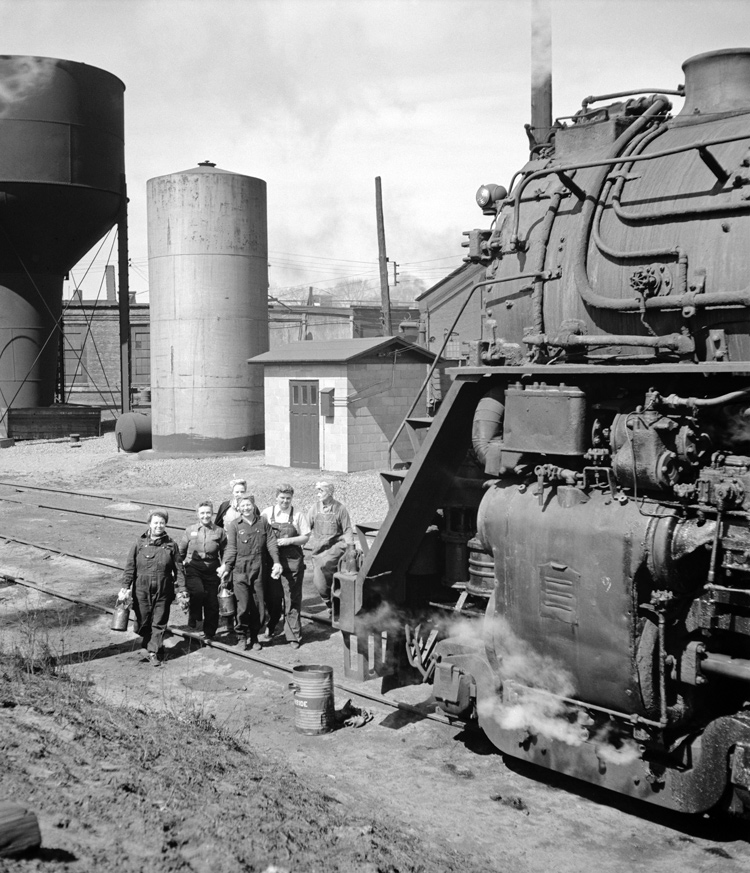
I’ve shown several photos of women employed by the railroads during the war years of the 1940s, many of them as engine wipers. I came across this Jack Delano photograph recently that I didn’t recall having seen before. After studying it for awhile, I realized that I had seen both this locomotive and several of these ladies in other images.
The scene is at the Chicago and North Western’s roundhouse in Clinton, Iowa in April of 1943. The locomotive is an “H” Class 4-8-4 steamer, the number 3034. The team of ladies are coming out to wash and wipe down the locomotive. At left, holding an oil can is Mrs. Dorothy Lucke, and at center, also holding an oil can is Mrs. Marcella Hart.
This image shows the ladies having their lunch in the lunch room. Mrs. Hart is the lady at left wearing the red head scarf. Mrs. Sievers is the third from left on the far row. An unidentified lady present in the photo above (at far right) is also seen in the lunch room photograph, the second from left on the far row.
I surely wish all of these ladies had been identified so that their memory would be coupled to this photograph.
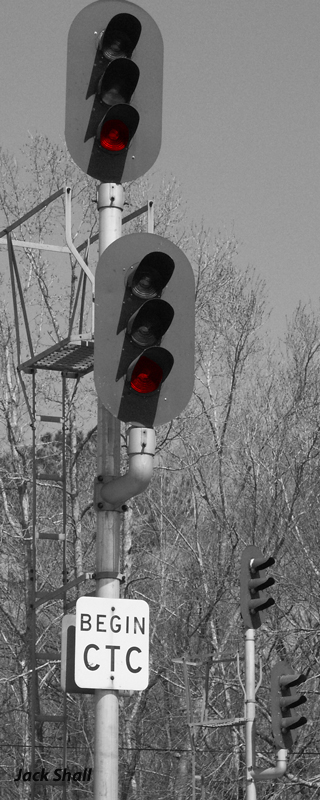
The east end of the Illinois Central’s (now Canadian National) Hammond District ends at the McComb District in Hammond, Louisiana. This signal controls entry from this east-west line into the north-south mainline heading up to Chicago from New Orleans.
After the I.C. merger into the C.N. in 1999, the districts were renamed as subdivisions. This junction remains, but the signals have since been replaced by newer models.
The fourth in this series of photographs, this scene is also at the old Yazoo and Mississippi Valley Railroad station (now the the Louisiana Art and Science Museum) located in Baton Rouge, Louisiana.
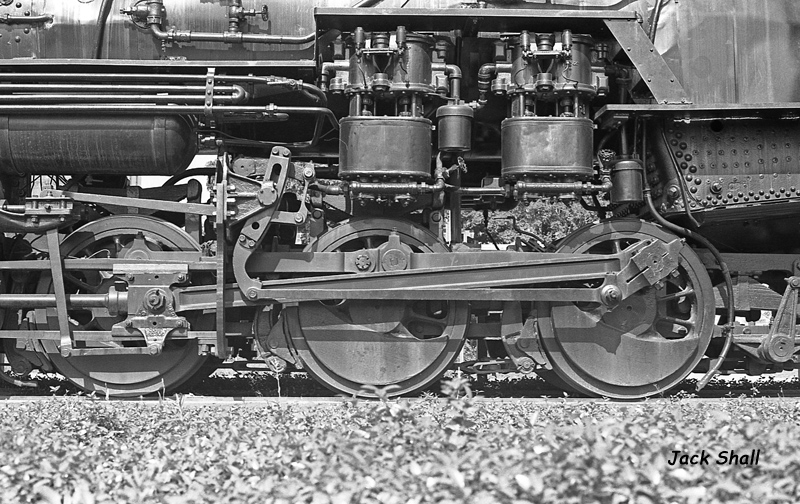
For many years an old former Illinois Central 0-6-0 steam locomotive was parked on display at the north end of the station platform. One afternoon while studying the locomotive I captured this view of the steamer’s driving wheels and valve gear.
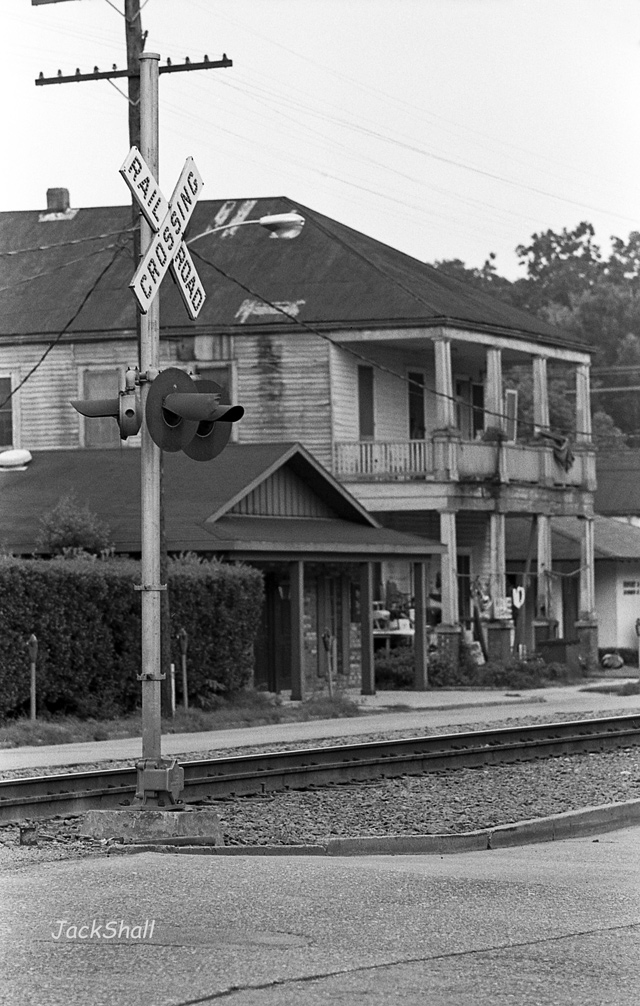
I used to occasionally drive over to the west bank of the Mississippi River across from Baton Rouge, Louisiana to do a little railfanning. Of course I would always check out Plaquemine as part of my route. The Texas & Pacific (now Union Pacific) runs right through the center of town, and with an abundance of interesting structures on either side of the tracks, there was always something of interest to photograph while waiting around for a train to rumble by.
Here’s one such subject that I caught one afternoon during the lull.
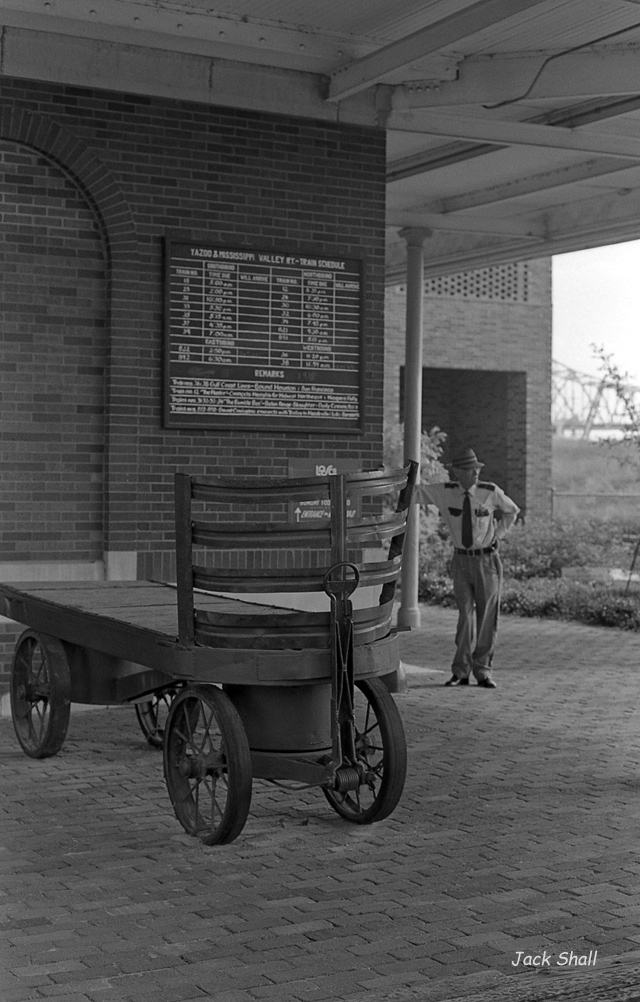
The second in this series of photographic reviews, this scene is at the old Yazoo and Mississippi Valley Railroad station located in Baton Rouge, Louisiana right next to the Mississippi River levee. The Y&MV was a subsidiary of the Illinois Central Railroad until merged into the I.C. in the late 1940s. After the demise of rail passenger service to Baton Rouge, the building changed ownership and became the Louisiana Art and Science Museum.
This is the scene on the north end of the depot under the covered platform. A glimpse of the “new” Mississippi River bridge can be seen in the background. About midway up in front of the levee, the tracks of the Illinois Central can be seen. As an update, in 1999 the railroad was merged into the Canadian National.
I mentioned in last week’s post that I might republish a few “reruns”, photos that I like that were posted in the earlier days of this blog. I’ll start that today with the post below, originally published in March of 2018.
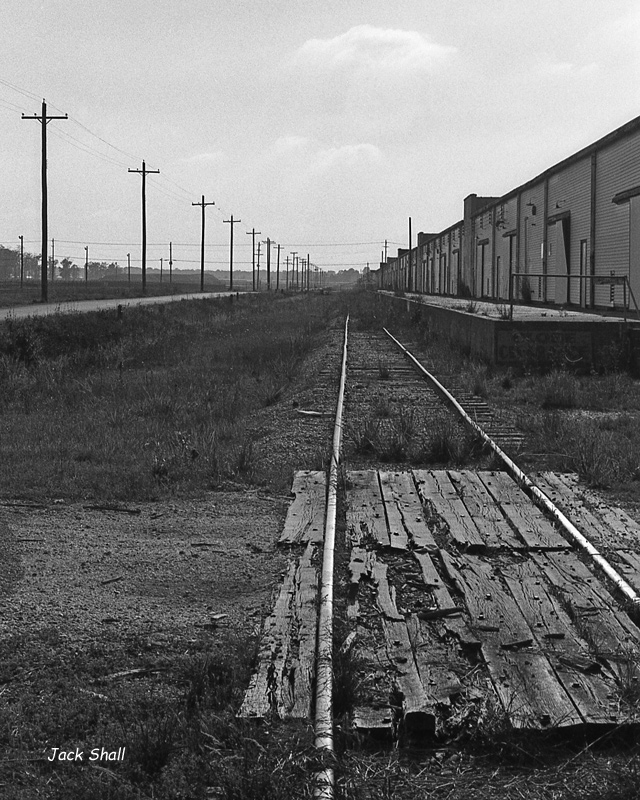
I thought I’d start posting a few photographs I took back in the 1970s. I’ll start today with this one taken at the former federal General Services Administration (GSA) supply depot that was in Baton Rouge, Louisiana. This was a significant supply depot for many years, even having its own steam locomotive to switch and spot the freight cars. But after use of this depot began to wind down, a large chunk of it was eventually turned over to the BREC park commission in Baton Rouge. This photo shows one of the rail served warehouses that were in the facility. A few still survive to this day.
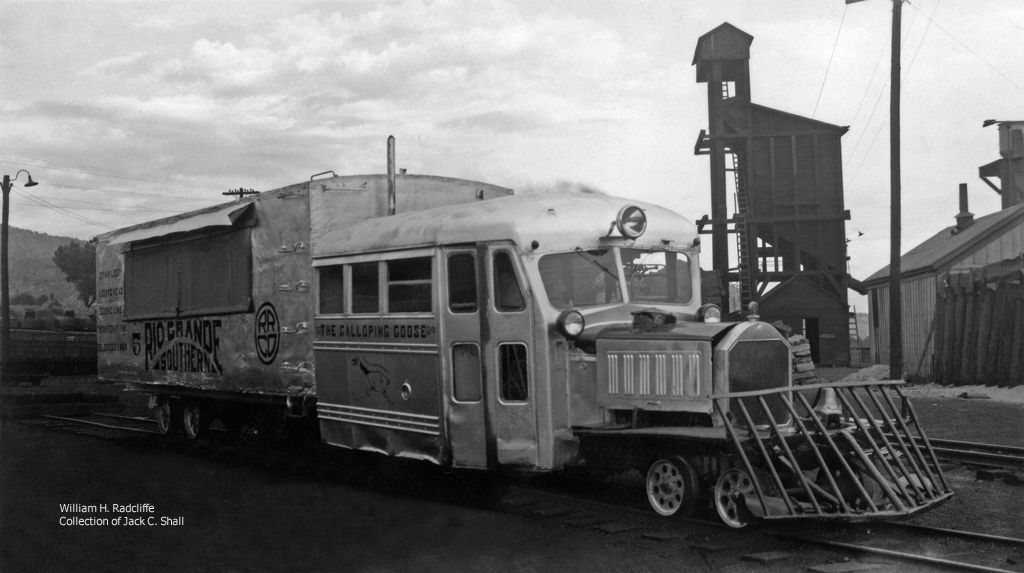
The topic for the day is Geese . . . Galloping Geese that is.
The cash strapped Rio Grande Southern was always looking for ways to cut costs while trying to maintain service along the road. They did have occasional freight traffic, and passenger traffic as well. And a significant source of income came from the U.S. Postal Service via a mail hauling contract. Their answer to cutting costs came in 1931 by a novel way of transport.
The road’s master mechanic created the road’s first railbus, #1 (called motors on the RGS). This motor differed considerably from the #5 seen below, utilizing a Buick 4-door sedan as it’s base. The motor #5 featured here was built in 1933 using a 1928 Pierce-Arrow limousine body and running gear, and powered by a Pierce-Arrow 36 engine. It was similar to a tractor-trailer truck, the trailer being essentially a boxcar. Power was applied to the second truck (first truck of the boxcar). In 1946, the motor was re-built utilizing a Wayne Corporation bus body, and powered by a World War II surplus GMC gasoline truck engine. This is the version seen here.
Somewhere along the line, the motors became known as the Galloping Geese, and in 1950 the term became official with the railroad. In 1950, with the loss of the mail contract, the trailer was modified to carry passengers by adding the windows and installing seats within the interior. But unfortunately, without the mail contract the line could no longer survive and the plug was pulled in 1951. Many assets were sold off in 1952, including the #5.
All told, seven of these motors were built. They all survived except for motor #1. However I understand that a reproduction of #1 has been constructed for the Ridgway Railroad Museum, so it lives on in a sense. The Dolores Rotary Club purchased Galloping Goose #5 from the court-appointed receiver for $250. It was then put on display in Flanders Park in Dolores, Colorado. The Galloping Goose Historical Society of Dolores embarked on a restoration effort in 1997-98, completely restoring Galloping Goose #5 to operating condition. Today she sees occasional service on both the Cumbres and Toltec Scenic and the Durango and Silverton railroads. A more detailed history of the #5 can be read at the Galloping Goose Historical Society. Click on the History button.
Rio Grande Southern “Galloping Goose” #5 – Photograph by William H. Radcliffe, sometime in 1950-51
An update: My friend Brian Kistanmacher provided this link to a 30 minute history of the Geese from a Denver PBS special several years ago: Galloping Goose History. It’s interesting . . . give it a watch.
This is the last of my Radcliffe collection of images, and I hope everyone has enjoyed the show! The reason this blog was created several years ago was to document the construction of my HO scale model railroad, the Louisiana Central. Sometime this spring/summer I hope to be back into layout construction, and will again post occasional updates here of the layout progress. I may also post a few “reruns”, photos that I especially like that were posted in the earlier days of this blog. You can avoid constantly checking the blog for new posts simply be subscribing to the blog. Doing so will get you an email advising that there’s a new post to check out.