Southbound ICRR Freight Train

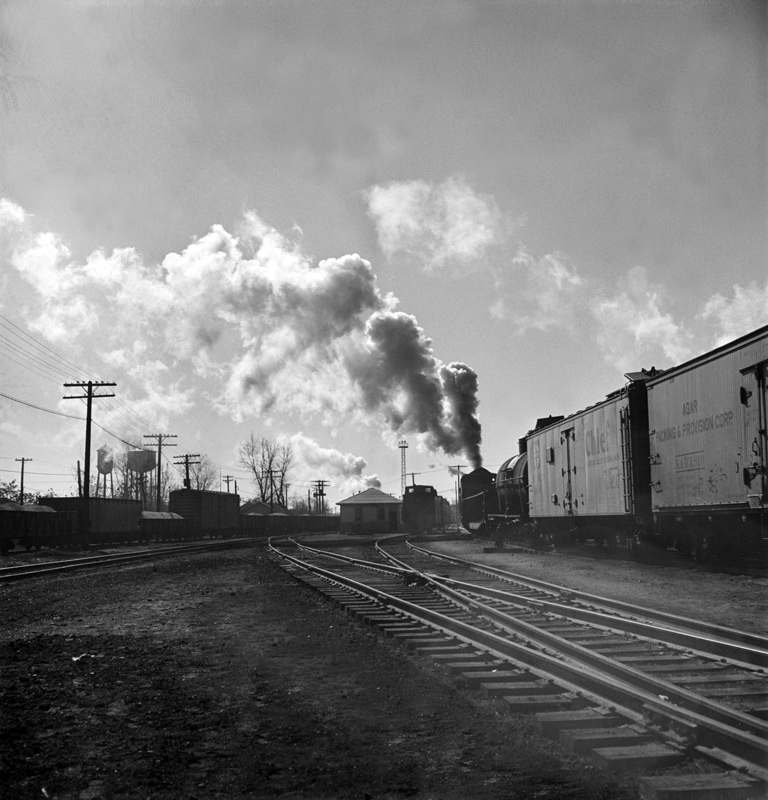
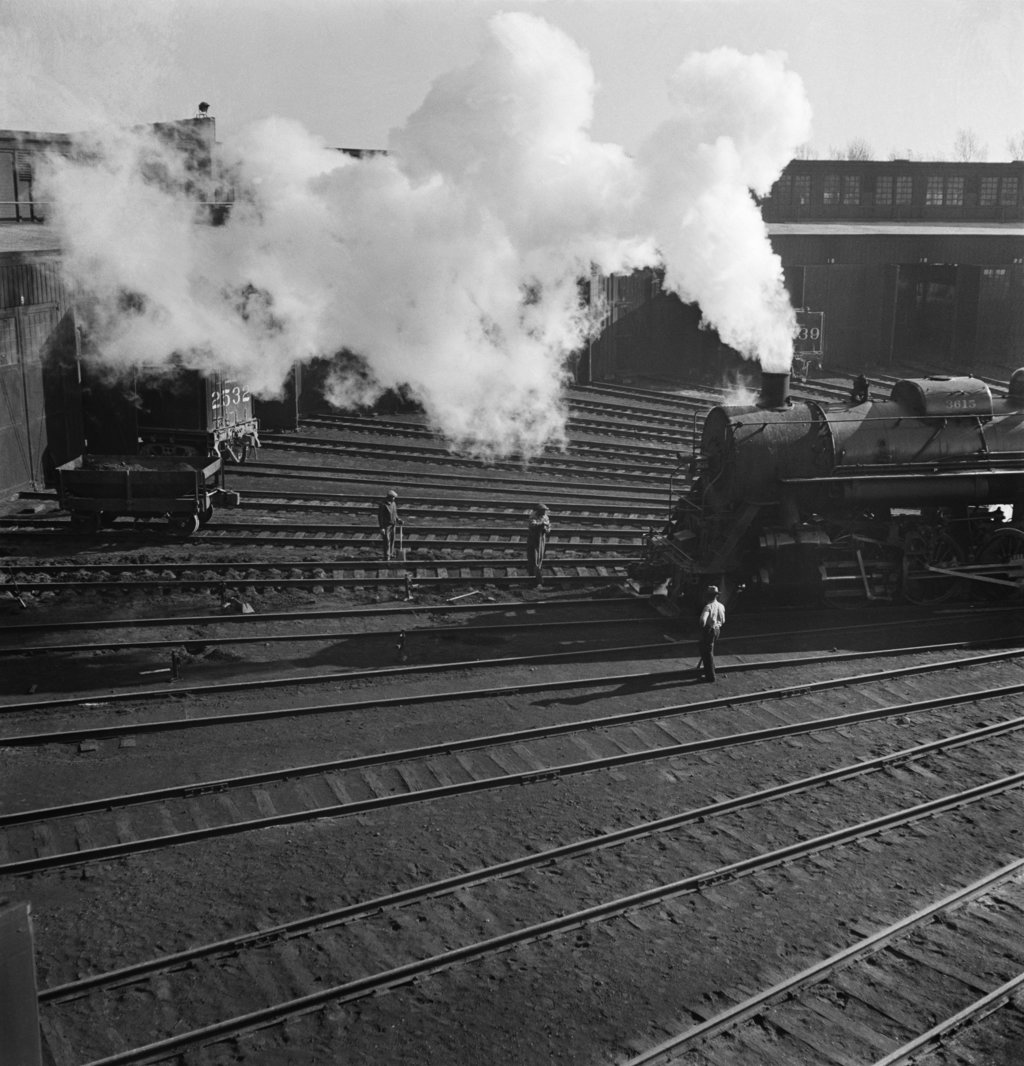
So we haven’t seen a road train for something over a couple of months now. Jack Delano heard us and headed over to the Illinois Central yard in Chicago. He arrived there just as a southbound train was departing for New Orleans. The chill in the air of this November day in 1942 accentuated the smoke and steam exhaust of our train, and betrayed the location of a couple other locomotives near by.

Southbound ICRR Freight Train

Another Yard Master

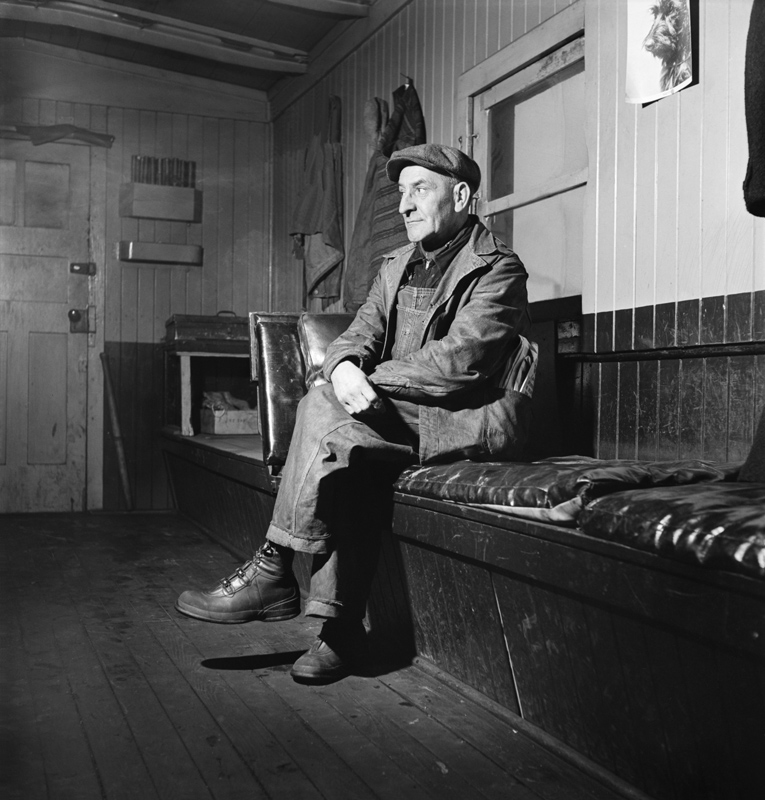
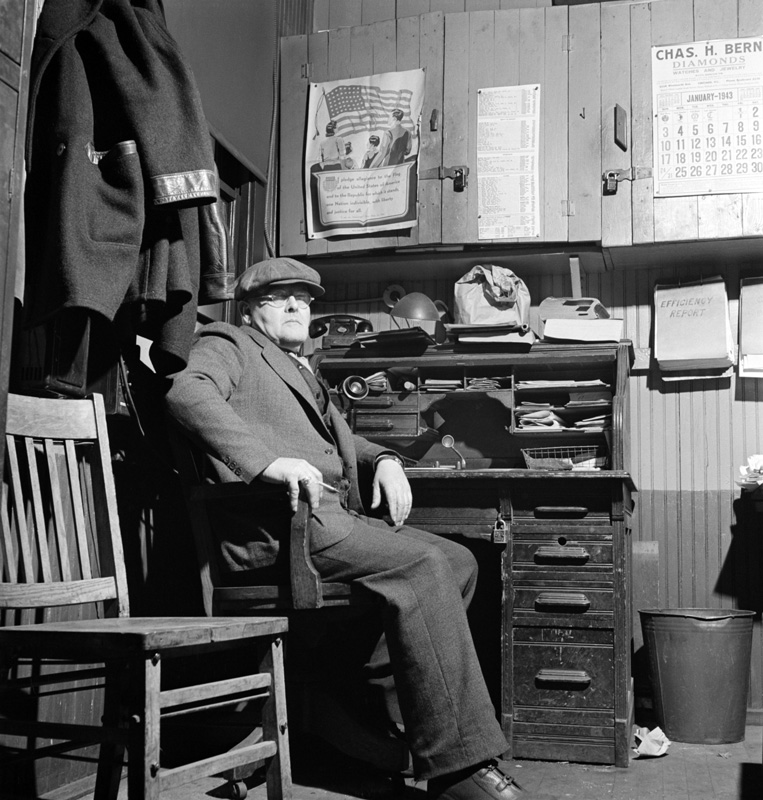
While on the property of the Indiana Harbor Belt Railroad in January of 1943, Jack Delano decided to visit the yard master. Unfortunately this photograph that he took of the gentleman didn’t say which yard he was at, though I would assume it was in or near Chicago. At any rate, this fellow looks like he’s all business, and probably not someone you’d like to lock horns with!

Another Yard Master

Making Up the Air

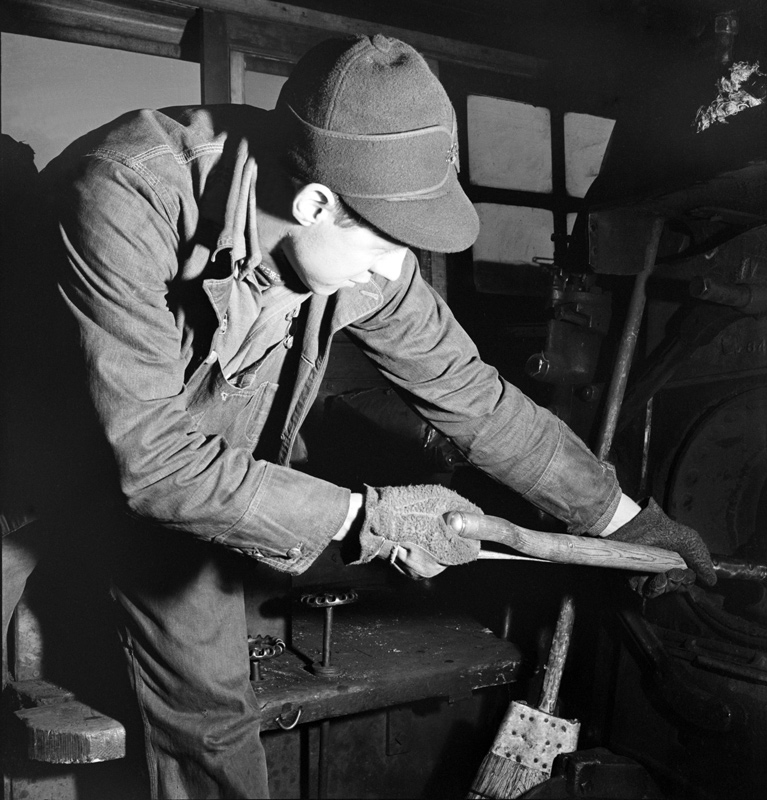
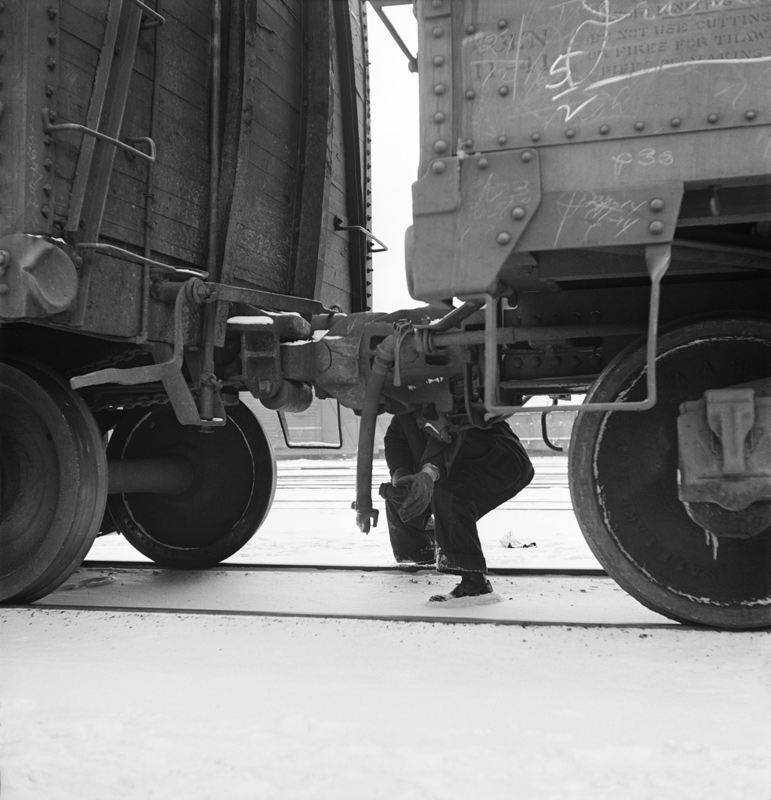
Photographer Jack Delano documented this brakeman in the midst of a time-honored “tradition” on the railroad: making up the air. The location is on the Indiana Harbor Belt Railroad, and it’s a frosty day in January, 1943. Actually, a necessary task when making up a train, all the air hoses must be coupled together to complete the brake air line (the brake pipe) for the length of the train.

The brakeman is reaching in between the cars to couple up the air hoses. Unfortunately, he will have to reach over the couplers in order to open the air valve (the angle cock) on the car at the right. That practice is often frowned upon by railroaders. Technically, the brakeman should climb up on the car, get to the other side, then descend so as to reach that valve while facing it.

I was also noticing the coupler “cut” lever on that outside braced wooden car. While common many years ago, the bent iron bar that would be lifted was much more common by this era. You can see the end of that style cut lever on the car at right. It’s dangling just behind the brakeman’s back.

Making Up the Air

C&NW Tower “HM”

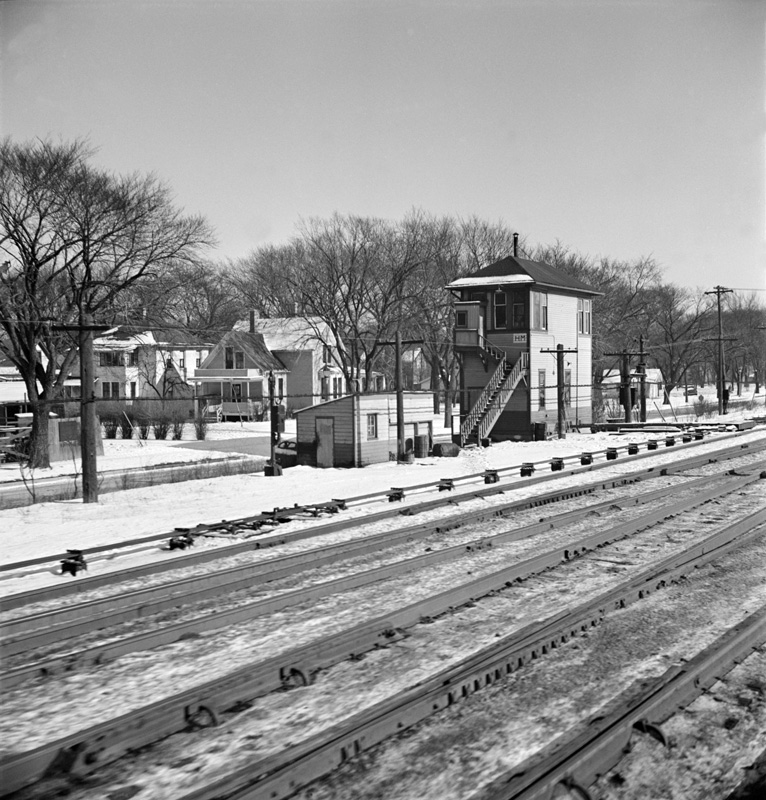
The Chicago and North Western’s tower “HM” was located on the mainline at Elmhurst, Illinois. This is just a bit west of the huge Proviso Yard, and it controlled a pair of crossovers on the three tracks running by. HM is the telegraph call, and tower designation. Jack Delano documented the tower as he rode by in January of 1943, apparently while heading in each direction on different tracks.

The first photo shows that the tower was in a residential area. When researching it’s location, I found that it was located at the intersection of 1st Street and Haven Road, just east of York Street. The view here is looking to the east (toward Proviso Yard). Note the rodding for the mechanical control of the track switches. The tower even had a vestibule to allow sheltered entry into the upstairs room during inclement weather.

C&NW Tower HM - Looking East

The second photo is the view from a caboose platform, and is looking to the west. The crossovers are readily seen in this image. And note the crossing gates at right. I find it curious that the tower doesn’t have it’s HM designation displayed on it’s east side.

C&NW Tower HM - Looking West

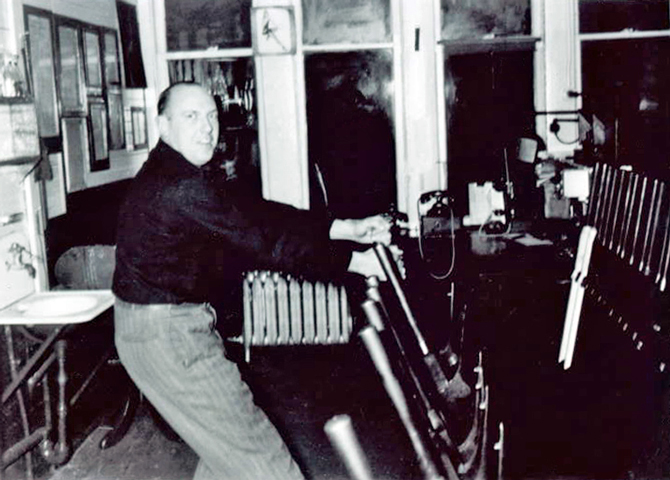
Also while researching this tower, I stumbled across this last photograph showing the interior of the second floor room. The towerman manning those Armstrong levers is Mr. George L. Thorpe, Jr. These levers actuate and power all of that rodding, which in turn lines the track switches. This image was taken by an unknown photographer in 1948, and the notes say that Mr. Thorpe operated in this tower until 1964.

C&NW Tower HM - GL Thorpe

Headin’ For the House

Some track workers pause for the #3615 to pass through. Jack Delano captured this scene as the Illinois Central 2-10-0 was easing off the turntable and heading for a stall in the roundhouse. We’re in Chicago in November of 1942, but hard work apparently keeps these workers warm even with light jackets and overalls.

Entering the Roundhouse

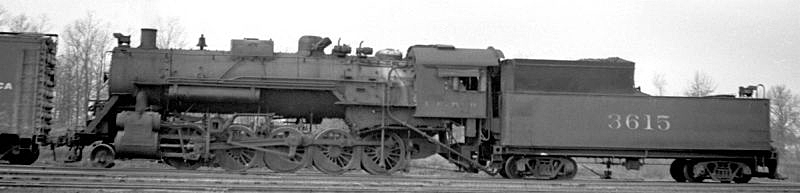
I became curious about this locomotive, so decided to do a little research on it. I found the below photo and commentary on Dr. Richard Leonard’s Random Steam Photo Collection website. “She was a 1939 Paducah Shops rebuild and combined the boiler of a 2-8-2 (original number 1537) and the chassis of a 2-10-2. She was scrapped in August 1957, according to Ray Breyer’s invaluable all-time IC steam roster spreadsheet. This view, by an anonymous photographer, comes from the collection of Tom Rock of T.D.R. Productions. A late 1940s date is suggested for this photo, which was taken at the Paducah Shops.”

ICRR Steamer 2-10-0 #3615

And below is a broadside view of the Decapod recorded on February 21, 1957. This photo was taken in Bluford, Illinois by an unknown photographer. Note that in these last two photos, the headlight has moved to the top of the boiler, otherwise she looks about the same as Delano’s view in 1942.

ICRR Steamer 2-10-0 #3615 - 1957

The Roundhouse (in B&W)

Last summer I posted a photograph inside the Chicago and North Western’s roundhouse in their Proviso yard near Chicago. That scene, captured in December of 1942, is one of my favorite Jack Delano images. While scanning through the vast number of black and white negatives in the collection at the Library of Congress, I was surprised to see that Mr. Delano had recorded a similar view of this roundhouse in B&W. It presents an entirely different feel than the color image, so I thought I’d post it here.

It’s hard to imagine working in such a smoky environment. I would assume that a locomotive has either just entered or departed the house judging from the density of smoke. Looking through the haze, one can discern the image of a worker warming himself by the heater (that open fire of coal in the drum).

As I like to say, “this place is reeking with atmosphere!”.

C&NW Roundhouse in B&W

The Lamp Room

One of the things that interests me about Jack Delano’s photographs is that he explores the often unseen areas of railroading. He captures the human element in many of his photographs, and he likes to poke around in the support infrastructure of the railroads.

Here is a great example of that. Pictured is the lamp room of the Chicago Union Station. This was simply a place where the lanterns (mostly kerosene fueled) were cleaned and repaired. The worker is busy cleaning what appears to be a marker lamp for the end of a train. Note the Pennsylvania Railroad bulletin board behind him, and the metal cages at left to store the lanterns from the various roads.

This image was recorded on January 1st of 1943, and if you look carefully, you’ll see the obligatory war bonds poster at right rear.

Lamp Room, Chicago Union Station

Chicago Union Station Concourse

While in Chicago, Jack Delano strolled through the Union Train Station and documented several of the views he saw. This image is of the station’s concourse, and it shows a typically busy day.

It’s January of 1943, and the United States has been directly involved in World War II for a bit over a year now. There are quite a few service men in the crowd, and virtually every poster and sign has a war theme. The largest banner in the background shows bombs dropping on Nazi Germany. The USO is represented, and if one looks carefully, you’ll spot signs directing the service members to the USO Lounge, as well as the Servicemen’s Canteen.

The concourse is lined with a spectacular display of international flags, presumably all of the nations involved in the allied war effort.

Chicago, Illinois. Union Station Train Concourse

Steam on the IHB

It’s quite early on New Year’s day, signaling the beginning of 1943. Jack Delano has recorded this steam powered train chuffing through a yard on the Indiana Harbor Belt Railroad. Based on the direction of the track and the proximity to the C&NW’s Proviso yard, I’d guess the location to be the IHB yard in Franklin Park near Chicago. And while speculating, I’d say the locomotive is likely one of the road’s 2-8-2 Mikados, this based only on this silhouette.

Steam on the IHB

Painting a Freight Car

Over the years I’ve read through the label on a can of paint and one is always admonished to apply the coating in mild temperatures, generally above 60 degrees F or so. Apparently the Chicago and North Western folks have different ideas on the subject, or perhaps a new and improved paint for their freight cars.

It’s December of 1942, and Jack Delano spied this fellow applying a fresh coat of paint to a car on the RIP track in the Proviso yard near Chicago. And that has to be the longest extension I’ve ever seen for a paint sprayer! I wonder how many days it will take before one can touch that car without sticking to it.

Painting a Freight Car

Santa Fe Freight Departing Corwith Yard

Back over at the AT&SF Corwith yard in Chicago, Jack Delano photographed a Santa Fe freight train preparing to depart the yard. It’s March of 1943, and obviously it’s pretty chilly there. The locomotive, #3266, is a Baldwin built 2-8-2.

A curious thing I noticed is what appears to be a blue flag on the side of the locomotive. In zooming in on the original image, the flag is supported by a steel arm or bracket. I’m familiar with a flag between the rails used to protect a worker, but don’t recall seeing one on the side like this. I’ll venture a guess that perhaps the engineer places this flag while oiling around. With the heavy shroud of steam vapor emitting from the machine, it would be quite easy to get “lost” in the cloud while working up close to the valve gear. If anyone knows the correct answer, please add a comment to enlighten the rest of us.

Santa Fe Freight Departing Corwith Yard

The Hulett

To my eye, an engineering marvel were the massive Hulett machines built to transfer iron ore from lake freighters to railroad hopper cars. Jack Delano traveled to the Pennsylvania Railroad’s ore docks in Cleveland, Ohio in May of 1943. There he documented these huge machines at work, and I’ve selected a few samples of his work to present here.

Hulett Unloader Overview

Above is an overview of the iron ore transfer operation. The Hulett machines ride on a huge bridge carriage that travels on a set of parallel rails. Railroad tracks pass beneath the machine to handle the hopper cars to be loaded.

Hulett Unloader Closeup

Here’s a close-up view of the machine. The bucket assembly is suspended from a “walking beam” affair with a smaller boom to keep the bucket arm vertical as it’s raised and lowered. The entire thing rolls back and forth on the traveling bridge, and after picking up a load of ore from the ship’s hold, it is dumped into a hopper bin located between the side rails structure of the bridge. This bin will weigh the ore, and is then rolled over the appropriate hopper car to dump it’s load. Note the tiny locomotive below the bridge, used to position the hoppers.

Bucket on a Hulett Unloader

This is a close-up view of the huge clam-shell bucket as it is rising from the hold of the freighter after scooping up some ore. Look closely above the bucket and you’ll notice the operator of the machine smiling at the photographer. This position enabled him to precisely direct the bucket to the ore pile. Two additional Huletts can be seen beyond this machine.

Hulett Loading the Cars

And here’s the view of the hopper car loading. The traveling bin has positioned over the car, and is releasing it’s load. The bin can also travel out beyond the cars on that cantilevered section at the far right to simply dump it’s load on the ground to create a stockpile.

It must have been an impressive sight to see several of these machines working side by side to unload one of those huge freighters. Imagine the time saved from unloading them by hand!