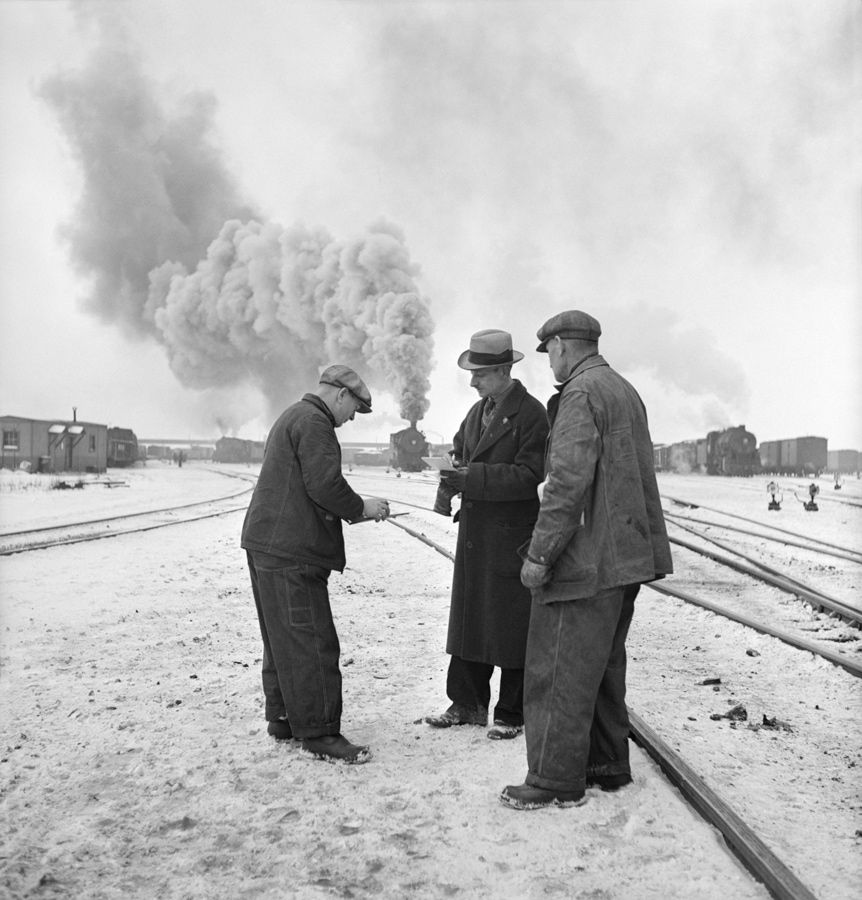
During his tour of the Indiana Harbor Belt Railroad in January of 1943, Jack Delano recorded this view of IHB Conductor Cunningham discussing the train he is to pick up with the Chicago and North Western yardmaster. Though not identified, I would assume the yardmaster is the gentleman with the fedora and necktie.
I like the composition of this image, with the steamer at center, and two others flanking these railroaders on either side.
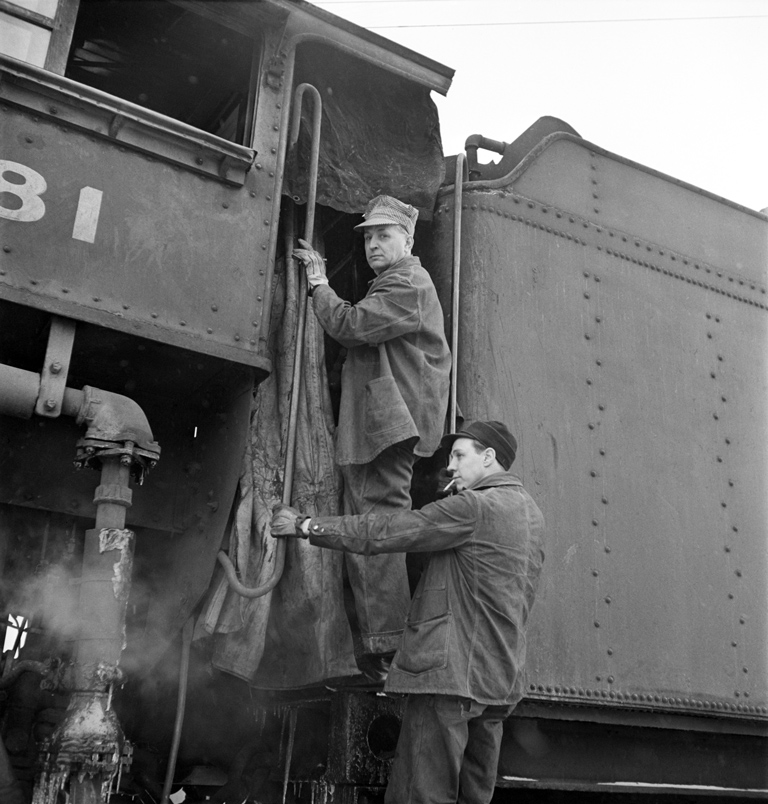
It’s another frosty day in January of 1943, and Jack Delano was there to see the engineer and fireman boarding their locomotive for another day’s labor. We’re on the Indiana Harbor Belt Railroad which runs between Chicago, Illinois and Hammond, Indiana.
In these temperatures it doesn’t take long for dripping water to turn into ice cycles as seen on the piping at left. Also note the canvas curtains surrounding the backside of the cab in an effort to preserve a bit of heat inside for the crew.
As I studied this image, the faces seemed familiar. Turns out we’ve seen these fellows and their charge in an earlier post as they were waiting for their orders to start work.
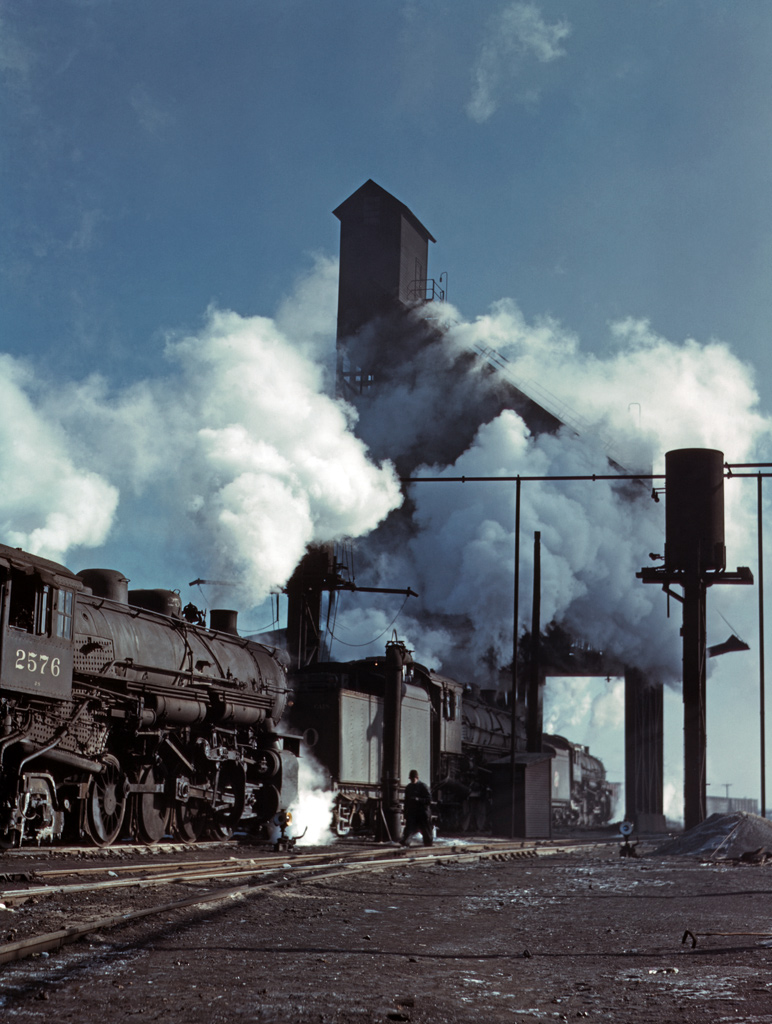
I’ve always liked photographs of the locomotive servicing facilities on railroads. And the facilities that service steam locomotives are especially exciting, what with all the smoke and steam in the air.
Jack Delano must have been interested in them also, as he recorded quite a few images of the beasts as they were marshaled through the facility. In this view he captured the line of locomotives as they were fed and watered at the Chicago and North Western’s service area in their Proviso yard near Chicago. The locomotives receive coal, water, sand and lubrication here, and they drop the ashes from their fire boxes into the ash pit. In a large facility such as this, there was almost always a constant line of locomotives going through as seen here.
It’s a cold winter’s day in December of 1942, and if you look carefully, you can see ice cycles hanging on the trailing truck of the 2576!
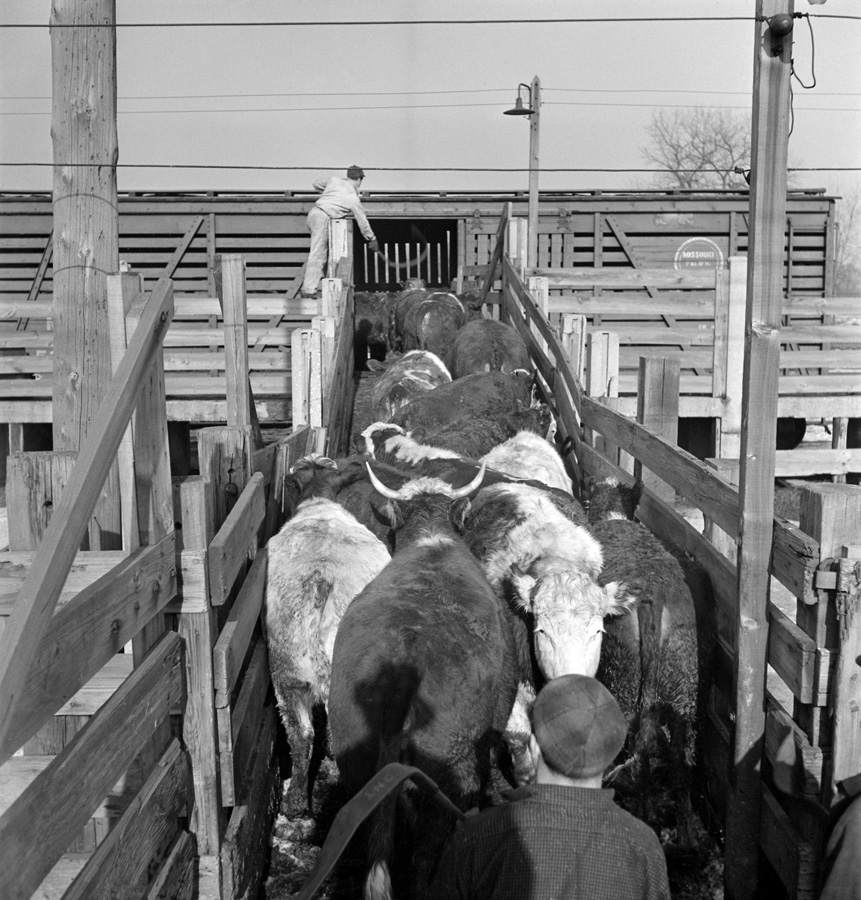
In January of 1943 Jack Delano made his way to the Calumet Park stockyards in Calumet City, Illinois. There he found workers busily loading stock cars that day. In the photograph below steers are being loaded into a Missouri Pacific car. It seems that one of the beasts is wise to what’s going on, and has decided she isn’t going to have any part of it!
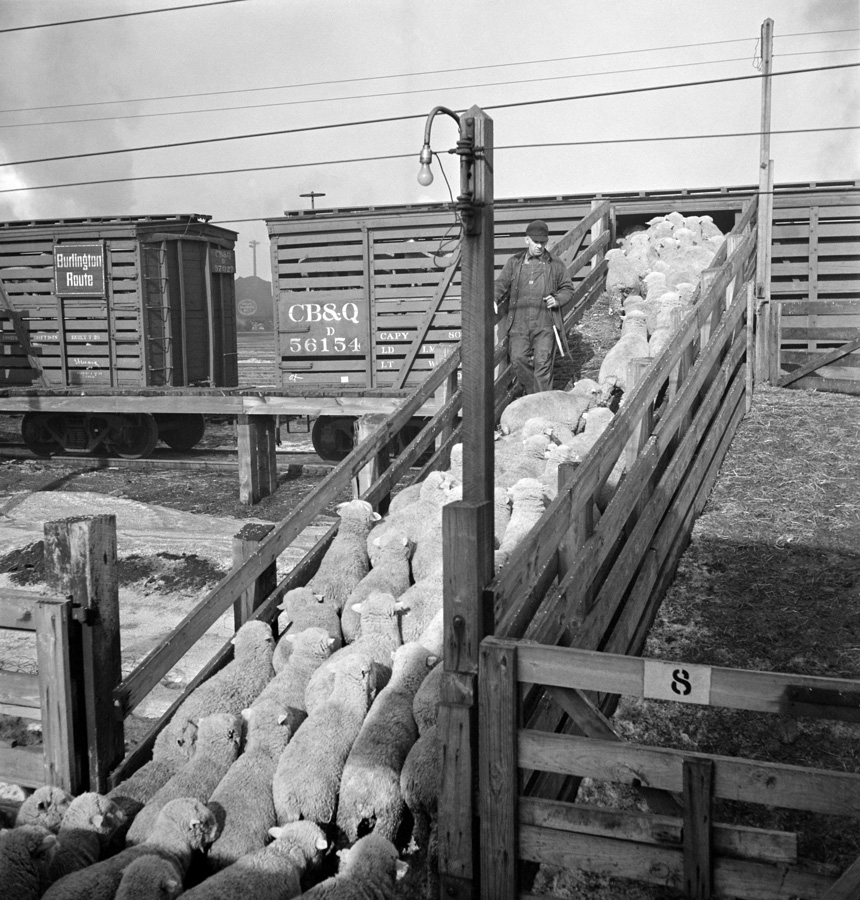
And here is a group of sheep being loaded into the upper deck of a Burlington stock car. They all appear to be compliant, even giving the worker wide berth.
These stockyards are operated by the Indiana Harbor Belt railroad.
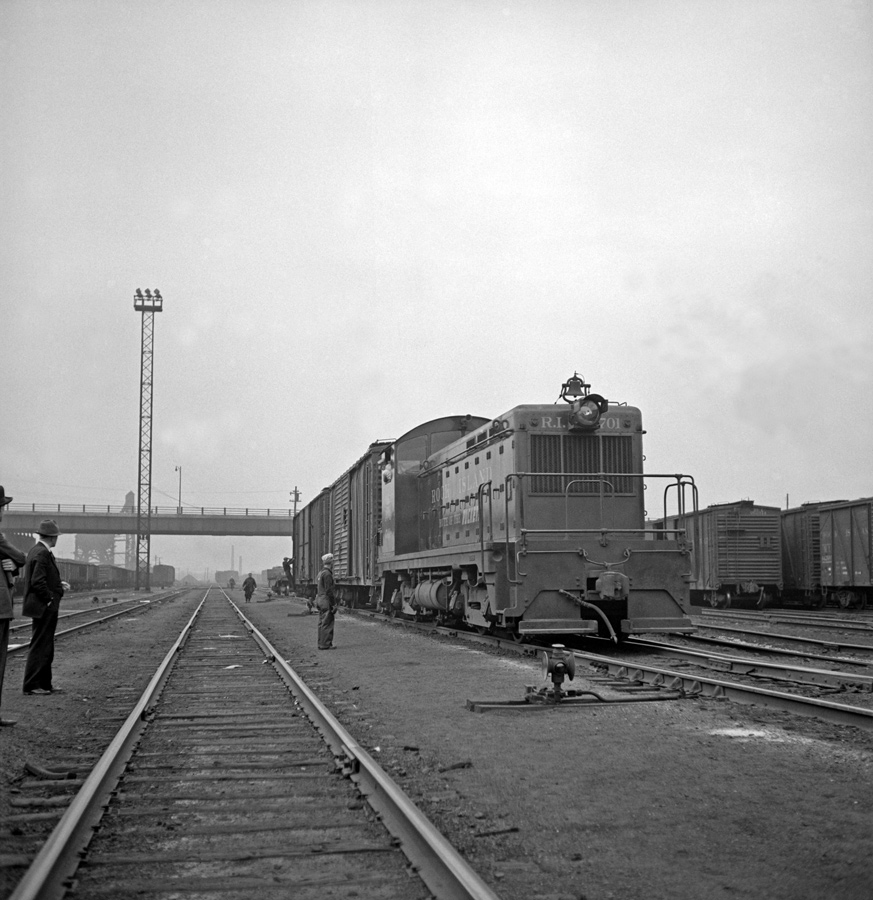
In May of 1943 Jack Delano made a brief visit to a Chicago, Rock Island and Pacific Railroad yard (presumably) in Chicago. While there he recorded some of the switching operations of a crew. Their power was this EMC Winton powered NW1 (relatively rare – only 27 were built). Note the headlight with a visor, and the steam locomotive style bell.
Looks like a couple of “suits” from the front office are observing the crew (or perhaps the locomotive) on this overcast day.
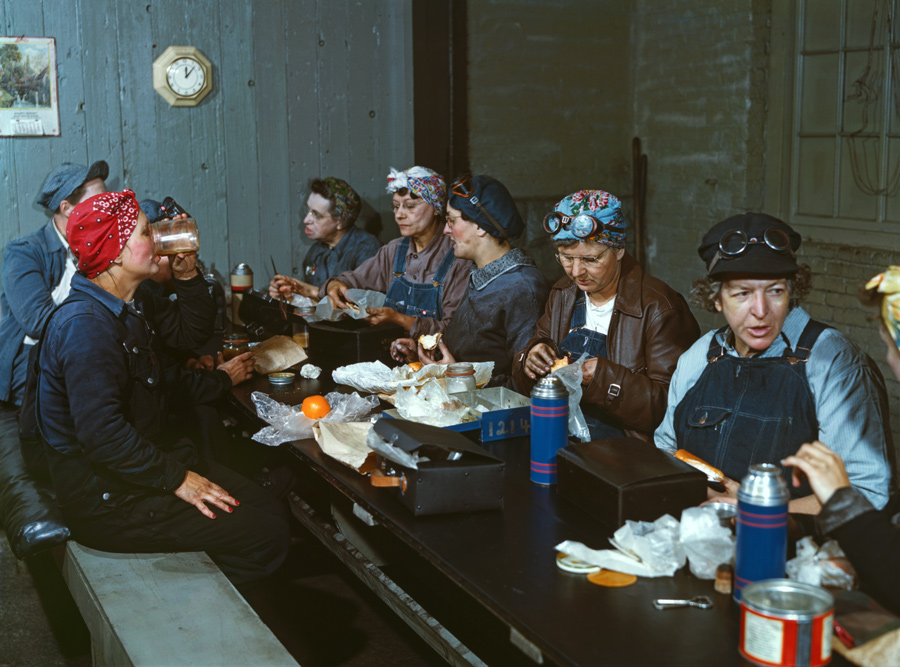
We’ve seen several photographs of the women that had taken jobs with the railroad during World War II. The Chicago and North Western had many ladies employed as engine wipers at their yard in Clinton, Iowa. Part of the locomotive service included a washing and wipe down, a very labor intensive job handled by this crew.
It’s lunch time and the women are having their meal and getting a bit of rest in their “lounge” area. In the high resolution photograph, it’s easy to see the grit, grease and grime on these lady’s hands, indications of their hard labor. The table is filled with lunch boxes, Thermos bottles and Mason jars. In the days before plastic wrap and Tupperware containers, wax paper served well to protect a sandwich. We’ve seen a couple of these ladies before; Mrs. Marcella Hart (the lady with the red bandana) and Mrs. Viola Sievers (third from left on the far row) climbing up on a steamer to do their job. Also identified in this image is Mrs. Elibia Siematter at right (in foreground).
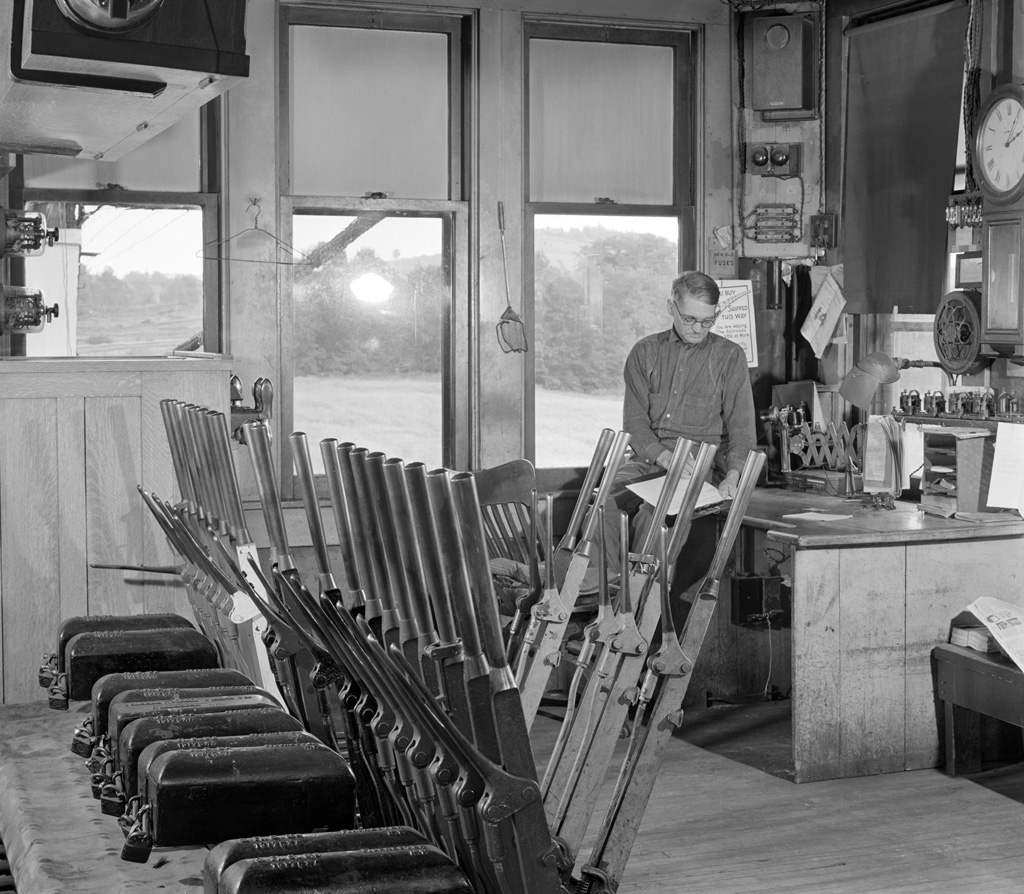
In September of 1940 Jack Delano was traveling through the state of Pennsylvania. That afternoon while passing through the DuBois area, he spied a railroad tower, and decided to pay a visit. The operator there was a Mr. T. J. Long, and he graciously allowed Mr. Delano to photograph his interlocking facility. The railroad(s) served weren’t mentioned with the photograph, but I’ll speculate that this was protecting a junction of the Baltimore and Ohio and Pennsylvania railroads.
Mr. Long was also the president of the Tri-County Farmers Co-op Market in DuBois.
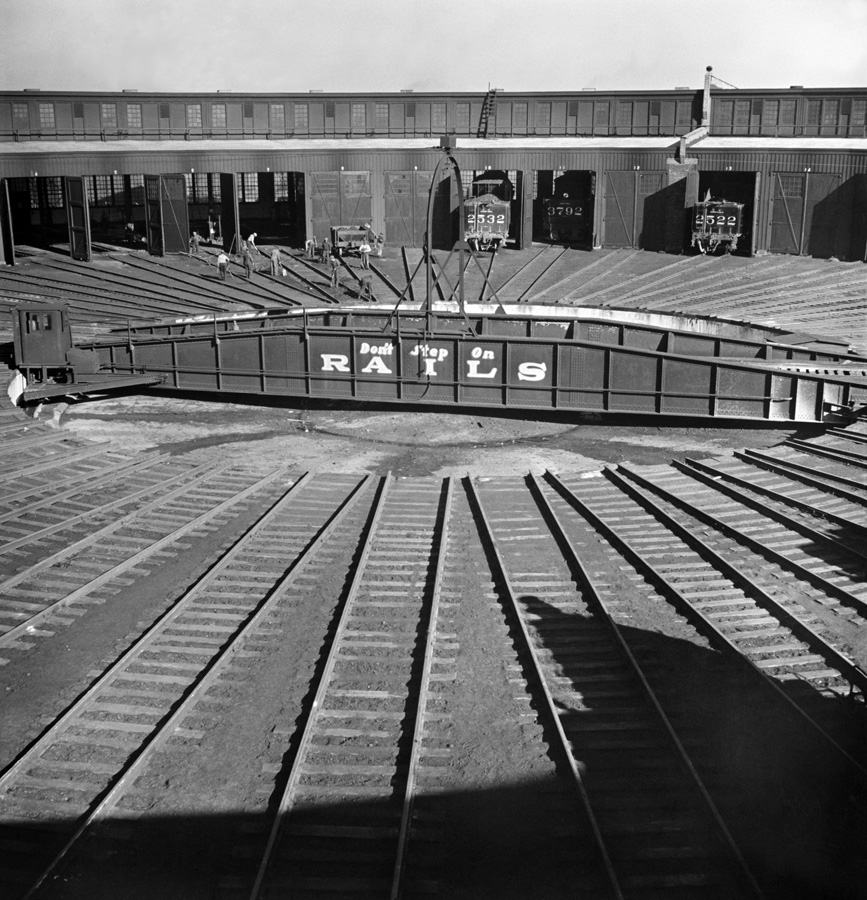
There isn’t much better than a turntable and roundhouse that speaks of steam railroading! In November of 1942 Jack Delano climbed up onto the roof of the Illinois Central’s roundhouse in Chicago. There he captured this overall view of the pit and part of the huge structure. Note the track workers doing repairs to one of the tracks. And the message on the turntable’s bridge is rather unique.
We’ve seen a couple other images recorded at this facility. A year ago we saw this view showing one of the road’s 2-10-0 steamers easing off the table as she headed toward her stall. And two and a half years ago we witnessed a switcher taking a spin on the table.
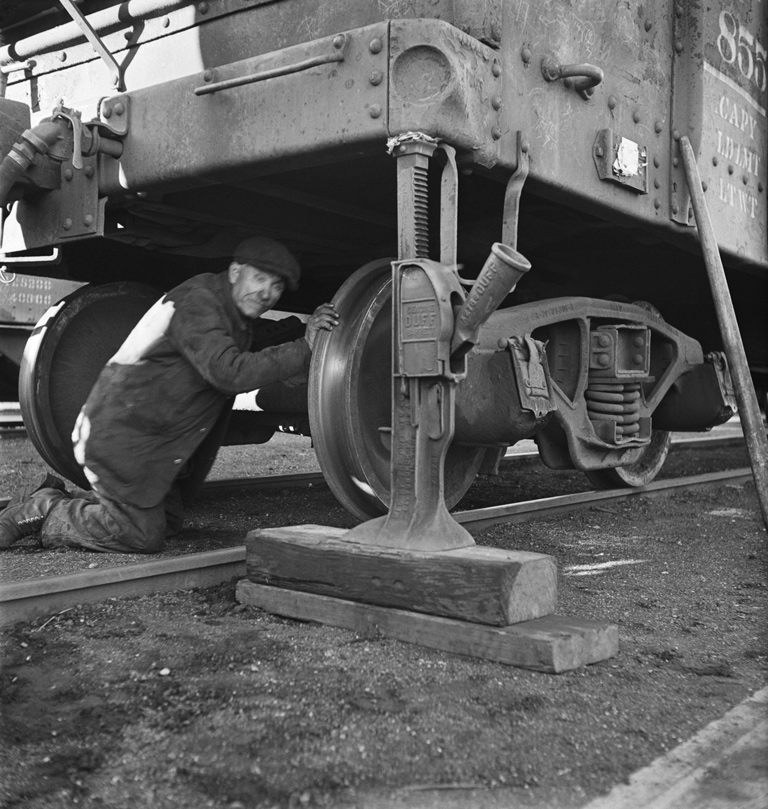
In November of 1942 Jack Delano spent some time at the Illinois Central freight yard in Chicago. During this visit he observed this worker beneath a freight car on a repair track that was undergoing running gear repairs. The car has been raised to facilitate rolling it’s truck out for replacement. I suspect this operation would be handled a bit differently in today’s workplace!
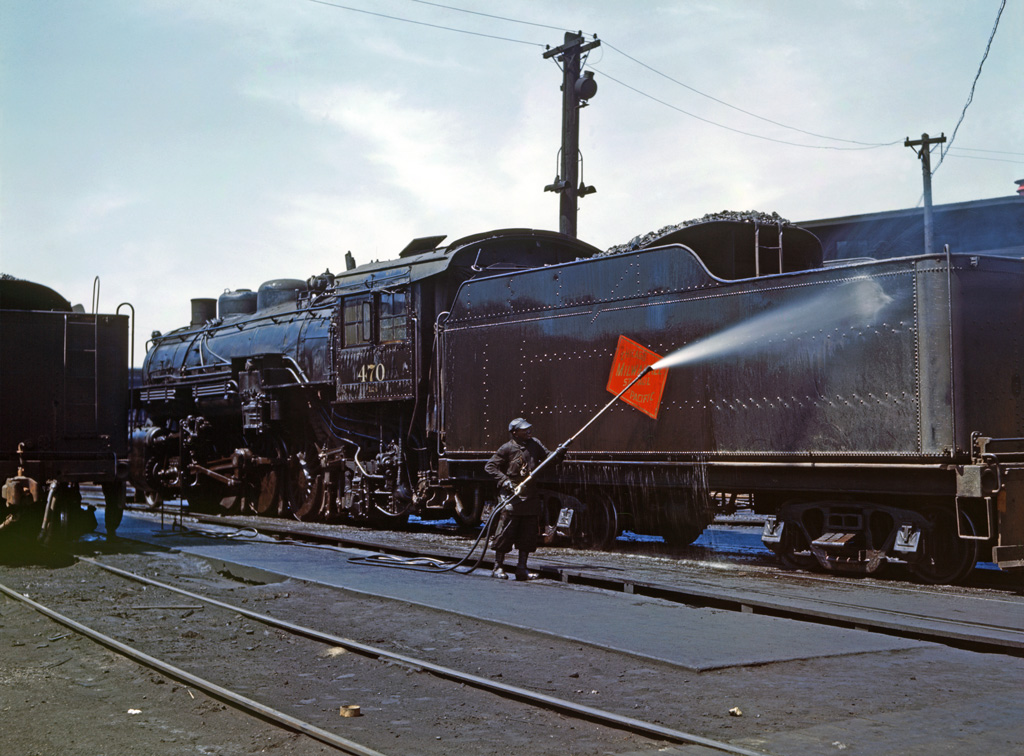
When Jack Delano traveled through Bensenville, Illinois in April of 1943, he stopped to observe the goings on at the Chicago, Milwaukee, St. Paul and Pacific Railroad (the Milwaukee Road). He stopped near the roundhouse to observe this worker washing down one of their steamers just in from it’s run. This class L2b Mikado was built by Baldwin, a member of a group of 100 built in 1922-23. Apparently some roads were conscience of their image, even with their freight locomotives in those days.
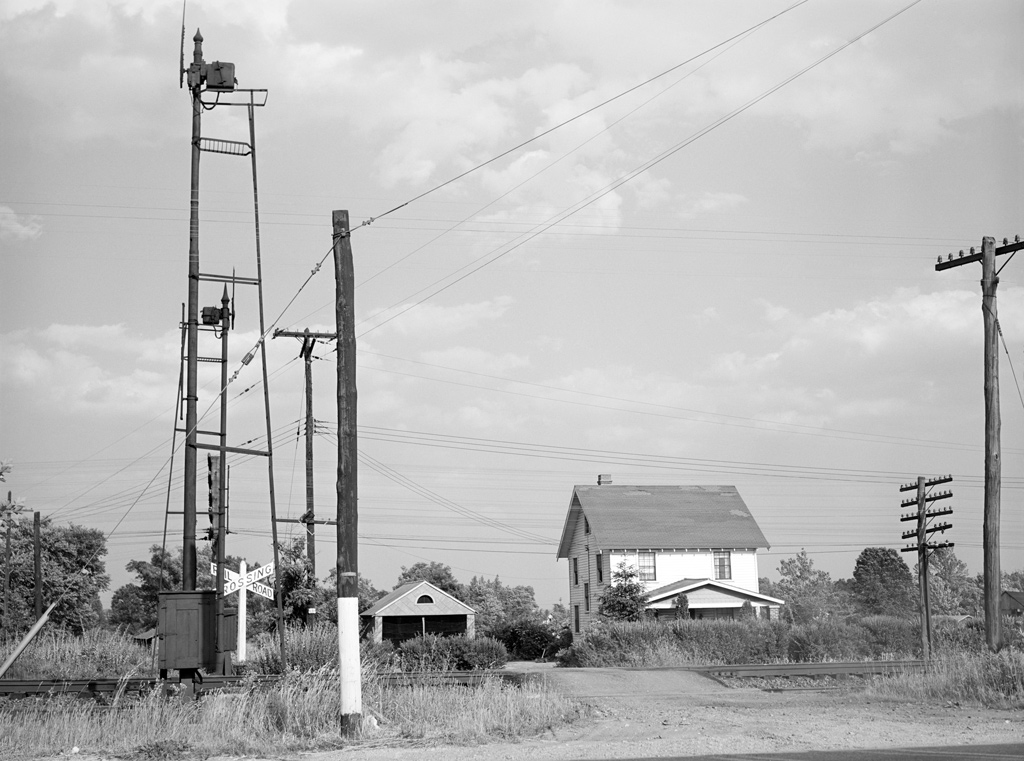
In June of 1940 Jack Delano was traveling through Maryland, heading down U.S. Highway No. 1. This railroad crossing in the small community of Muirkirk caught his eye, so he documented it. The railroad is the Baltimore and Ohio, and those semaphore signals caught my eye, so I thought I’d share the image with you.
Note also the telegraph poles at right with six cross-arms supporting the telegraph lines.
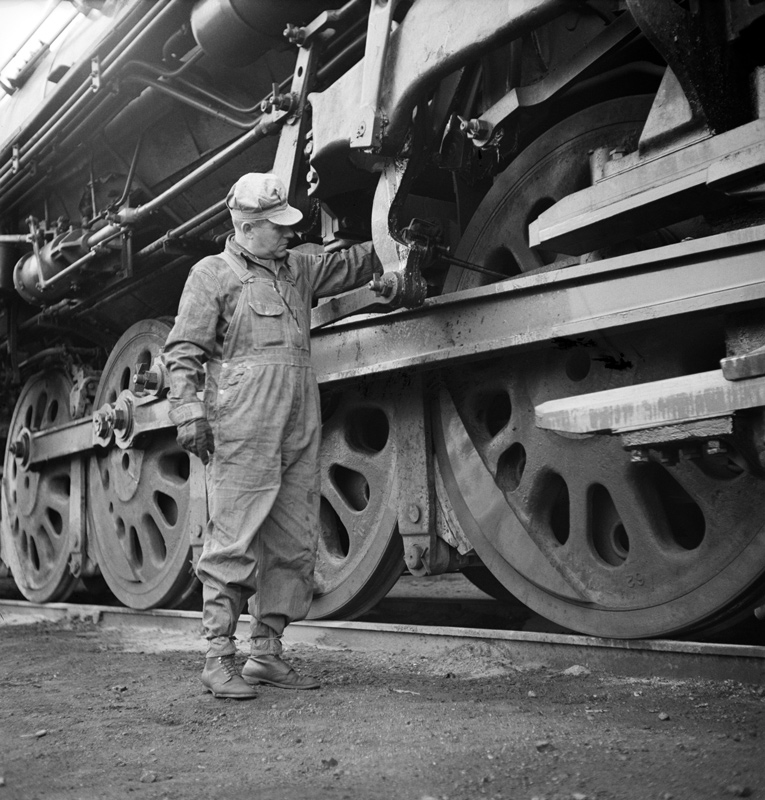
Operating a steam locomotive can be a labor intensive thing, with almost always something to do for both the engineer and the fireman. Jack Delano spied this engineer as he was oiling around his charge before starting out on the day’s run. It’s likely that the fireman is busy tending the fire and making sure everything is in working order at his post.
It’s May of 1943 and we’re in the Chicago, Burlington & Quincy Railroad’s Clyde yard in Cicero, Illinois.