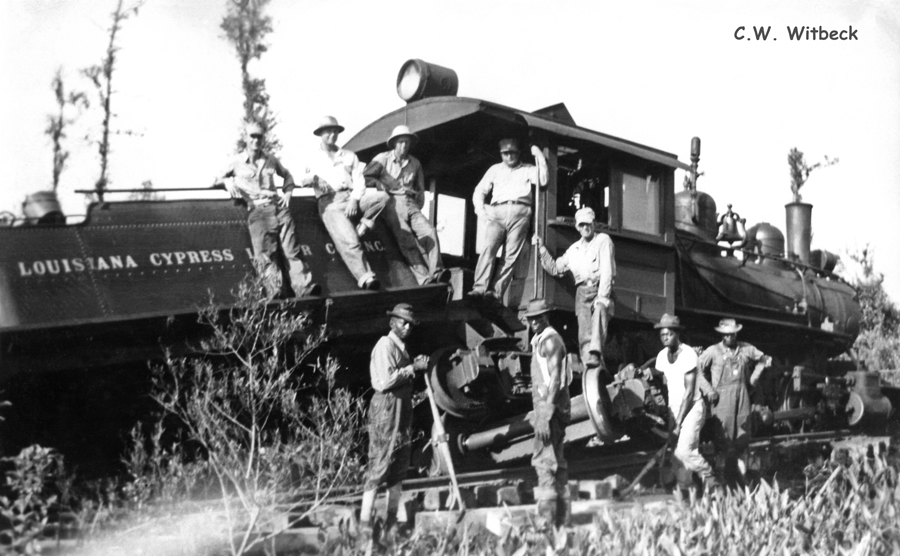
The Louisiana Cypress Lumber Co. locomotive #1 stubs her toe out in the swamps. While backing over rough track the tender derailed, pulling #1 off the rails as well. Date unknown, but likely around 1951.
C.W. Witbeck photo, Jack C. Shall collection
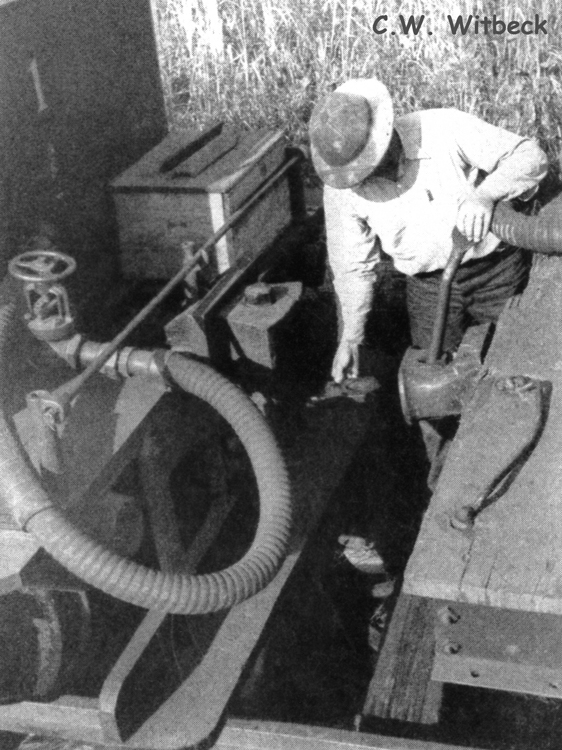
Watch Your Fingers! Conductor Lloyd Ballard holds the link in his right hand and the pin in his left. As the cars come together, the conductor will guide the link into the coupler pocket. Then the pin gets dropped into the pocket, securing the link. Many men lose fingers working with these devices. The rough swamp trackage prevented use of knuckle couplers. Date unknown, but likely around 1951.
C.W. Witbeck photo, Jack C. Shall collection
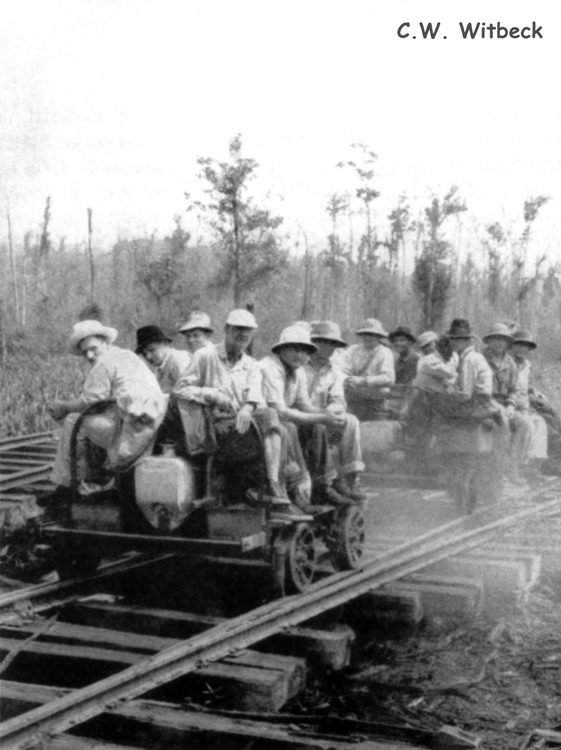
Heading Out. The Louisiana Cypress Lumber Co. log cutters enter the woods at first light using motor cars. I’ve read they would leave the swamp somewhere between noon and 4pm to avoid the mosquito swarms. Date unknown, but likely around 1951.
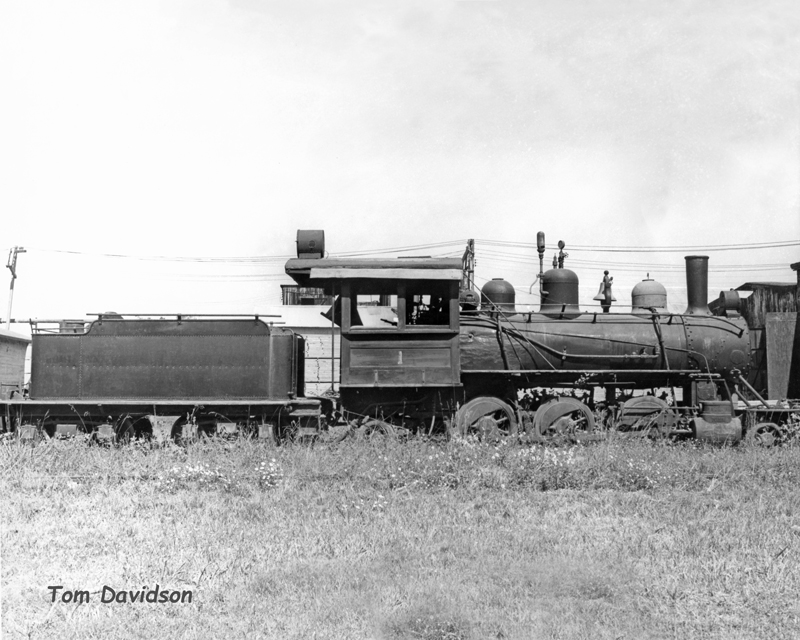
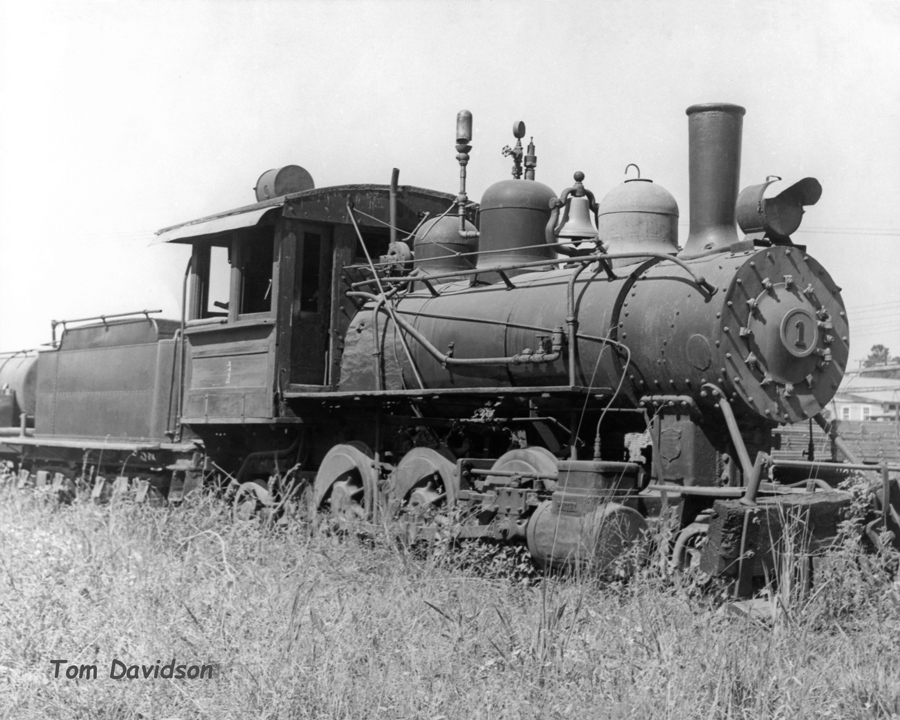
I mentioned in last week’s blog post that I would likely scan more of the photos from the late Tom Davidson’s Louisiana Cypress Lumber Co. scrapbook. Today I have three more images to share. The first is another view of the little Prairie locomotive that Tom recorded sometime in the early 1960s. I noticed that the company name is no longer on the tender. Since the cab still has its number 1 on it, I presume the other lettering was intentionally removed.
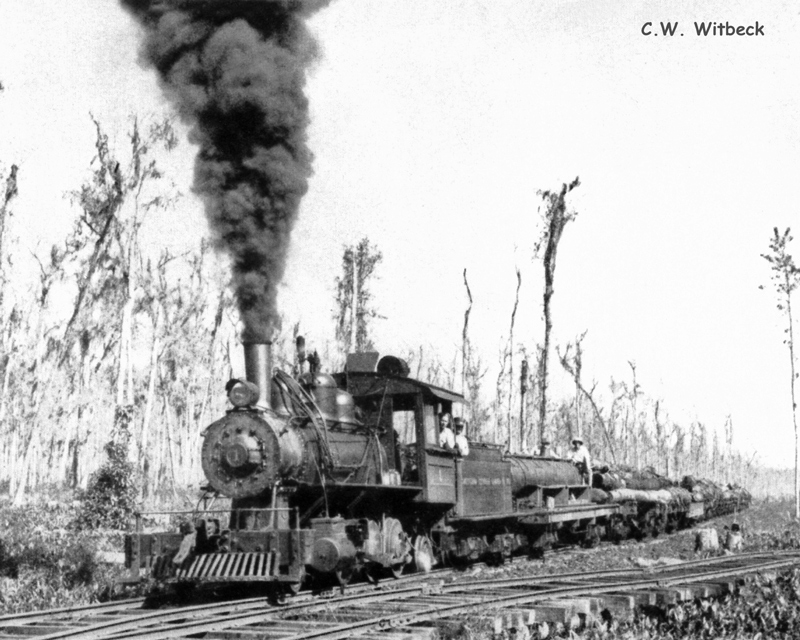
Below is a scene captured by C.W. Witbeck as the #1 is heading back to the mill with its train of logs. When enlarging my scan, I think Tom’s photo was a scan from a magazine, evidenced by the half-tone appearance. Nevertheless, it’s a nice scene of the train heading out of the swamp.
Notes on the photo: Louisiana Cypress Lumber Co. No. 1. A 2-6-2 built in 1921 by H.K. Porter for Rathborne Lumber Co. Sold in late 1960s and moved to Houston. Now stored in Atlanta. -1951
A bit more information about the whereabouts of the loco may be found on my older post from here: Louisiana Cypress Lumber Co. #1. Be sure to read the comments on the post also.
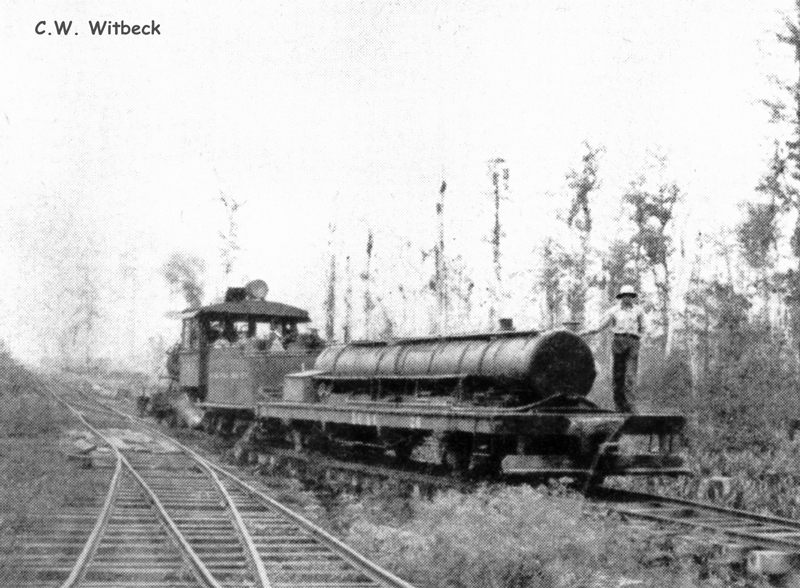
And finally, the Witbeck image below is the water car that was trailed behind the locomotive.
Notes on the photo: Conductor Lloyd Ballard rides the water car, used to supply water for the boilers of the swamp equipment, as it is backed into a siding. Tools and spare parts line the sides of the tank, ready for any problem. -1951
Note in these last two photographs that the Louisiana Cypress Lumber Co. Inc. name does appear on the locomotive’s tender.
Images collection of Jack Shall (former collection of Tom Davidson)
Back in June of 2025, I posted a photograph of the Louisiana Cypress Lumber Company’s #1, a diminutive Prairie locomotive built by H.K. Porter. The 1 spot was the primary power for hauling cypress logs out of the swamps and to the mill. I was recently digging through a bunch of old books and binders, and came across a binder that I had forgotten I possessed. It had the title “LCLC, Louisiana Cypress Lumber Company, Ponchatoula” on it, and I then remembered it had been given to me by the late Tom Davidson several years before his passing. It contains his collection of photographs and articles about the company, and is pretty interesting. Some of the images are labeled as CW (I’m assuming they refer to C.W. Witbeck) and TD (also assuming this to be Tom Davidson). The one print that caught my eye was the Tom Davidson image shown here. His notes say that the image was recorded in the early 60s. I had photographed virtually the same view almost a decade later. While I no longer have my version (it drowned in the Great Flood of 2016), my memory of that photograph is still vivid in my mind, and I recall the locomotive looking just about the same then as what we see here.
I won’t take the time or space here to detail the specifics of the locomotive, but rather you can see and read the earlier post here: Louisiana Cypress Lumber Co. #1. Be sure to read the comments on the post also.
I may post several more of the photos from that binder, as they are interesting. It will take a bit of time though, as after scanning, I generally also take time to “clean up” the images (removing dust spots and defects, sometimes adjusting the lighting a bit, etc.). I’ve done just that on this photograph.
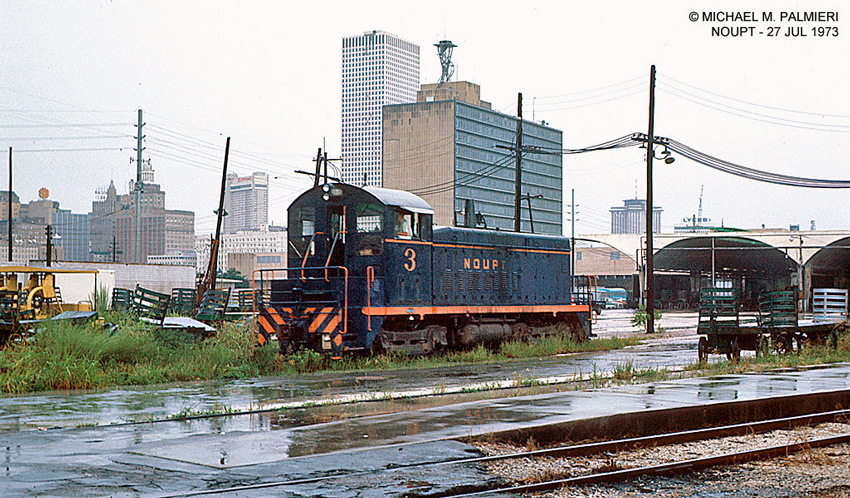
On a Friday afternoon photographer Mike Palmieri was at the Union Passenger Terminal in New Orleans, Louisiana (commonly known as NOUPT). While there he observed this blue terminal switcher shuffling about and recorded her as she was running up to the terminal for more work. His comments are below the photograph.
On a rainy summer afternoon New Orleans Union Passenger Terminal SW8 number 3 had just removed the mail car off of the southbound PANAMA LIMITED, placed it in the post office annex next to the station and was now returning to its other chores. At that time there were six post office tracks, covered by the arches seen on the right; but soon after this they were all gone. I had just purchased a used 35mm camera and this was my second railroad slide 🙂
The number 3 has a soft place in my heart. A dozen years prior to this image (give or take a year), I was a very young teenager standing on a platform at the NOUPT with my dad. I was intently studying this locomotive as it sat there idling away unattended. By and by the crew showed up, having returned from lunch. They were taking their place in the cab and on the rear platform when the engineer called down to me and asked if I wanted to come up for a look-see. With bulging eyes, I shouted my desire, the engineer asked my dad if that was okay, and he gave his nod of approval. Once in the cab, the engineer had me seated in front of the controls and proceeded to point out every lever, switch and gauge and what their function was. Then he asked if I wanted to take a spin with them (like he had to ask!). A shout to my dad, and with another nod, we were off.
But to my surprise, he didn’t take my place at the seat but rather directed me in the steps to get the beast rolling. Three short toots of the air horn, move the reverse lever to the rear, rotate the brake handle to release the brakes, then finally pull that big throttle lever two notches out. The engine roared, and with a slight shudder, we started rolling. We ran way out to the switches beyond the platforms, and a switchman lined the route for the track we were to enter to make a pickup. Reversing the direction, we then crept into the track to grab a couple passenger cars. We coupled up and that signaled the end of my throttle time and excursion. The “train” was to go way down to the coach yard, a bit too far for me to walk back from. So I reluctantly surrendered my position and climbed down to the ground, and the switchman escorted me back to the platform where my dad stood, hands in pockets, and with a smile on his face because he understood the joy I had just experienced. I remember that event like it was just yesterday. 🙂
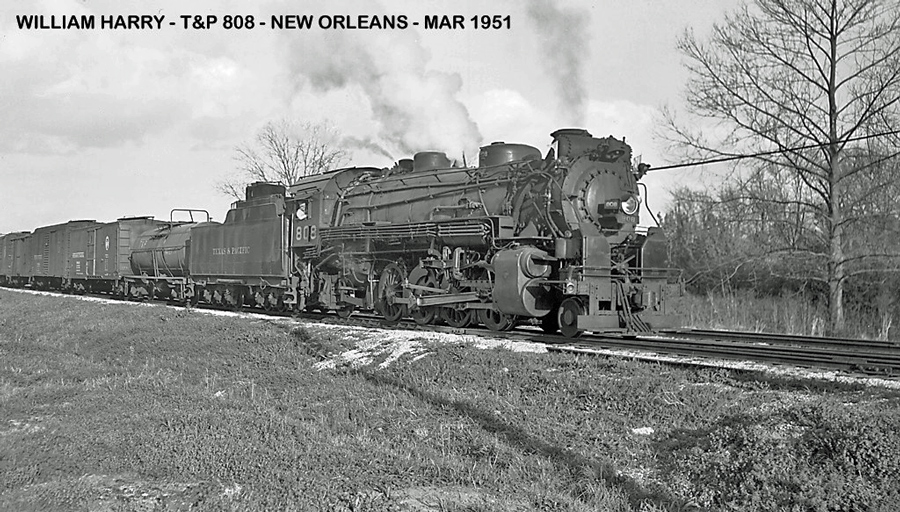
William Harry recorded this scene of a Texas & Pacific freight train in March of 1951. The train, headed by T&P 2-8-2 #808 followed by water car X25402, was running extra (as evidenced by the white flags), and was heading east in the New Orleans area. According to the comment on this photograph, the T&P had eleven Mikados on their roster, all built by Baldwin in 1919. They were USRA oil burning, light Mikados. An interesting story about the somewhat unusual acquisition of these locomotives may be found at SteamLocomotive.com. There are some details on this locomotive that likely were added by the T&P, the most obvious are the capped stack and the tender’s dog-house.
Some details from the aforementioned website: these locomotives were designated as Class H-2 and were assigned road numbers 800 through 810. They had 63″ diameter drivers, 26″ x 30″ cylinders, a 200 psi boiler pressure and they exerted 54,724 pounds of tractive effort and each weighed 290,000 pounds. They were rebuilt in 1936, with an increase of 2,000 pounds and they were equipped with roller bearings. My notes: I’m speculating that the feed-water heater and twin pilot-mounted air pumps were added during the rebuild.
Several weeks ago I posted a photograph of Texas & Pacific steam locomotive #331. The locomotive was a Class D-9 built by A.L. Cooke in May of 1903, and the image was taken in 1939 with the locomotive shown in its as-built condition. Most of the Class D-9s were upgraded in later years, but I found no evidence that the #331 received those upgrades.
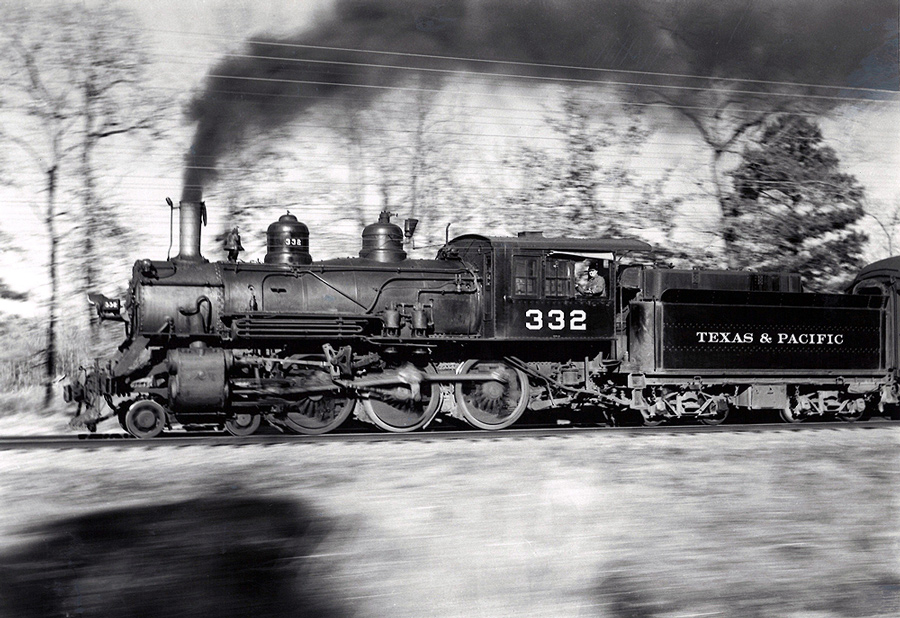
Her sister locomotive, the #332, however did receive those upgrades. The photograph below is undated, but shows how she looked after receiving piston valves and new outside valve gear. She also got a new headlight mounted on the smokebox front, and “stairs” from the pilot deck up to the running boards.
I really like this shot, apparently taken while pacing the train. The blurred foreground and trees in the background really give the locomotive a sense of speed.
Unfortunately the photographer of this great scene is unknown.
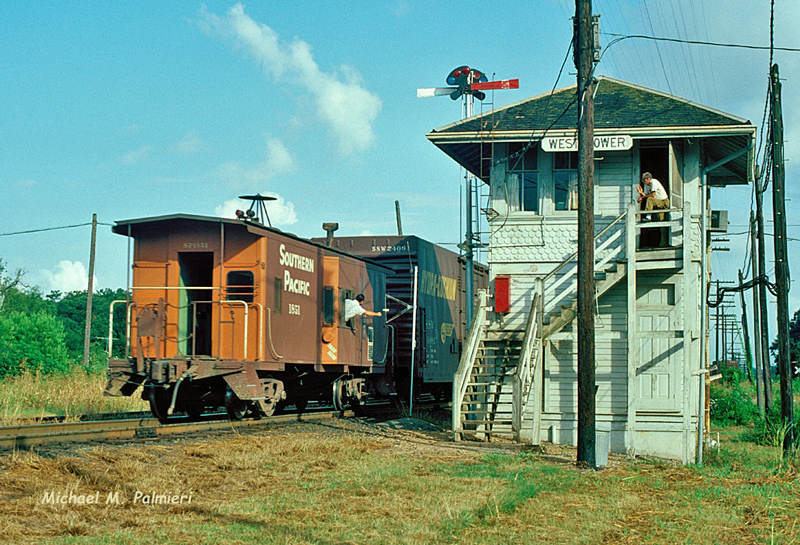
On a Friday, August 6th of 1976, photographer Mike Palmieri had stationed himself at the Southern Pacific’s West Tower in New Iberia, Louisiana to watch the traffic flow. West Tower protected the crossing of the Southern Pacific with the Missouri Pacific’s line down to the Jefferson Island salt mine. The tower’s train order signal is indicating to the train crew that they have train orders to pick up.
A westbound freight train eventually showed, and is passing under the watch of the tower operator. At precisely 8:35 a.m. Mike recorded this view of a crew member just as he was about to snatch his orders on the fly while passing the tower.
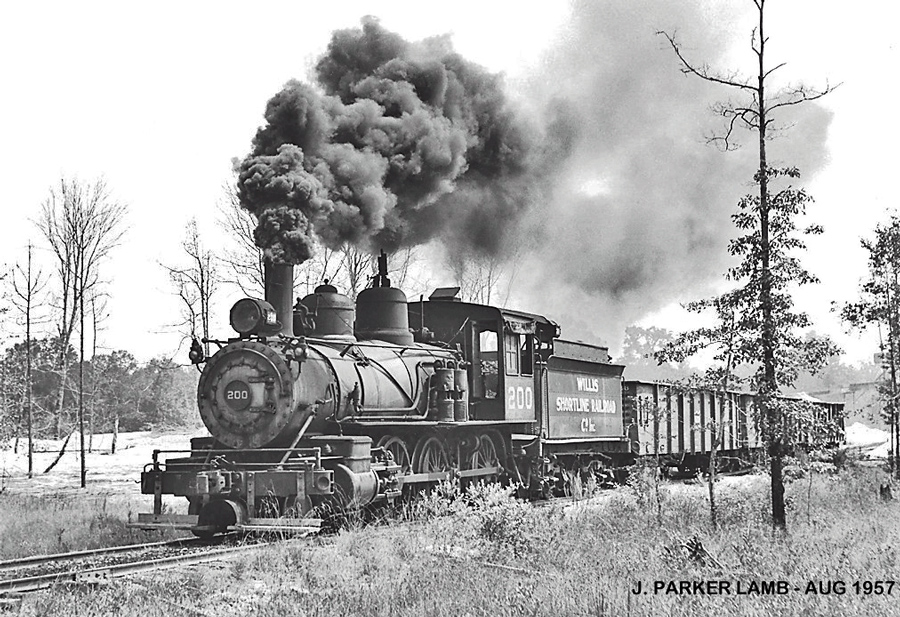
In August of 1957, photographer J. Parker Lamb captured this view of the Willis Shortline Railroad’s #200 steam locomotive hauling a string of gondolas at a sand and gravel pit.
“The Willis Shortline Railroad Co. served a sand and gravel pit owned by Jerry Willis at Enon, in Washington Parish, Louisiana and was located along the Gulf, Mobile & Ohio’s Bogue Chitto District. This 4-6-0 was built by Baldwin in August 1889 as Texas & Pacific class D-5 number 200. It was sold to the Cinclare Central Plantation at Brusly, in West Baton Rouge Parish, where it was used to haul sugar cane trains over the T&P’s Port Allen Branch. Cinclare replaced the 200 with a used 44-ton General Electric center-cab diesel-electric loco, and the Ten Wheeler was sold to the Willis Shortline in 1955. It was last used around 1963 and subsequently scrapped.” -Mike Palmieri
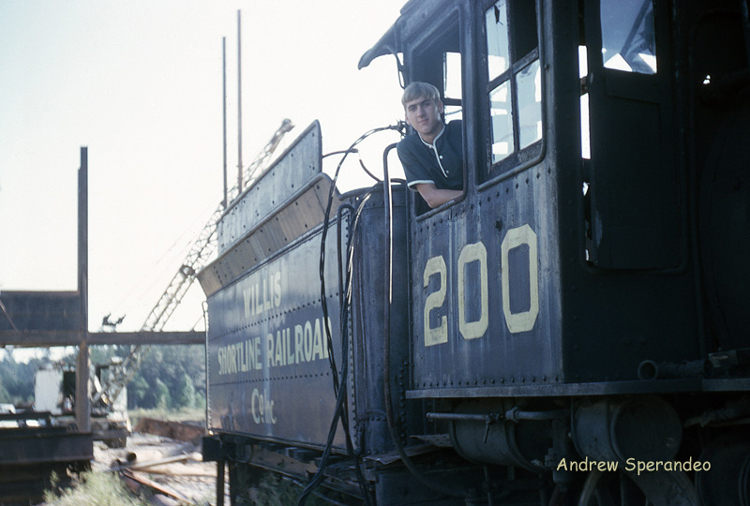
I was lucky to see this old locomotive as a 17 year old kid back in the summer of 1965. I was on a railfanning expedition with a few members of the Crescent City Model Railroad Club, serving that day as the driver for Lou Schultz, Andy Sperandeo and Rick Boutall. This gravel pit was the last stop in our journey which also included stops in Bogalusa at the Crown Zellerbach mill to see their old interurban car hauling paper rolls around the plant, and a visit to the Standard Gravel Co. pit near Franklinton. What a day that was!
Proof that I was there! 🙂
Top image by J. Parker Lamb; collection of Michael Palmieri. Bottom image by Andy Sperandeo.
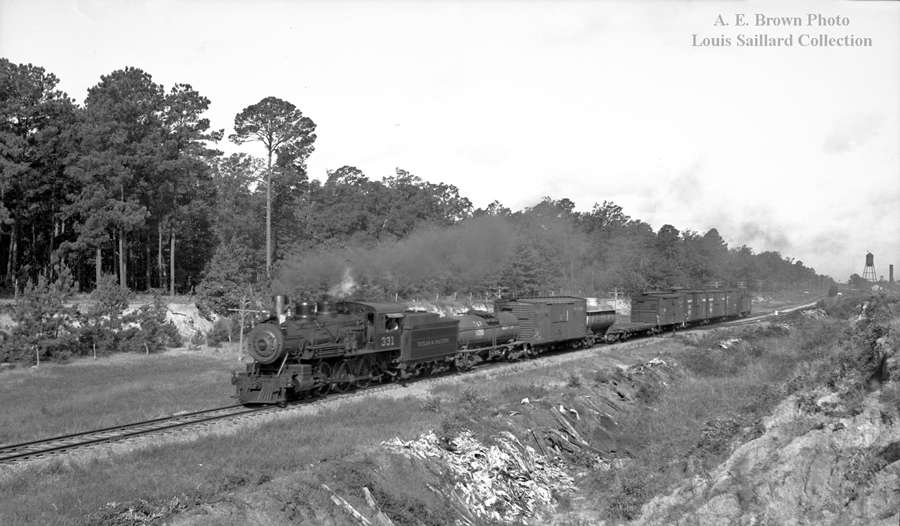
In the year 1936, A.E. Brown recorded this view of Texas & Pacific locomotive #331 as she was running extra with a short freight. The location is east of the Cedar Grove tower located in Louisiana. Looking at the 1948 railroad Atlas, I see that the T&P crossed both the Southern Pacific and the Kansas City Southern in a place called Cedar Grove. This is now within the greater Shreveport area. I’m speculating that the tower was likely at one of those crossings.
I really like this scene, both the little train itself, and the countryside where it’s running. This is the flavor that I’m hoping to capture on my Louisiana Central model railroad pike that is presently under construction.
The #331 is a 4-6-0 “ten-wheeler” and she is an oil-burning, Class D-9 built by A.L. Cooke in May of 1903. She ran with a 200 psi boiler pressure feeding her 20″x26″ cylinders, those powering the 63″ drivers. She had a tractive effort of 28,000 lbs. I’ve seen photos of several of her sisters that had been out-shopped at some point, receiving piston valve cylinders and new outside valve gear. Some had their headlight location moved to the center of the smokebox door. I can’t say whether the #331 received that upgrade in its later years.
This photograph is part of the Louis Saillard collection that is being uploaded to the flickr website by Tony Howe.
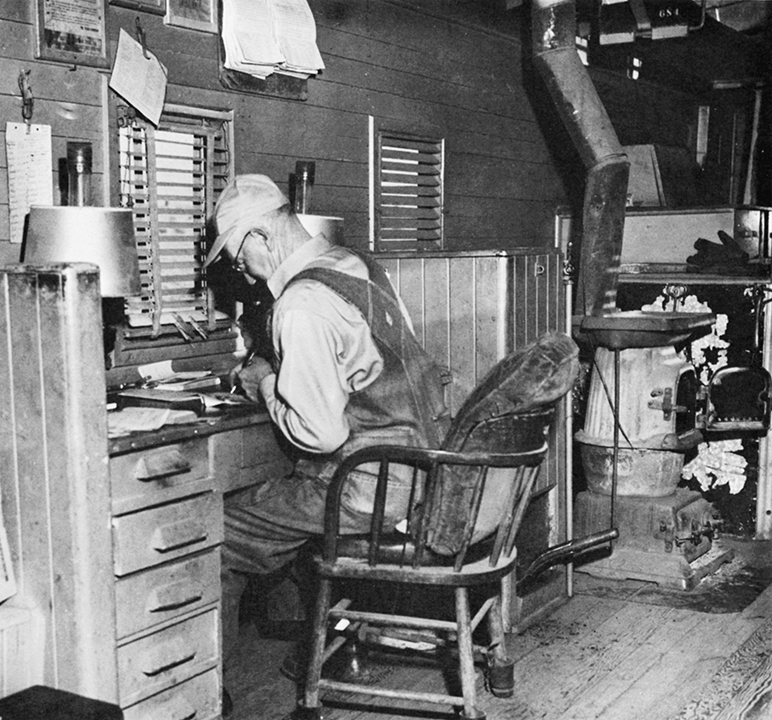
A railroad caboose, in my view, is perhaps the most interesting of railway cars. In the “golden era” of railroading, the caboose had become a crew’s home away from home. It was common for a conductor to be assigned a particular caboose that became “his” caboose. And many of those conductors (perhaps aided by their brakemen) began to customize their hack to their liking. They might add things that added to their comfort, or perhaps things to make their job easier and more efficient. And many also added things to make the traveling home more like home. Today’s photograph shows a sample that includes all of these things.
The scene is the interior of Southern Pacific #684, a class C-30-1 caboose. Seated at the desk is conductor Charles Martin, busy with his paperwork. And the gentleman has done a number of things to aid his work, and increase his comfort. The Venetian blinds will certainly aid in keeping the glare from his eyes as he works. And the lamps aren’t likely to be railroad issue. Most obviously is his chair. I’m quite sure it’s also not railroad issue, with its nice, thick cushions. Note the glass telegraph insulators on the leg tips. I had never seen a detail like that, and I first thought perhaps they were to help keep the chair from sliding. So I searched for an answer and found two. A lot of folks say this was commonplace on telegrapher’s chairs; that it protected them from electrical shock if a bolt of lightning hit the telegraph lines while the agent had his hand on the key. A few others claimed that these glass insulators made the chair slide much easier on rough wooden floors (exactly opposite of my speculation). I’m prone to buy into the latter explanation since the conductor doesn’t have a telegrapher’s key. You know better? . . . then please share with us!
When I saw this image I thought it might be from photographer Jack Delano, who had a similar “style” in his photography. But this image was recorded by Stan Kistler. The photo is undated, but I believe it to be in the 1950s. I’ve heard Mr. Kistler’s name before, and I’m encouraged to look further into his work as I’m liking what I’m seeing here.
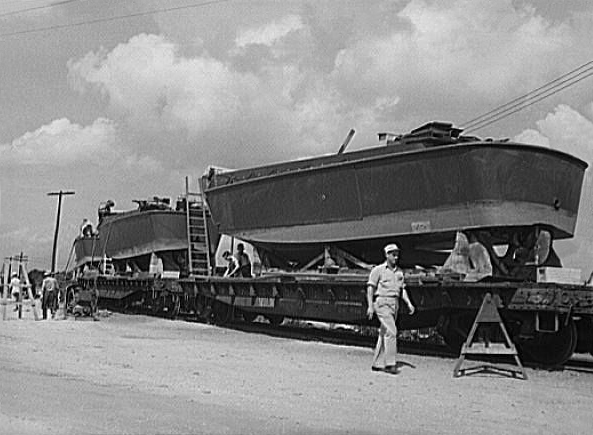
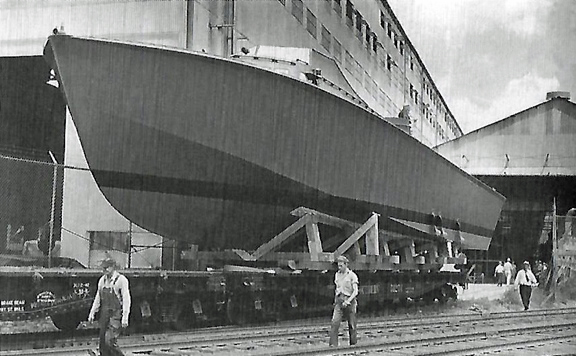
No, I’m not talking rail ferries. Rather, the shipment of boats on the railroads. During World War II an entrepreneur by the name of Andrew Jackson Higgins designed and built over 20,000 boats and small ships for the U.S. Navy. He originally had a small boat building company in New Orleans, Louisiana used to build boats for his lumber exporting business. At the onset of WWII this expanded into five huge boat building plants. One was in Houma, Louisiana, the rest in New Orleans. One of those four plants was located on City Park Avenue, just several blocks from the home I was raised in.
The largest number of the boats he produced were the model LCVP ramp boats, often referred to as Higgins Boats. These were the ones that were able to get in close to beaches, then drop a large ramp at the front for the Marines and the Army troops to storm out of. The other boats that gained attention were the PT (patrol torpedo) boats that Higgins produced for the Navy. While not as numerous as the Elco built boats, they were still vital in their mission. And there were several other boats and small ships that Higgins built, mostly unknown to the general public in the general sense.
So what does this have to do with railroads? Railroads were essential for the transportation of these boats. Only one of the boat building plants had direct access to a waterway. The others (including the one on City Park Avenue) had to transport each boat to Bayou St. John, and then travel down that waterway to Lake Pontchartrain for testing. There was a rail line directly next to the City Park plant, so boats there were shipped to Bayou St. John by both truck and rail. After testing, boats would be loaded on railcars for shipment across the country for delivery to the military services.
Higgins LCVP ramp boats being loaded onto railcars at Bayou St. John in New Orleans, Louisiana for shipment to the U.S. Navy. Photo taken in early 1940s during WWII.New Orleans, Louisiana: A Higgins PT boat exits the City Park plant via railroad transport to nearby Bayou St. John east of the plant for its water testing. At 78 feet in length, the boat takes multiple cars to handle it; note the idler car in front of the overhanging bow. The boat is also well over the normal width and height limits so that the car’s routing will be carefully planned to clear obstructions along the way. Photo taken in early 1940s during WWII.
I visited a number of websites that covered the topic of the Higgins operation. One of the most interesting sites was The American Automobile Industry in World War Two, An American Auto Industry Heritage Tribute by David D Jackson. Both of these images can be found on those pages. Unfortunately, I wasn’t able to find a photo credit for these images on any of the websites that I visited.
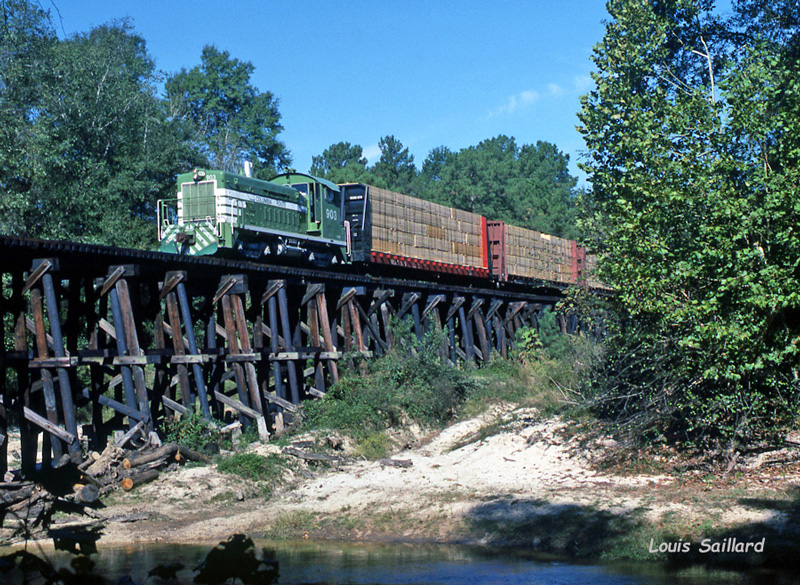
The late Louis Saillard had visited the Gloster Southern Railroad during its tenure operating on the line between Columbia and Silver Creek, both located in Mississippi. In October of 1989 he captured this view of the line’s sole locomotive and its train as it crossed the trestle at Silver Creek. Ralph Hawkins has a nice write-up about this operation on his website HawkinsRails, and I borrowed extensively for this post from the same.
This is the introduction to Ralph’s article: “Columbia Route operations . . . From November 1988 to December 1995, the Gloster Southern operated the 29 mile line from Silver Creek to Columbia, Mississippi. Dubbed the “Columbia Route” by Georgia Pacific, the line was originally built by the Gulf & Ship Island Railroad just after the turn of the century. After the Illinois Central Gulf sold the line in 1982, it was operated by the Columbia & Silver Creek Railroad until 1988, when the GLSR took control.”
Note the Columbia Route lettering on the locomotive. She’s an EMD model SW900 switcher producing 900 HP. She was built for the Hammond Redwood Lumber Co. in September of 1959. Having changed ownership several times, she finally arrived on the Gloster Southern.