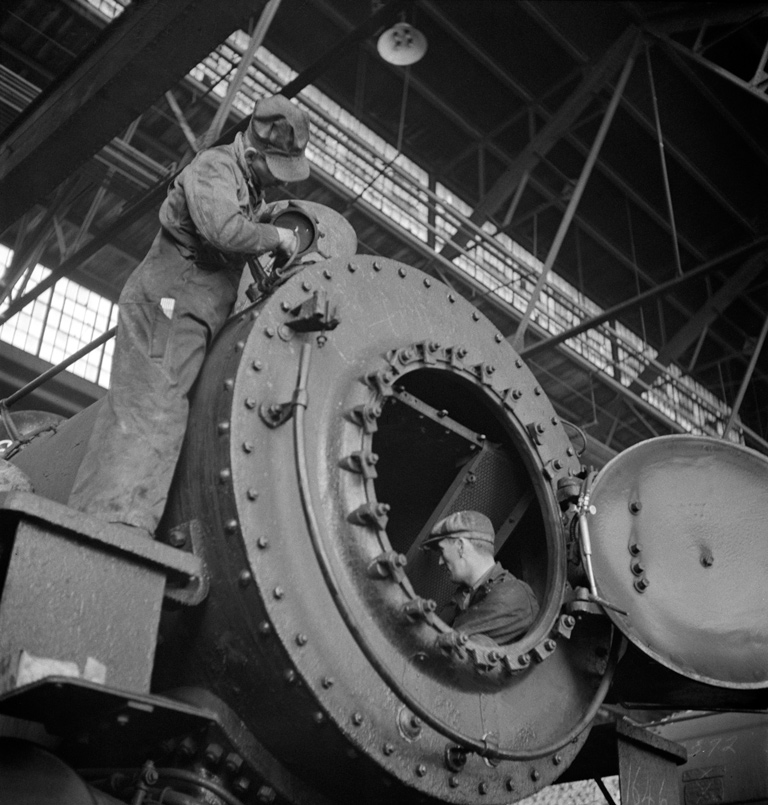
Jack Delano visited the Chicago and North Western railroad’s locomotive backshop in December of 1942. Shown here are a couple workers doing inspection and repairs to a steam locomotive. Opening the smokebox was an important part of the inspection, as it enabled the mechanic to see the tube ends for the boiler, as well as the exhaust components for the steam cylinders. The worker on the left appears to be an electrician performing some work on a class light.
Steam locomotives have a voracious appetite, and they visit the servicing facilities quite often. Here we see a line of the beasts as they replenish their supply of water, sand and coal. This is the Chicago and North Western’s coaling stage in the Proviso yard located in Chicago, Illinois. Photographer Jack Delano captured this image in December of 1942.
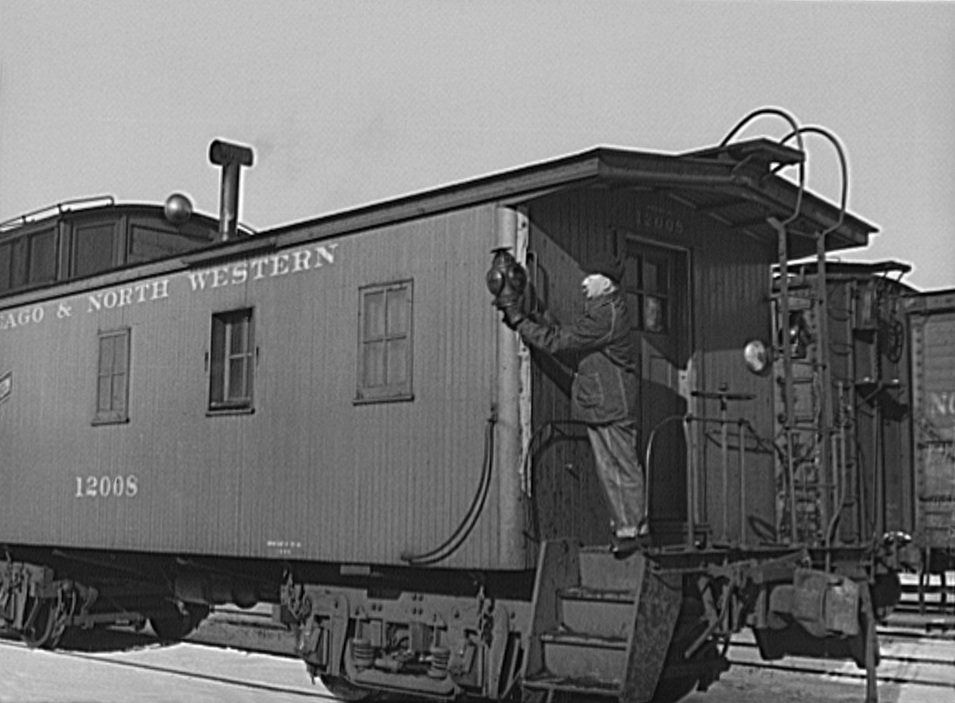
It’s a cold January day in 1943, and a crewman is hanging the marker lamps on his caboose in preparation for their run. The location is likely the Chicago and North Western’s Proviso yard in Chicago. Photo by Jack Delano
Back to our series of images by photographer Jack Delano: we’re in Chicago, Illinois and it’s November of 1942. Mr. Delano captured this view of a C&NW engineer about to ease out on the throttle of his fire-belching steed.
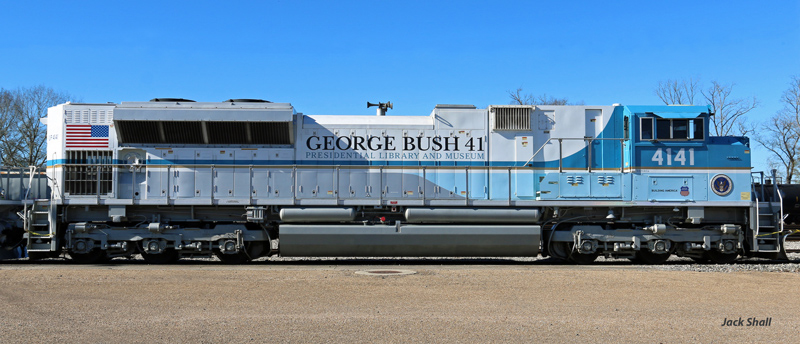
Word was floating around that the Union Pacific’s #4141 was parked over at the U.P. yard in Addis, Louisiana today. This is the locomotive that pulled the funeral train of the late President George H. W. Bush to Texas during his recent funeral. Naturally I felt compelled to investigate, so my friend Ron Findley and I headed over across the Mississippi River late this morning. Arriving in Addis, we found the prize, along with locomotive #1943, the “Spirit of the Union Pacific”.
Here’s the U.P. #4141, the “George Bush 41” parked at the edge of the yard for all to see:
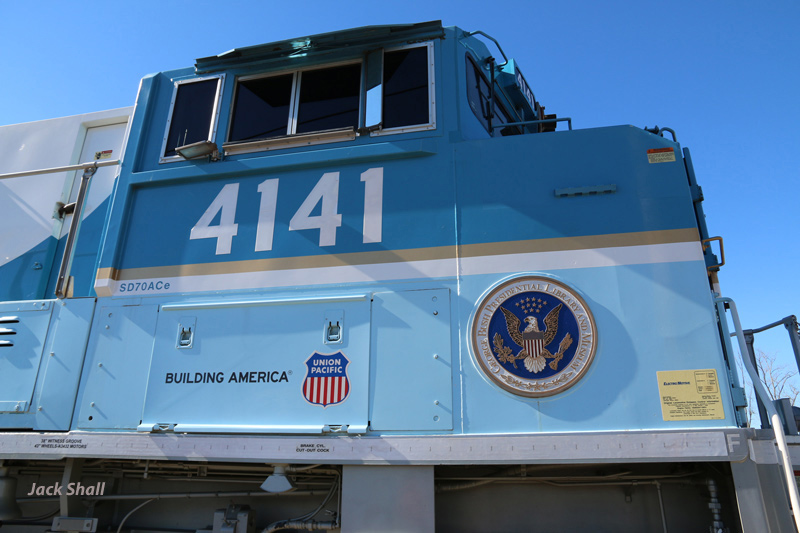
This locomotive is an Electro-Motive SD70ACe, and it was manufactured in Canada in June, 2005. Below is a close-up view of the cab. The Bush Presidential Library plaque is seen on the side of the hood.
The weather in this area has been terrible lately, with thunderstorms and such almost daily. But today we were rewarded with sun and beautiful blue skies . . . perfect weather for a bit of railfanning.
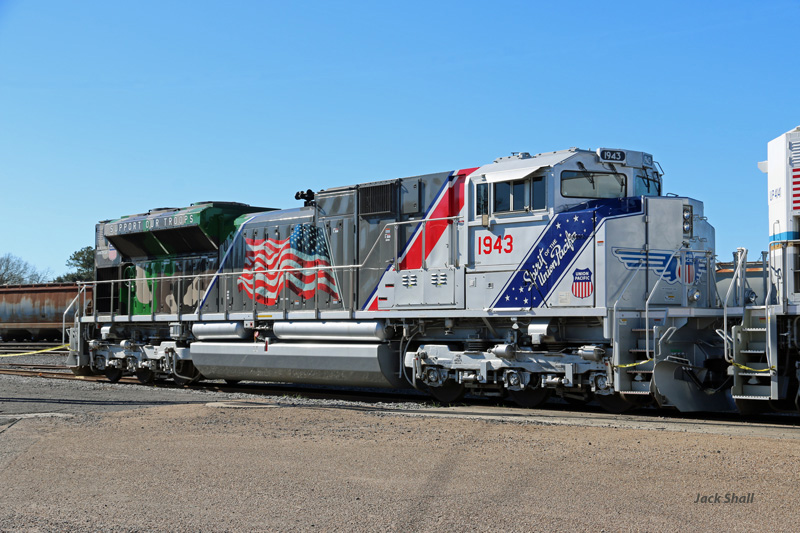
The 4141 was paired with another interesting locomotive, an SD70AH #1943, and it’s named “Spirit of the Union Pacific”. This locomotive pays tribute to our military.
And below is a close-up view of the rear of the 1943. Note the POW-MIA remembrance.
This pair of locomotives is indeed an impressive sight, and I’m thrilled that we were fortunate to see them. Even though the U.P. has published that the locomotives are touring their system for their employees to view, they were very hospitable to the crowd of “civilians” that encroached upon their property today.
It’s a frigid winter day in December of 1942 at the C&NW’s Proviso Yard in Chicago. Jack Delano spied these engine-men attempting to thaw the air pumps on their steamer. Burning a bit of cotton waste against them hopefully will do the trick.
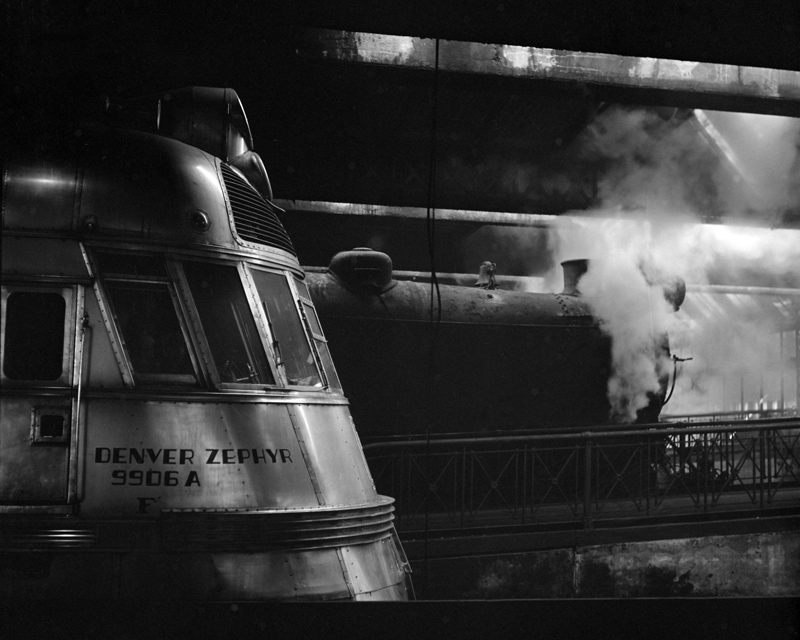
One of those new newfangled diesels meets a steam locomotive at the Chicago Union Station. The time is January of 1943, and that modernistic train is the Chicago, Burlington and Quincy’s Denver Zephyr. This train ran between Chicago and Denver, with service commencing in 1936, and running until 1973. The route was 1,034 miles and the train generally covered the distance in 16 ~ 16-1/2 hours.
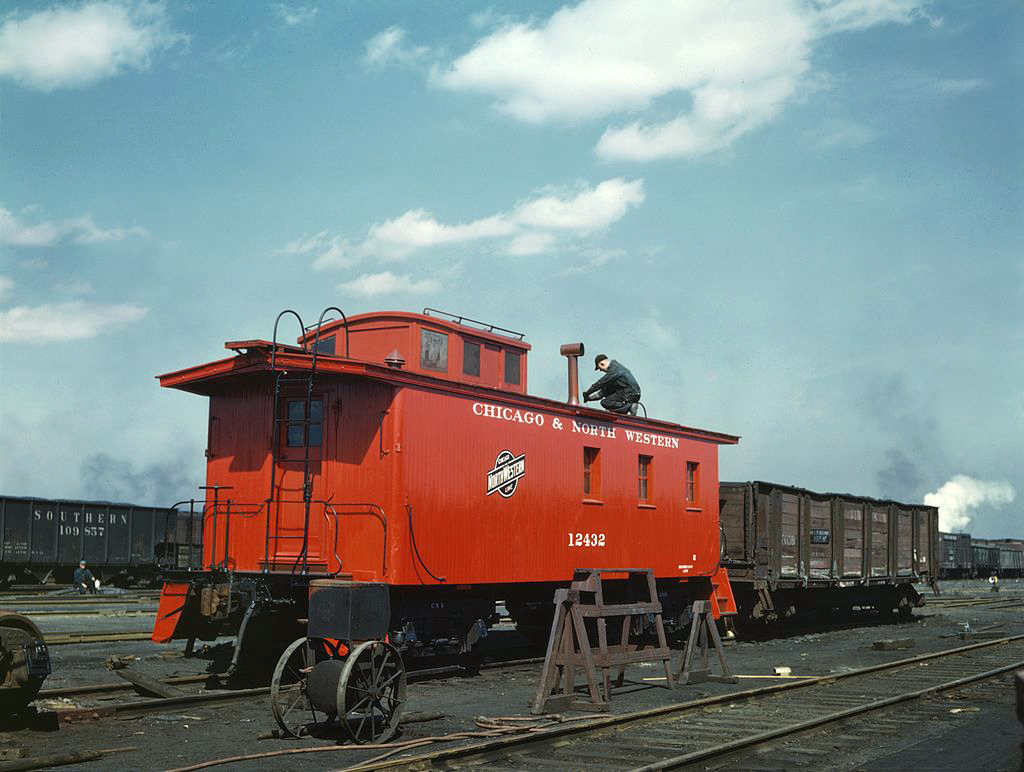
Jack Delano has recorded a worker putting the finishing touches on a rebuilt C&NW caboose down at the rip tracks. The location is the Proviso yard in Chicago, Illinois, and the time is likely early 1943. Number 12432 has probably never looked better, and I’m sure it’s conductor is ready to move back in!
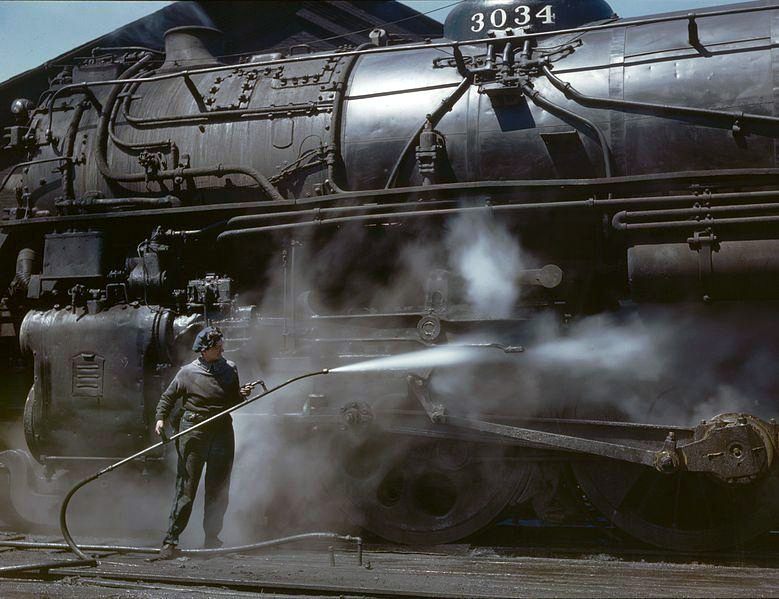
Jack Delano has ventured down to the locomotive servicing facilities to see what goes on there. And here we see Viola Sievers washing down the running gear of C&NW steamer #3034 at the end of its run. Washing the locomotives was not only for the pride of the fleet, but also so that the machine could be properly inspected for problems and defect.
With the war going, the manpower shortage created thousands of jobs for the women, and they stepped up to even the toughest and dirtiest jobs that had to be done.
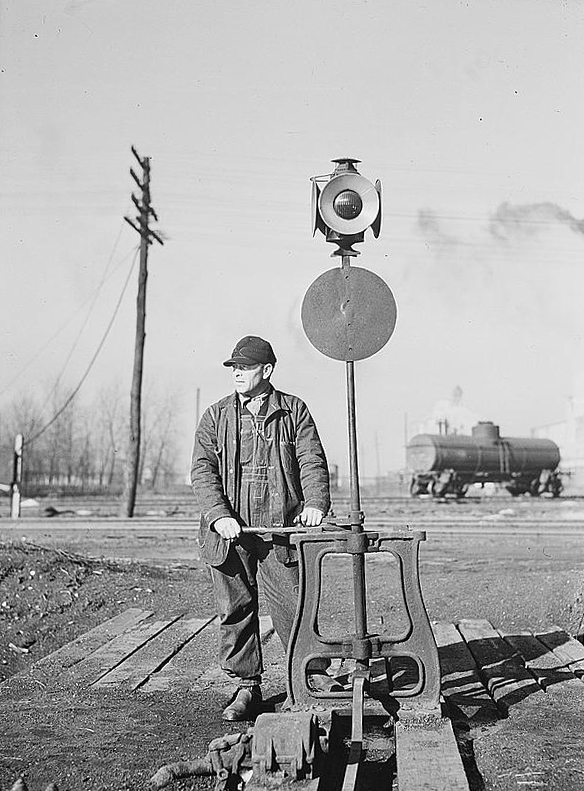
The year is 1943 and we’re on the Indiana Harbor Belt line. Switchman Daniel Senise is seen waiting for the movement after lining a switch while at work in an IHB railroad yard. Jack Delano photograph.
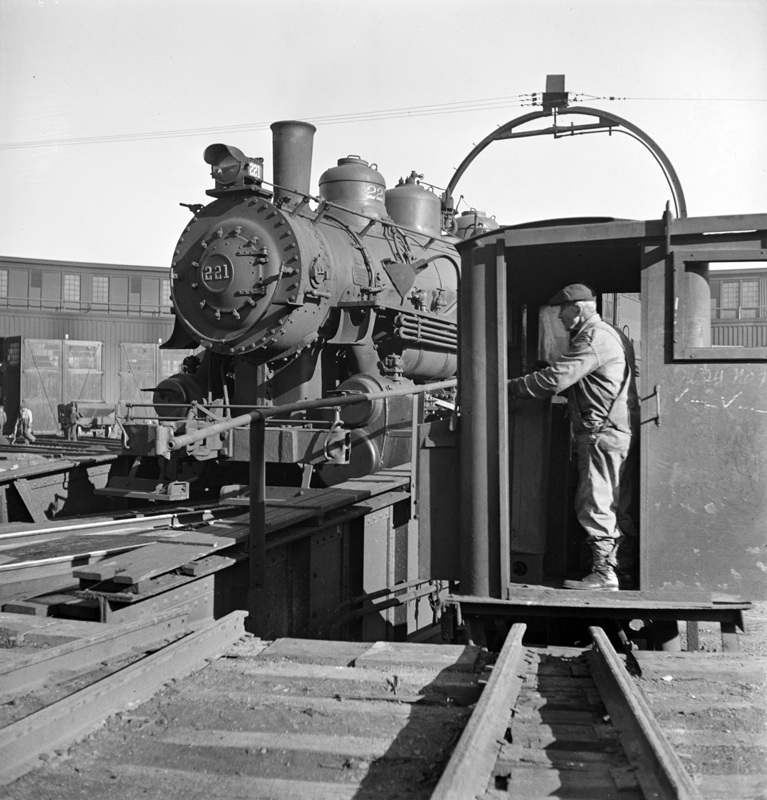
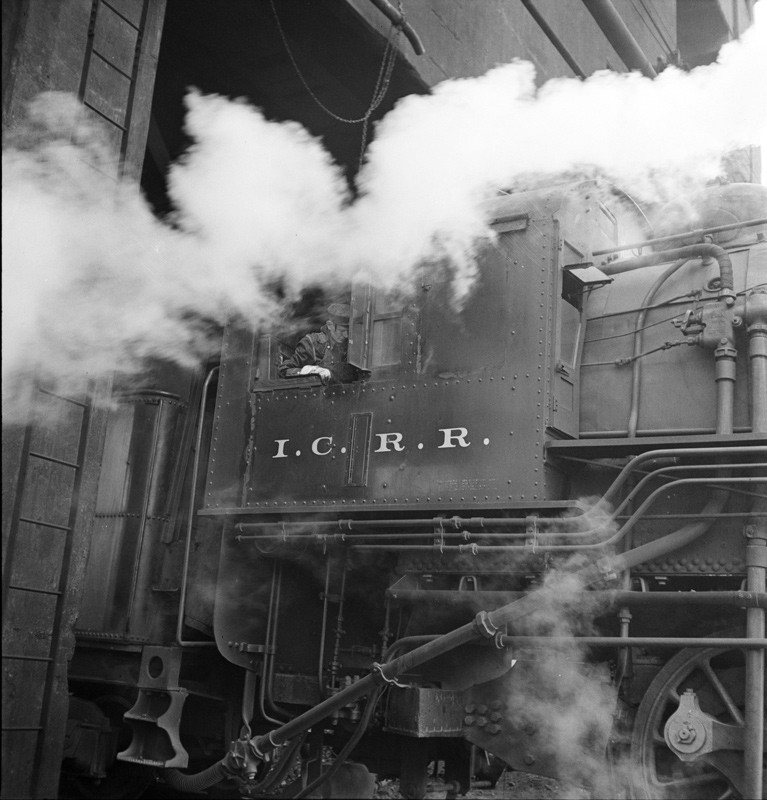
It’s 1942 and photographer Jack Delano secured this shot of an 0-6-0 switching locomotive taking a spin on the turntable in the Illinois Central’s yard in Chicago, Illinois.