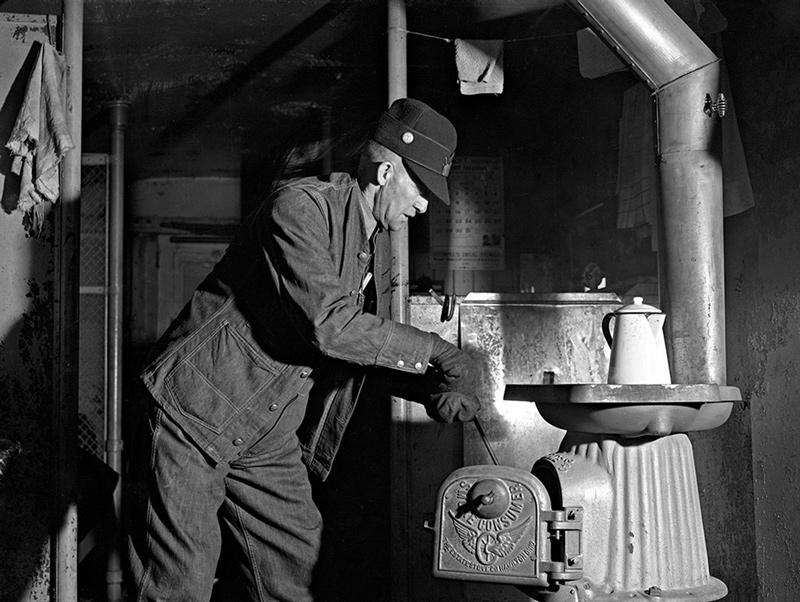
AT&SF Conductor George Burton is tending the stove in his caboose on a frosty March morning in 1943. Those stoves were important to crews as they provided not only the obvious need for heat in the caboose, but also for keeping a pot of hot coffee available, and a means by which to cook a meal. Photo by Jack Delano.
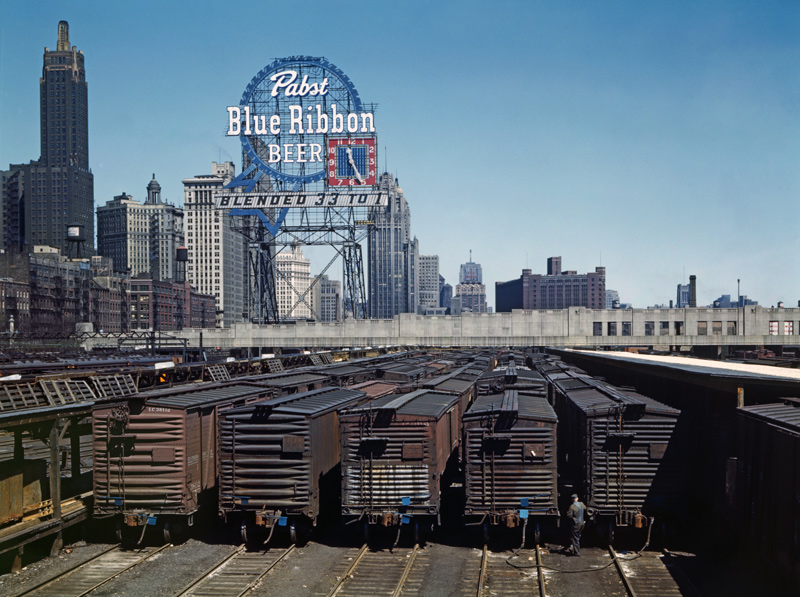
A view of the Illinois Central’s South Water Street freight depot in Chicago, Illinois. Jack Delano recorded this facility on a beautiful spring day in May of 1943. It’s 11:26 in the morning according to the clock on the iconic neon Pabst Blue Ribbon sign looming above.
Note the blue flags on each cut of cars, along with a carman at right. At left those appear to be blocks of ice in a trough, and behind that one can spot the roofs of a few passenger cars (commuter cars or express?). Studying the boxcars themselves, one can easily see the evolution of this workhorse as they grew larger and larger over the years.
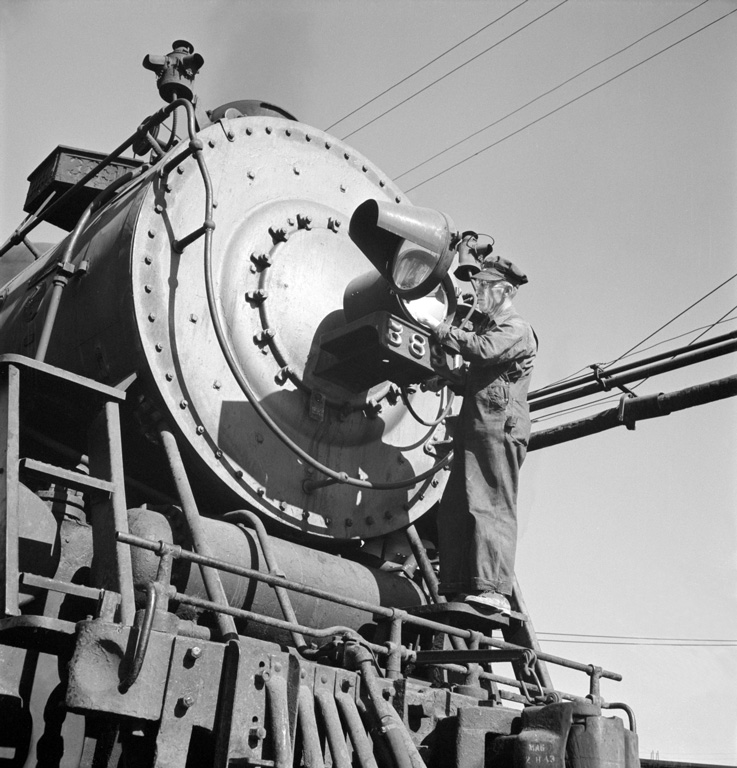
Jack Delano has continued his trek into the west, reaching Needles, California. And here he has captured this image of Electrician B. Fitzgerald cleaning the headlight on AT&SF steamer #3891.
The date is March of 1943, and all locomotives operating west of Needles were equipped with hooded headlights in accordance with the wartime blackout regulations. Sharp-eyed readers may have spied the hood on the Santa Fe streamliner diesel locomotive just a few posts back.
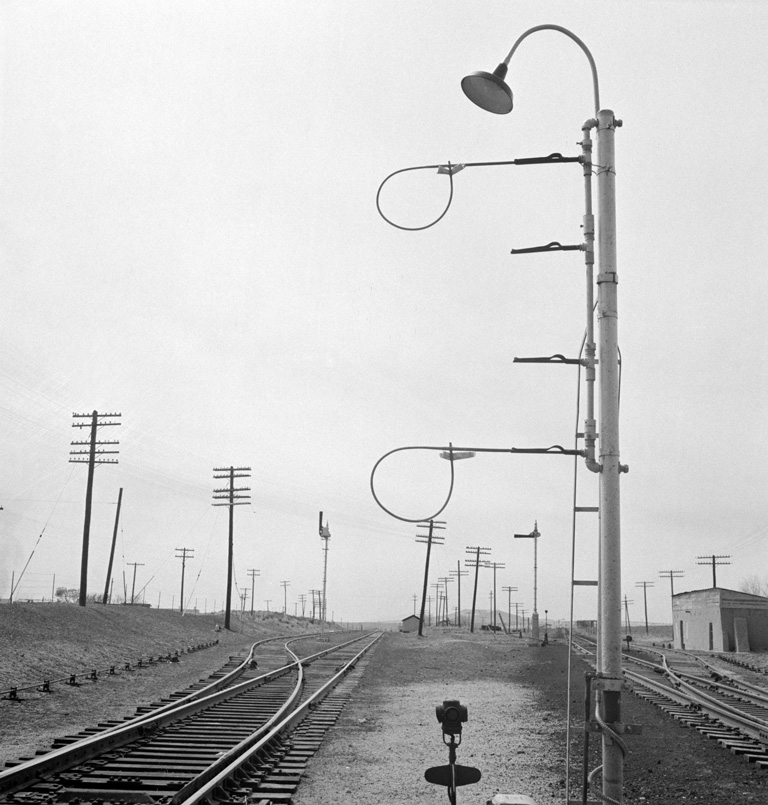
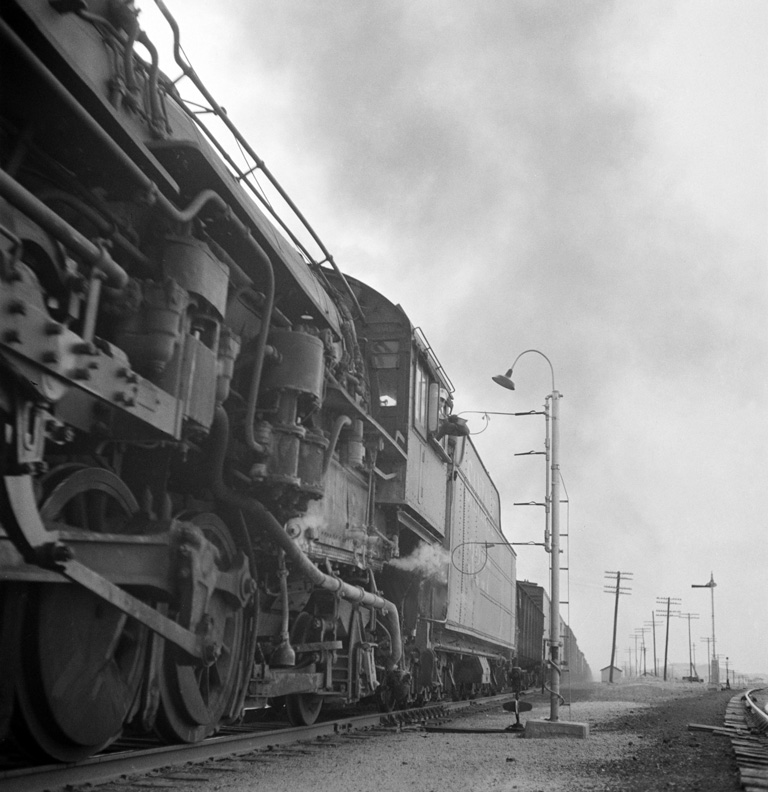
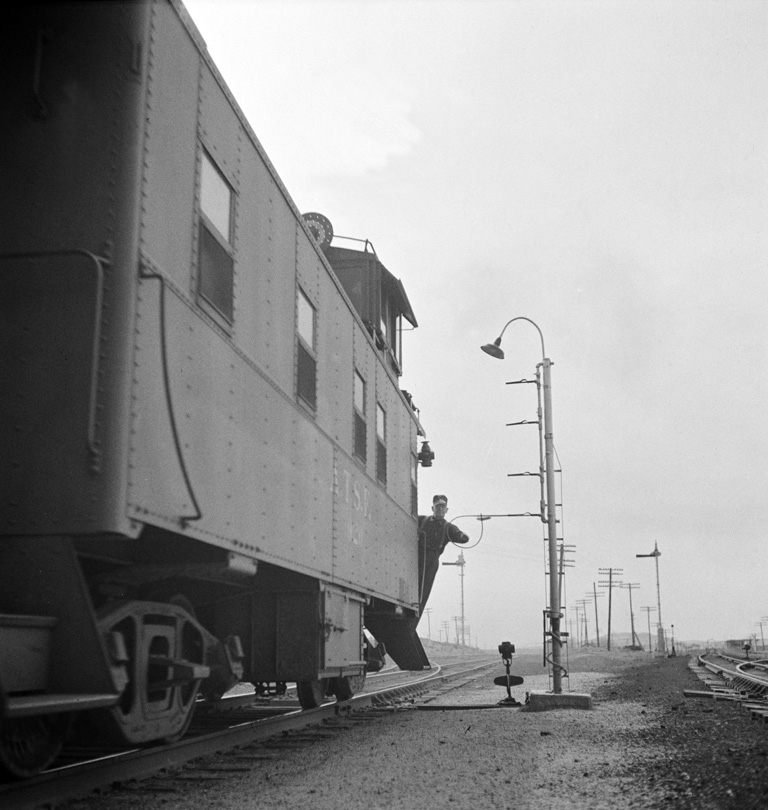
In the days of written train orders, a passing train could, under certain conditions, be passed orders as it rolled by a station. The operator would write out a couple sets of orders, then attach them to a wye shaped affair on the end of a handle, or to a wooden hoop as shown in the photos below. These order hoops could either be held up to the crew to snatch as the train rolled by, or could be attached to a train order post. In either case, the operator would alert the crew that they had train orders to receive by the use of a train order signal, or “board”.
Jack Delano was visiting the Atchison, Topeka and Santa Fe Railway back in March of 1943, and he recorded the ritual of the passing of orders to a freight train in Isleta, New Mexico as it was rumbling by. The first photo shows the train orders attached to their hoops, and ready for the approaching train . . . the actual orders can be seen tied to the end of the hoop where it joins the shaft.
Here we see the fireman of the steamer leaning out of his window, and he is capturing the order hoop with his arm. He’ll immediately give a copy of the orders to the engineer.
And now the conductor snatches up the remaining lower hoop with it’s orders. He and the brakeman will each have their copy.
Nowadays train crews can receive their orders directly from the dispatcher via radio, and this time-honored way of doing things is virtually extinct.
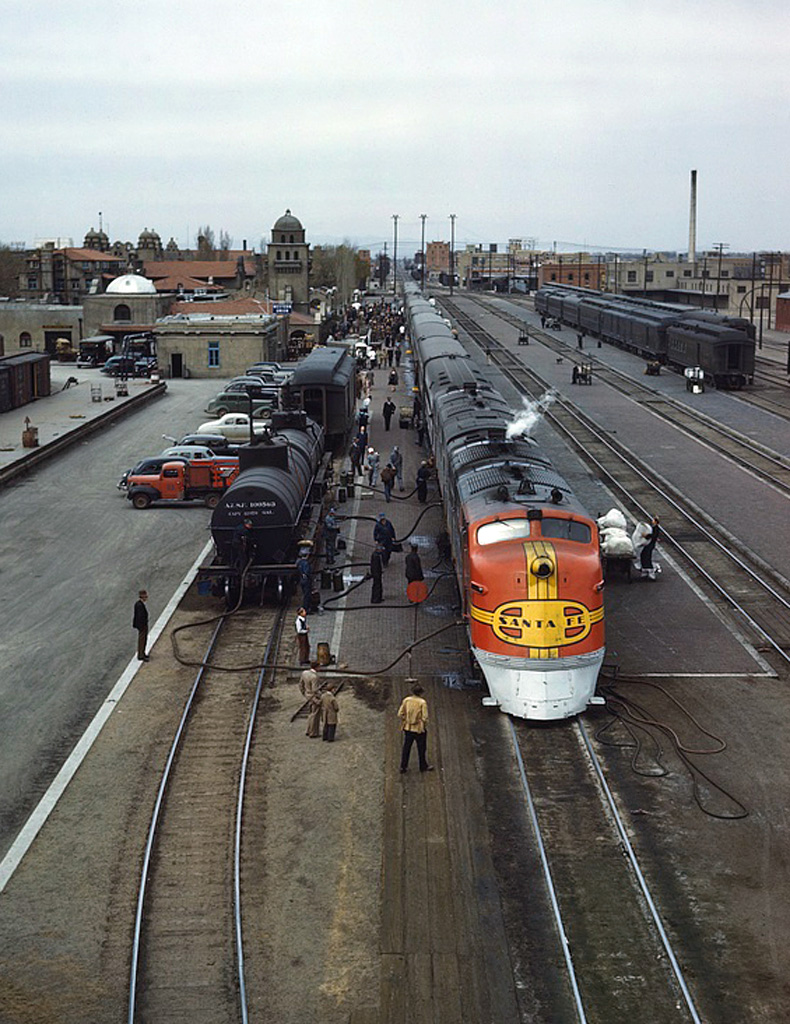
It’s March of 1943, and Jack Delano has ventured westward to visit the Atchison, Topeka and Santa Fe Railway. And here he has captured their streamliner, the “Super Chief”, being serviced at the depot in Albuquerque, New Mexico. Servicing these diesel streamliners with a large crew takes merely five minutes.
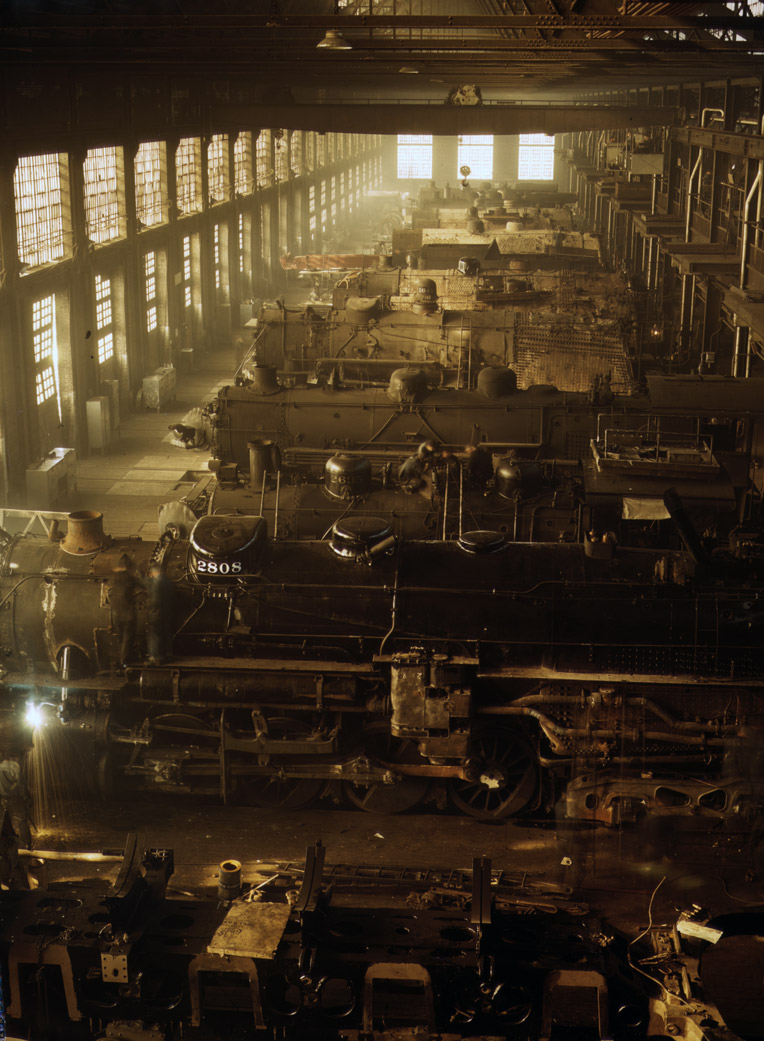
Here’s a birds eye view in the Chicago and North Western railroad’s locomotive backshop located in Chicago, Illinois. Jack Delano photographed this scene in December of 1942.
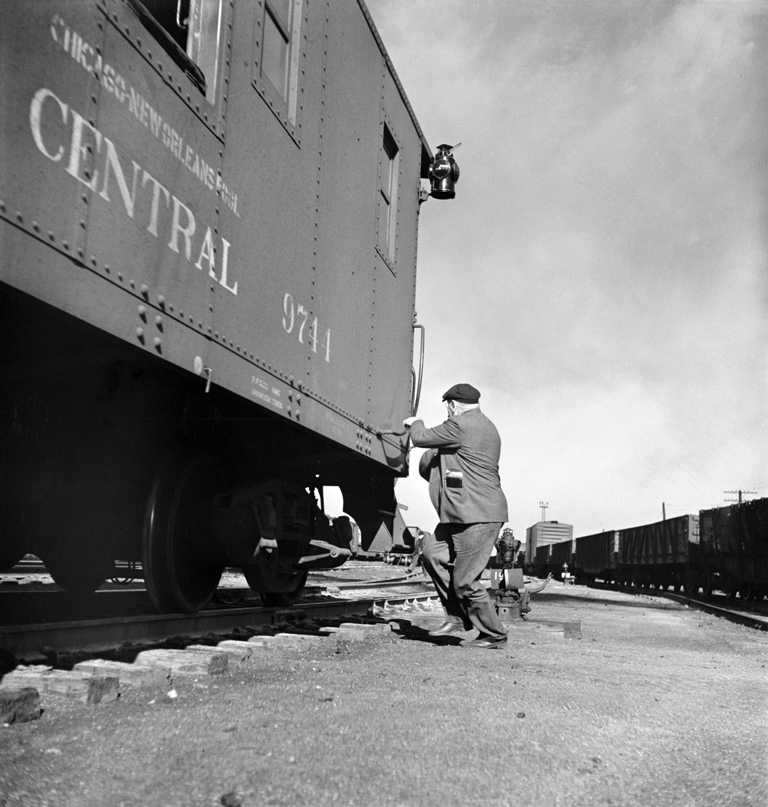
Jack Delano also spent some time visiting the Illinois Central facilities while in Chicago. It’s November of 1942, and Jack spied this conductor hopping aboard his caboose as it was pulling out of a yard track for it’s southward journey. He’ll likely settle in place at his desk, with a cup of hot java handy . . . there is still paper work to do during the ride.
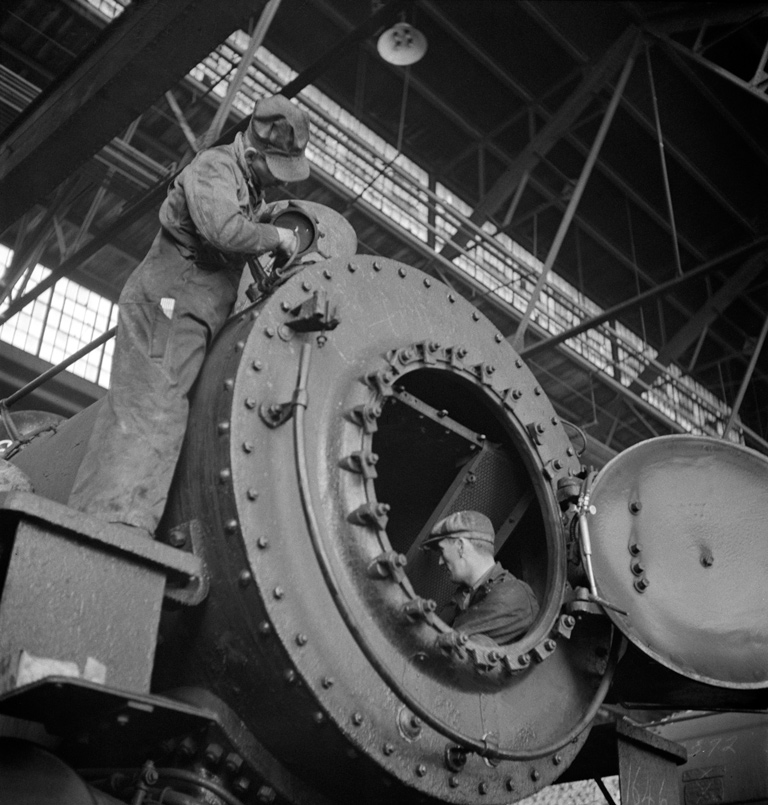
Jack Delano visited the Chicago and North Western railroad’s locomotive backshop in December of 1942. Shown here are a couple workers doing inspection and repairs to a steam locomotive. Opening the smokebox was an important part of the inspection, as it enabled the mechanic to see the tube ends for the boiler, as well as the exhaust components for the steam cylinders. The worker on the left appears to be an electrician performing some work on a class light.
Steam locomotives have a voracious appetite, and they visit the servicing facilities quite often. Here we see a line of the beasts as they replenish their supply of water, sand and coal. This is the Chicago and North Western’s coaling stage in the Proviso yard located in Chicago, Illinois. Photographer Jack Delano captured this image in December of 1942.
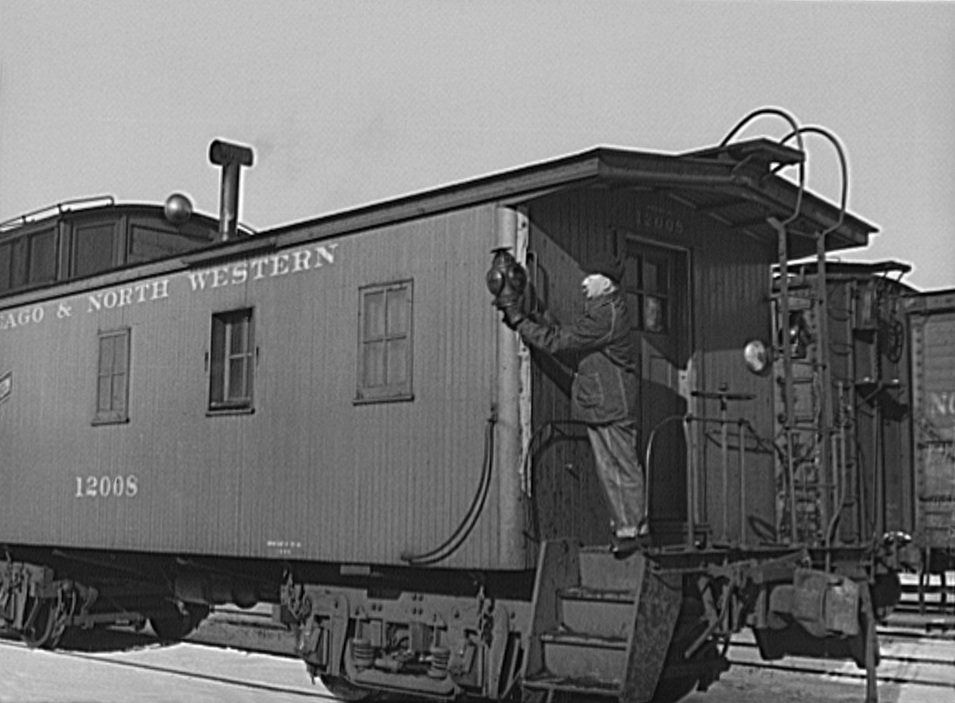
It’s a cold January day in 1943, and a crewman is hanging the marker lamps on his caboose in preparation for their run. The location is likely the Chicago and North Western’s Proviso yard in Chicago. Photo by Jack Delano
Back to our series of images by photographer Jack Delano: we’re in Chicago, Illinois and it’s November of 1942. Mr. Delano captured this view of a C&NW engineer about to ease out on the throttle of his fire-belching steed.
It’s a frigid winter day in December of 1942 at the C&NW’s Proviso Yard in Chicago. Jack Delano spied these engine-men attempting to thaw the air pumps on their steamer. Burning a bit of cotton waste against them hopefully will do the trick.